
Your eyes are your windows to the world, but how often do you really pay attention to their health? Many of us only visit an eye doctor when something feels wrong, but regular checkups are essential even if your vision seems perfect. So, how often should you get your eyes checked? The answer depends on your age, overall health, and risk factors.
An eye check up test is one of the simplest ways to protect your vision and detect eye problems before they become serious. This detailed age-wise eye care guide explains when to schedule routine eye exams at different stages of life, what to expect during an eye check up test, and why regular visits are critical for preserving your eyesight.
The eye is the only place in the body where doctors can directly see blood vessels and nerves without surgery. This means a routine eye exam can sometimes pick up early signs of diabetes, high blood pressure, or certain neurological conditions, sometimes before any other symptoms appear.
Why are Regular Eye Exams Important?
Your eyes can reveal more than just vision problems. Routine eye exams not only help detect refractive errors like nearsightedness or farsightedness but also identify serious health conditions early. Diseases like glaucoma, cataracts, and diabetic retinopathy often develop without noticeable symptoms at first. Early detection can help save your sight.
For many people, understanding eye health by age and scheduling proper care can prevent long-term damage. Regular exams also help monitor changes in vision that may come with aging, medical conditions, or lifestyle factors.
An Eye Care Guide for Every Stage of Life
This is a detailed age-wise eye care guide to help you plan your visits to the optometrist or ophthalmologist.
Infants and Toddlers (0 to 3 years)
Eye development begins at birth, so the first few years of life are crucial. Doctors check a newborn’s eyes in the hospital for congenital issues, and vision screening should continue at every routine pediatric visit after that, not just at one or two fixed ages.
A comprehensive eye exam is generally recommended around 6 months to check alignment, movement, and overall development, and again around 3 years to catch issues like lazy eye (amblyopia) or crossed eyes (strabismus). These conditions are much easier to treat when caught early.
If your baby’s pediatrician notices anything unusual at any visit, such as the eyes drifting, constant tearing, or no red reflex in photos, ask for a referral to a pediatric eye specialist right away rather than waiting for the next scheduled exam.
Children and Teenagers (4 to 18 years)
Vision problems can affect learning and development, making regular checkups vital during school years.
- Before starting school, around age 5, children should have their vision tested.
- If no problems are found, exams every 1 to 2 years are typically sufficient.
- If your child wears glasses, contact lenses, or has a family history of eye disease, your doctor may recommend more frequent visits.
Routine eye checkup frequency during childhood ensures that vision changes do not interfere with academic or social development.
Young Adults (19 to 39 years)
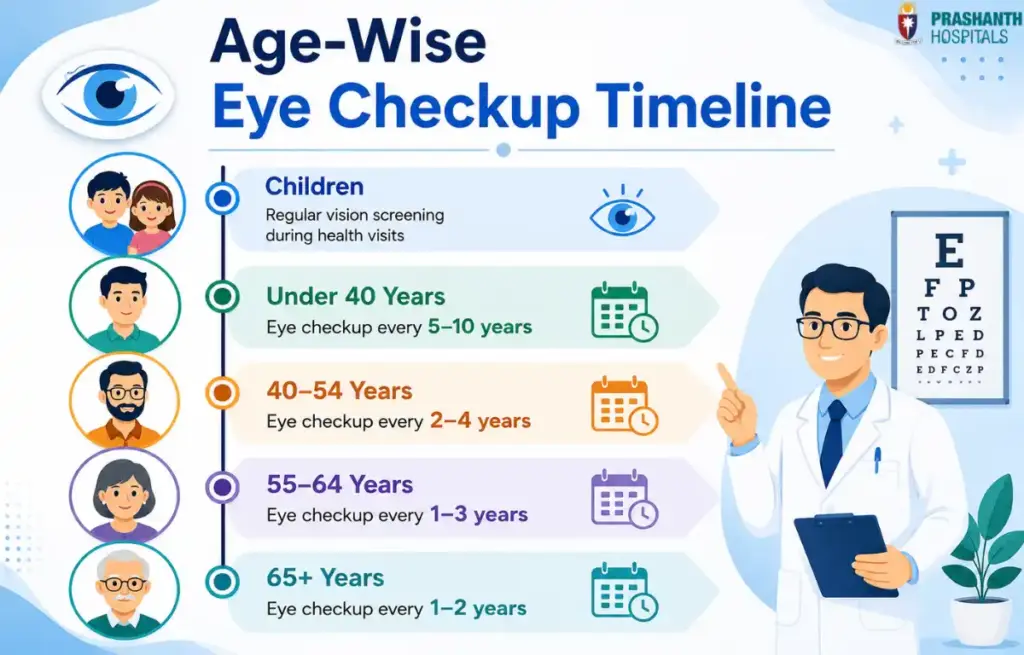
For adults with no vision problems or risk factors, a comprehensive eye exam every 2 years is usually recommended. However, you should schedule a visit sooner if you experience:
- Sudden changes in vision
- Eye pain or discomfort
- Frequent headaches related to vision
- Family history of eye diseases
If you wear contact lenses, you should have your eyes checked every year, no matter your age. Yearly exams confirm your lenses still fit well and are not damaging the surface of your eye.
Middle-Aged Adults (40 to 64 years)
Once you hit your 40s, your risk for age-related eye conditions begins to increase. Many people notice presbyopia, or difficulty reading fine print, in this age group.
- At 40, it is recommended to have a baseline comprehensive eye exam.
- After that, schedule follow-up exams every 1 to 2 years, or as advised based on risk factors.
This is also the age when routine eye exams can detect early signs of glaucoma, cataracts, diabetic retinopathy, and macular degeneration. These conditions often develop with no noticeable symptoms at first, which is why regular checks matter even if your vision feels fine.
Seniors (65 years and older)
In your senior years, annual eye exams become essential. Vision naturally declines with age, and the risk of serious conditions like glaucoma, cataracts, and diabetic eye disease rises sharply. Regular checkups ensure these conditions are caught and managed early to preserve your sight.
So, how often should you get your eyes checked after 65? Plan for a visit every year, even if you feel your vision is stable.
Risk Factors that May Require More Frequent Eye Exams
Some people may need more frequent care at any age. If you have any of these risk factors, your doctor may recommend more regular visits:
- Wearing contact lenses regularly
- Family history of glaucoma or macular degeneration
- Diabetes or high blood pressure
- Previous eye injuries or surgery
- Certain medications that affect vision
- Prolonged screen use or occupational hazards
Knowing when to see an eye doctor for your unique needs is crucial to protecting your eyesight.
Signs You Should See an Eye Doctor Immediately
Do not wait for your next scheduled exam if you experience:
- Sudden vision loss or blurred vision
- Flashes of light or floaters
- Severe eye pain or headaches
- Redness, swelling, or discharge
- Double vision or difficulty focusing
These symptoms could indicate a serious condition that needs prompt treatment.
Tips to Maintain Healthy Eyes Between Exams
Here are a few simple habits to keep your eyes healthy at any age:
- Wear sunglasses with UV protection outdoors
- Stay hydrated to avoid dry eyes
- Eat a balanced diet rich in leafy greens, fish, and vitamins
- Follow the 20-20-20 rule when using screens: look 20 feet away for 20 seconds every 20 minutes
- Avoid smoking, which increases the risk of many eye diseases
Good daily habits combined with regular exams can help you maintain clear vision for years to come.
How Often Should You Get Your Eyes Checked? A Quick Summary
So, how often should you get your eyes checked? The answer depends on your age, health history, and risk factors. Here is a quick summary:
- Infants and toddlers: ongoing screening at routine visits, with comprehensive exams around 6 months and 3 years
- Children and teenagers: every 1 to 2 years
- Young adults: every 2 years
- Middle-aged adults: every 1 to 2 years
- Seniors: every year
- Contact lens wearers, at any age: every year
Routine checkups are a simple but powerful way to protect your eyesight, detect problems early, and maintain overall health. Use this age-wise eye care guide as a roadmap and discuss your individual needs with your eye doctor.
Your eyes deserve care at every stage of life. Book your next exam and give your vision the attention it deserves.