Seeing blood in saliva can feel alarming, especially when it happens suddenly. In many cases, the cause is minor, such as irritated gums or mouth dryness. But persistent bleeding should never be ignored.
This guide helps you understand what is happening and when to visit a doctor or dentist.
How Do You Identify Blood in Saliva?
Not all bleeding in the mouth looks the same. Here is what to watch for:
- A pink or red tint in your spit, especially after brushing or eating
- A metallic taste without any visible cut
- Streaks of blood in mucus when you clear your throat
- Small clots in your saliva when you wake up
The colour of the blood can point to its source:
- Bright red blood often comes from the mouth, throat, or lungs
- Pink or frothy blood mixed with mucus tends to come from the airways
- Dark, coffee-coloured blood usually points to the stomach or food pipe
If you notice dark blood, seek medical attention the same day.
What Causes Blood in Saliva?
Quick answer: Common causes include:
- Gum disease
- Aggressive brushing or flossing
- Mouth ulcers
- Dry mouth
- Nosebleeds and post-nasal drip
- Acid reflux
- Respiratory infections
- Medications like blood thinners
- Nutritional deficiencies
According to the American Dental Association, bleeding gums are one of the earliest signs of gum disease, a condition that affects nearly half of adults over the age of 30. Many people brush it off, but early attention makes a real difference.
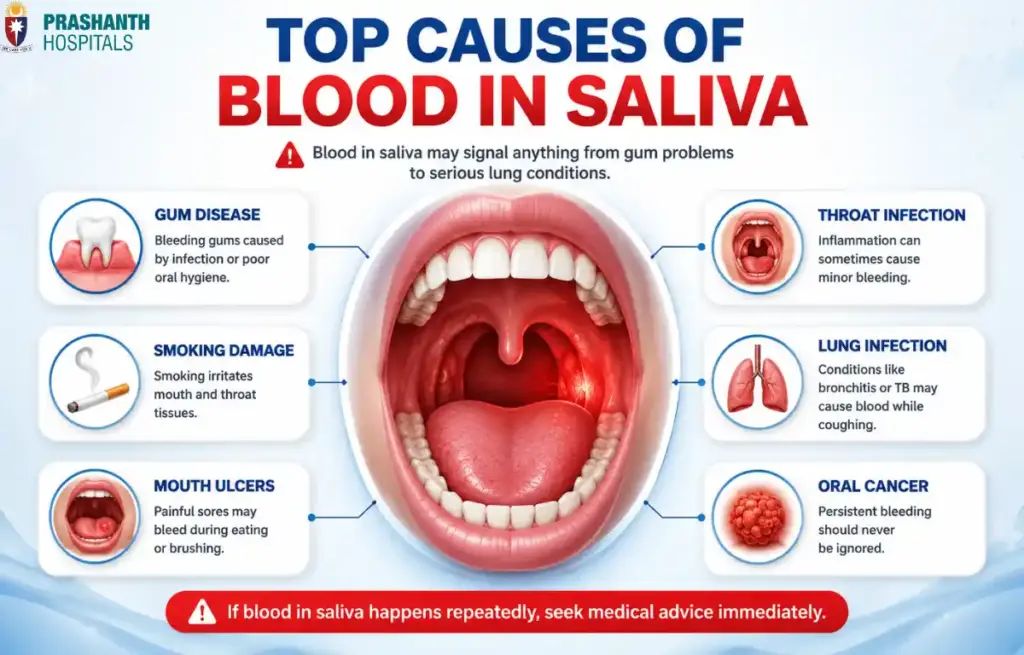
Common Dental Blood in Saliva Causes
Most blood in saliva causes trace back to the mouth and gums. Here are the most frequent ones:
Gum Disease (Gingivitis and Periodontitis)
This is the number one reason people see blood when they spit. Plaque builds up along the gumline, causing swelling, redness, and bleeding. In early stages this is called gingivitis. Left untreated, it becomes periodontitis, which can damage the bone holding your teeth. The good news is that early gum disease responds well to a professional cleaning and better brushing habits. Learn more about our gum disease treatment options at Prashanth Hospitals.
Aggressive Brushing or Flossing
Brushing too hard tears the delicate tissue along your gums. Many people believe harder brushing means cleaner teeth. It does not. Use a soft-bristled toothbrush, hold it at a 45-degree angle, and use gentle circular movements.
Mouth Ulcers and Canker Sores
These small sores bleed when touched or irritated. Common triggers include minor mouth injuries, low iron or vitamin B12, spicy foods, and stress. Most ulcers heal in one to two weeks. If they keep coming back or grow larger, see your dentist.
Recent Dental Procedures
Some bleeding after a tooth extraction or deep cleaning is completely normal. It usually settles within 24 to 48 hours. If it continues beyond that, call your dental clinic.
Oral Infections
Bacterial, viral, or fungal infections in the mouth can cause tissue to swell and bleed. Oral thrush, a fungal infection, leads to soreness and spotting. These infections respond well to the right medication once diagnosed.
Teeth Grinding (Bruxism)
Many people grind their teeth at night without realising it. This puts pressure on the gums and causes bruising along the gumline, which can lead to blood in saliva in the morning when you wake up.
Dry Mouth (Xerostomia)
When saliva reduces during sleep, gums dry out and small cracks form. These tiny cracks bleed easily. Staying hydrated and using a humidifier can help.
Non-Dental Causes Worth Knowing
There are also blood in saliva causes that have nothing to do with your teeth. Here are a few medical reasons to be aware of:
Nosebleeds and Post-Nasal Drip
If your nasal passages are dry from allergies, a small nosebleed can drain down the back of your throat overnight. You then see it in your spit when you wake up. It often looks more alarming than it is.
Acid Reflux (GERD)
Stomach acid travelling up into the throat irritates the soft lining and can cause minor bleeding. If you have frequent heartburn alongside bleeding in your spit, speak to a gastroenterologist.
Respiratory Infections
A heavy cough from bronchitis, pneumonia, or a persistent cold can strain small blood vessels in the throat or airways. Streaks of blood in mucus during a cough are common with chest infections and are usually not life-threatening.
Medications and Nutritional Deficiencies
Blood thinners such as aspirin or warfarin make bleeding more likely. Low levels of vitamin B12, iron, or folic acid weaken gum tissue over time. A simple blood test can check both.
Serious Conditions
In rare cases, unexplained persistent bleeding can point to conditions like tuberculosis, COPD, or oral cancer. This is why bleeding that does not go away should always be assessed by a professional. If you are concerned, our oral cancer screening team at Prashanth Hospitals can help you get a clear answer quickly.
Why is there Blood in Saliva in the Morning?
This is one of the most common questions patients ask us. Waking up with a bloody taste is unsettling, especially when you feel perfectly fine during the day.
The most likely reasons for blood in saliva in the morning are:
- Mouth breathing during sleep dries out gum tissue, which cracks and bleeds overnight
- Post-nasal drip from allergies pools at the back of the throat while you sleep
- Unnoticed gum infection causes slow bleeding that collects in the mouth
- Bruxism bruises the gumline and the damage shows up when you wake up
If it happens once, it may be dry air or mild irritation. If it happens more than two or three times a week, get it checked.
When is Blood in Saliva Serious?
Go to an emergency room right away if you notice:
- A large amount of blood (more than a few tablespoons)
- Blood with chest pain or tightness
- Difficulty breathing or shortness of breath
- Dizziness, fainting, or a fast heartbeat
- Vomiting blood
See your dentist or doctor within a few days if:
- The bleeding has gone on for more than one week
- You have no obvious reason for the blood
- You also have fever, unexplained weight loss, or night sweats
- You smoke or have a history of lung or throat conditions
You can monitor at home if:
- You see a tiny amount of blood only after brushing
- It is a one-time event with no other symptoms
- It clears up within a day
One thing worth understanding: blood coughed up from the lungs looks frothy and pink. Frothy blood when coughing always needs a doctor review, not just a dental visit.
How Doctors Find the Cause
At Prashanth Hospitals, here is what to expect when you come in with this concern:
- A dental exam to check your gums, teeth, and soft tissues
- X-rays if gum disease or bone loss is suspected
- Blood tests to check for nutritional gaps or clotting problems
- A chest X-ray or CT scan if a respiratory cause seems likely
- Referral to the right specialist: a dentist, ENT consultant, pulmonologist, or gastroenterologist for GERD treatment
The right tests lead to the right answers quickly.
Treatment Based on Cause
| Cause | Treatment |
| Gum disease | Scaling, root planing, antibiotics if needed |
| Oral infections | Antivirals, antibiotics, or antifungals |
| Dry mouth | Hydration, humidifier, alcohol-free rinse |
| Teeth grinding | Night guard or occlusal splint |
| Nutritional deficiency | Diet changes, targeted supplements |
| Acid reflux | Lifestyle changes, medication |
| Oral cancer (early stage) | Surgery, radiation, or chemotherapy |
Finding the cause early always means simpler treatment.
8 Habits That Help Prevent Bleeding
Preventing blood in saliva and bleeding gums comes down to daily consistency:
- Brush twice a day with a soft-bristled toothbrush
- Floss or use a water flosser once daily
- Visit your dentist every six months for a professional check-up
- Drink at least 8 glasses of water a day to keep mouth tissues moist
- Quit smoking and reduce alcohol intake
- Use an alcohol-free mouthwash to avoid gum irritation
- Try a bedroom humidifier if you breathe through your mouth at night
- Manage chronic conditions like acid reflux with your doctor’s help
Small daily habits protect your gums far better than any one-time treatment.
Book an Appointment at Prashanth Hospitals
You know your body. If something does not feel right, it is worth checking.
Come and see us at Prashanth Hospitals if:
- You have noticed bleeding in your spit more than twice this week
- You wake up regularly with a metallic taste or bleeding gums
- You have not had a dental check-up in over six months
- You have a family history of oral cancer or gum disease
- You are pregnant and noticing gum sensitivity
Our dental and medical teams work together to give you a clear answer and the right care plan. We are here to help you feel informed and at ease.
Book your appointment at Prashanth Hospitals today. Early care is always the simpler path.
This article is for general information only. Please consult a qualified doctor or dentist for personal medical advice.