Understanding Pregnancy Scans a Comprehensive Guide

Early pregnancy scan | Prashanth Hospitals

Pregnancy is an exciting journey filled with milestones, and scans are crucial for monitoring the health and development of both mother and baby. But understanding the purpose and timing of these scans can sometimes be overwhelming. This guide will walk you through the essential scans during pregnancy, ensuring you feel informed and confident every step of the way.

Early Pregnancy Scan (7-8 Weeks)

In the early stages of pregnancy, typically around 7 to 8 weeks, an early pregnancy scan is conducted. This ultrasound confirms the pregnancy by detecting the presence of a fetus inside the uterus and ensures it’s developing as expected. Additionally, this scan detects the fetal heartbeat, which is a reassuring indicator of a healthy pregnancy. For many women, this is also considered the first pregnancy scan, making it an emotionally significant milestone. For parents, hearing their baby’s heartbeat for the first time is often a cherished moment that brings reassurance and joy.

Nuchal Translucency (NT) Scan (12-13 Weeks)

Many parents often ask what is NT scan in pregnancy, as it plays an important role in early screening. The NT scan, performed around 12 to 13 weeks, measures the thickness at the back of the baby’s neck to assess the risk of chromosomal conditions, such as Down syndrome. This scan is often part of a broader first-trimester screening process that includes blood tests. Understanding what is NT scan in pregnancy helps parents make informed decisions, as early detection allows healthcare providers to discuss the results and plan further steps if needed.

Anomaly Scan (18-22 Weeks)

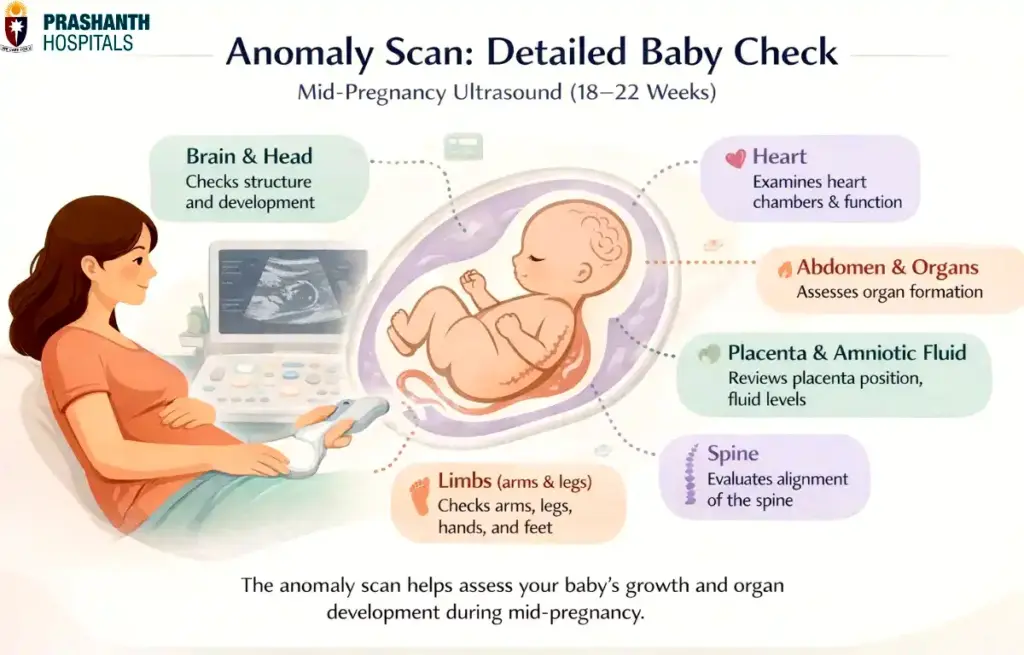
One of the most critical scans during pregnancy is the anomaly scan, which is done between 18 to 22 weeks. This detailed ultrasound checks the baby’s overall growth and development and examines vital organs like the brain, spine, heart, kidneys, and limbs. It helps identify any structural abnormalities that might require specialized care. This scan provides parents with a clearer picture of their baby’s progress and assures them that development is on track.
Early pregnancy scan | Prashanth Hospitals

Growth Scan (28-34 Weeks)

As the baby grows, a growth scan in pregnancy between 28 and 34 weeks evaluates the baby’s growth rate, position in the womb, and overall health. This scan estimates the baby’s weight and assesses whether there is any risk of complications during delivery. It’s also an opportunity for healthcare providers to check amniotic fluid levels and placental health, ensuring the baby is getting adequate nourishment.

Additional Scans Based on Medical Need

Sometimes, additional scans are recommended based on specific medical conditions or concerns. For example, if a healthcare provider notices discrepancies during routine check-ups or if there are conditions like gestational diabetes or hypertension, extra scans may be ordered to monitor the baby more closely. These scans could involve assessing amniotic fluid levels, checking for fetal well-being, or monitoring placental health.

Reasons for Getting an Early Pregnancy Scan

  • Confirms pregnancy at an early stage.
    An early pregnancy scan helps check if the pregnancy is inside the uterus and progressing as expected.
  • Confirms gestational age.
    The first pregnancy scan helps estimate weeks of pregnancy and calculate the expected due date.
  • Checks the baby’s heartbeat.
    This gives early reassurance that the pregnancy is developing normally.
  • Identifies multiple pregnancies.
    It can detect twins or more at an early stage.
  • Detects early concerns.
    Helps identify issues like ectopic pregnancy or early pregnancy loss.
  • Provides a baseline for future scans.
    Later scans, including a growth scan in pregnancy, are compared with early findings for better tracking.
  • Offers emotional reassurance.
    Seeing early development often reduces anxiety for families and expectant mothers.

Why Are These Scans Essential?

Each scan serves a purpose in safeguarding both the mother’s and the baby’s health. Regular monitoring helps healthcare providers detect potential issues early on and allows for timely interventions, ensuring a healthy pregnancy journey. For example, the anomaly scan can identify major structural abnormalities that might require additional care. In the same way, a growth scan ensures that the baby is developing well and provides essential information for planning a safe delivery.

Tips for Expectant Mothers

  1. Schedule Your Scans on Time: Ensure you follow your gynecologist’s advice on the timing of each scan. Missing a crucial scan could mean missing essential information about your baby’s health.
  2. Communicate Concerns: Share any discomfort or symptoms you are experiencing with your healthcare provider to ensure that any necessary follow-up scans are arranged.
  3. Stay Informed: While it’s tempting to Google every detail, rely on your healthcare provider for accurate information about your baby’s development.

The Role of Healthcare Providers

Your healthcare provider plays a crucial role in guiding you through each stage of pregnancy. They are there to explain the purpose of each scan, interpret results, and offer reassurance if you’re feeling anxious. Open communication is vital—don’t hesitate to ask questions about any part of the process that you find confusing.

Conclusion

Pregnancy scans are vital checkpoints that ensure your baby is developing healthily and that your body is adjusting well to the demands of pregnancy, starting from the early pregnancy scan. By understanding the role and timing of each scan, you can stay proactive in monitoring your baby’s health. Remember to consult your gynecologist regularly and follow their recommendations for a safe and fulfilling pregnancy journey. Taking these steps will give you peace of mind and set the foundation for a healthy pregnancy and delivery.

Frequently Asked Questions

An early pregnancy scan, usually done around 6 weeks, helps confirm pregnancy, check the baby’s heartbeat, and ensure it’s in the uterus. The scan shows the gestational sac, yolk sac, and embryo. A doctor interprets these findings to confirm healthy early development and rule out complications.

At 4 weeks, it may be slightly early for an ultrasound, but it’s a good time to visit your doctor. They can confirm pregnancy with a blood test, discuss prenatal vitamins, and advise on healthy habits to support early fetal development before your first major scan around 6–8 weeks.

Red or colored spots on an ultrasound usually indicate blood flow through Doppler imaging, not a problem. However, if your doctor mentions a red area in the uterus or placenta, it could represent bleeding or vascular activity. Always rely on the radiologist’s interpretation for accurate results and meaning.

Follow-up after an ultrasound depends on findings. If everything appears normal, the next scan is typically at 12 weeks. If abnormalities or uncertain results appear, your doctor may recommend additional scans or blood tests to monitor development, confirm viability, or assess the baby’s growth and health accurately.

During the first trimester, avoid smoking, alcohol, and caffeine in excess. Skip raw seafood, unpasteurized dairy, and undercooked meat to prevent infections. Limit stress, avoid heavy lifting, and stay away from toxic substances. Prioritize rest, hydration, and prenatal vitamins for a healthy pregnancy foundation and fetal development.

An early pregnancy scan, usually done around 6 weeks, helps confirm pregnancy, check the baby’s heartbeat, and ensure it’s in the uterus. The scan shows the gestational sac, yolk sac, and embryo. A doctor interprets these findings to confirm healthy early development and rule out complications.

At 4 weeks, it may be slightly early for an ultrasound, but it’s a good time to visit your doctor. They can confirm pregnancy with a blood test, discuss prenatal vitamins, and advise on healthy habits to support early fetal development before your first major scan around 6–8 weeks.

Red or colored spots on an ultrasound usually indicate blood flow through Doppler imaging, not a problem. However, if your doctor mentions a red area in the uterus or placenta, it could represent bleeding or vascular activity. Always rely on the radiologist’s interpretation for accurate results and meaning.

Follow-up after an ultrasound depends on findings. If everything appears normal, the next scan is typically at 12 weeks. If abnormalities or uncertain results appear, your doctor may recommend additional scans or blood tests to monitor development, confirm viability, or assess the baby’s growth and health accurately.

During the first trimester, avoid smoking, alcohol, and caffeine in excess. Skip raw seafood, unpasteurized dairy, and undercooked meat to prevent infections. Limit stress, avoid heavy lifting, and stay away from toxic substances. Prioritize rest, hydration, and prenatal vitamins for a healthy pregnancy foundation and fetal development.

Related Blogs

Pregnancy Exercises : Staying Active and Fit
Staying active with safe routines at home supports comfort, strength, and a smoother pregnancy journey.
Causes of Preterm Birth | Prashanth Hospitals
Certain health conditions, lifestyle factors, and infections can increase the chances of early or preterm birth.
Gynecology Hospital in Velachery
Women can receive complete care and guidance by visiting a reliable Gynecology Hospital in Velachery for routine checkups and specialized
Preparing for Labor: A Comprehensive Guide to Birth Plans
Being prepared with the right knowledge can help you feel more confident and calm during labor and delivery.
Gynecology Hospital in chennai
Comprehensive women’s healthcare services are available when choosing a trusted gynecology hospital in chennai for consultations, treatments, and ongoing support.
home remedies for pregnancy | Prashanth Hospitals
Simple home-based care and natural methods can help manage common pregnancy discomforts safely and gently.
what is painless delivery | Prashanth Hospitals
Modern medical options now allow a more comfortable childbirth experience with minimal pain and guided support.
Maternity Nutrition : Eating Well for a Healthy Pregnancy and Baby | healthy diet in pregnancy
A balanced and nutritious routine supports both mother and baby for a healthier and safer pregnancy journey.
Gynecology Hospital in Gummidipoondi | Prashanth Hospitals
Provides care, pregnancy support, diagnosis, and safe treatments with expert guidance at Gynecology Hospital in Gummidipoondi.
Navigating Labor Pain Pain Management During Childbirth
Understand coping techniques, breathing methods, and supportive care options while Navigating Labor Pain with confidence.
Benefits of Prenatal Care

Pregnancy is a journey filled with immense joy and anticipation but also demands careful attention and care. Prenatal care, the

Discover Your Childbirth Options: A Guide from Prashanth Hospital

The journey of giving birth is a profound and life-changing experience for expectant parents. As the due date approaches, understanding

Exercise for Pregnancy | Prashanth Hospitals

During pregnancy, exercise plays a crucial role in ensuring the health and well-being of both the mother and the developing

Gynecology Hospital in Kolathur | Prashanth Hospital

Women’s health is important at every stage of life. From adolescence to menopause, regular care ensures comfort, safety, and overall

Best Gynaecologist in Chennai
Find the Best Gynaecologist in Chennai for fertility, high-risk pregnancies, minimally invasive surgeries, and comprehensive women’s health care.
Overcoming Challenges : Successful Peritoneal Dialysis in a Micro Premature Infant

In the intricate world of neonatal care, micro preterm babies often face a myriad of health challenges. This case study