
When preparing for a medical or dental procedure, many patients hear terms like anaesthesia and sedation but aren’t sure what they really mean. Both are designed to keep you comfortable and pain-free, but they work in different ways. When people compare sedation vs anesthesia, they are usually trying to understand which option suits their procedure and comfort level. In this article, we’ll explain the difference between sedation and anesthesia, helping you understand what to expect.
Understanding the Basics: What Is Anaesthesia?
Anaesthesia refers to a medical process that temporarily blocks pain and sensation. It is administered by an anaesthesiologist or trained medical professional before surgery or a procedure. There are different types of anaesthesia, including:
- General anaesthesia: You’re completely unconscious and unaware of what’s happening.
- Regional anaesthesia: Only part of your body is numbed, such as during a C-section.
- Local anaesthesia: A small area is numbed, like for minor skin procedures.
So, when people ask what anaesthesia is, it’s essentially a way to make a procedure pain-free while controlling your level of awareness.
What is Sedation?
Sedation is slightly different. Instead of blocking all sensation, sedation relaxes you and makes you less aware or drowsy. Often called conscious sedation, this technique allows you to remain awake but very relaxed, and you may not remember much afterward. It’s commonly used for endoscopies, minor dental work, and outpatient procedures.
When comparing anaesthesia vs sedation, remember that sedation doesn’t always eliminate all sensation—it mainly helps reduce anxiety and discomfort.
Key Differences Between Anaesthesia and Sedation
Here’s a quick comparison of the two approaches:
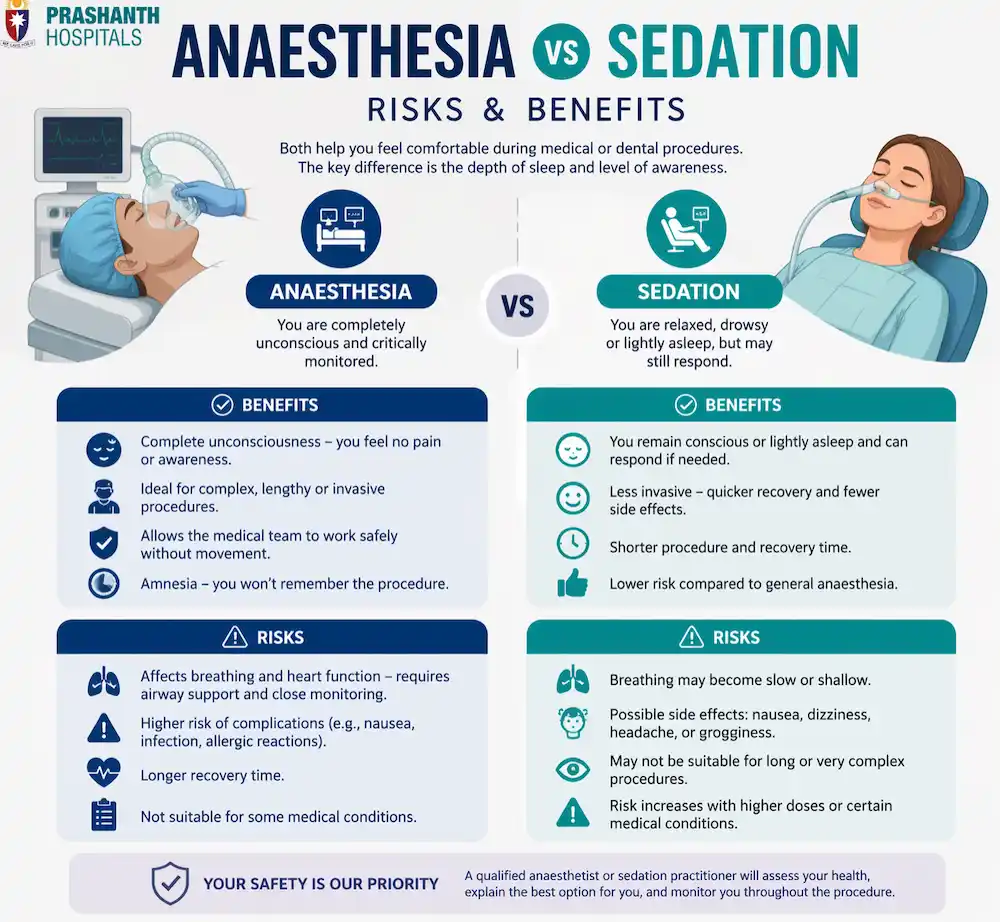
| Feature | Anaesthesia | Sedation |
| Awareness | Unconscious (general) | Relaxed but often awake |
| Pain control | Complete | Partial or reduced sensation |
| Recovery time | Longer (general) | Usually quicker |
| Application | Major surgeries | Minor or outpatient procedures |
Understanding sedation vs general anesthesia becomes important here. General anaesthesia leads to full unconsciousness, while sedation allows you to stay relaxed without being fully asleep. This clear understanding helps reduce fear and builds confidence before a procedure.
When is Each Used?
Anaesthesia is typically used for major surgeries where complete unconsciousness or full numbness of a large area is required. Sedation is often chosen for shorter, less invasive procedures where full unconsciousness isn’t necessary but anxiety relief is helpful.
In simple terms, the choice between sedation vs anesthesia depends on the type of procedure, your comfort level, and your overall health condition. Discuss with your doctor whether conscious sedation or one of the types of anaesthesia is more appropriate for your situation.
Types of Sedation
Sedation is adjusted based on how relaxed or unaware you need to be during a procedure.
- Minimal Sedation: You are awake and aware, but feel calm and relaxed. You can respond normally and follow instructions.
- Moderate Sedation (Conscious Sedation): You feel drowsy and may not remember much of the procedure. You can still respond when spoken to.
- Deep Sedation: You are very sleepy and may not respond easily. You are close to being unconscious, but breathing is usually maintained without full anaesthesia.
Is Sedation Safer than Anaesthesia?
Both options are safe when given by trained professionals. The decision is not about choosing the “safer” option, but about what is more suitable for your procedure and health condition. When comparing sedation vs anesthesia, sedation is often used for shorter and less invasive procedures because it allows quicker recovery and less strain on the body.
However, anaesthesia is necessary when complete pain control or full unconsciousness is required. The difference between sedation and anesthesia becomes important here—sedation focuses on relaxation, while anaesthesia focuses on blocking pain and awareness when needed.
In some situations, patients may also compare sedation vs general anesthesia, especially before surgery. Your doctor will guide you based on your medical history, procedure type, and overall safety.
Possible Side Effects and Risks
Most people tolerate both sedation and anaesthesia well. Side effects, if they occur, are usually mild and temporary.
Sedation may leave you feeling sleepy or slightly confused for a short time after the procedure. Some patients may experience mild nausea or dizziness, but these usually settle quickly with rest.
Anaesthesia, especially general anaesthesia, may take longer to wear off. You might feel tired, dizzy, or have a sore throat after certain procedures. These effects are temporary and improve with time.
Common side effects to be aware of
- Drowsiness or fatigue
- Mild nausea or vomiting
- Temporary confusion or grogginess
- Sore throat (after general anaesthesia)
When discussing sedation vs anesthesia, it’s important to remember that serious complications are rare, especially when proper monitoring is in place.
How to Choose the Right Option for Your Procedure
Choosing between sedation and anaesthesia depends on several factors, and it is not something you need to decide alone. Your doctor will consider the type of procedure, its duration, your comfort level, and your overall health before recommending the best option.
In many cases, sedation vs anesthesia is discussed based on how complex the procedure is. For minor or short procedures, sedation is often enough to keep you comfortable. For major surgeries, anaesthesia is required to ensure complete pain control and safety.
It also helps to talk openly about your concerns. If you feel anxious, sedation may be a good option. If the procedure is more involved, your doctor may explain why anaesthesia is necessary. Understanding sedation vs anesthesia clearly can help you feel more confident and prepared.
The goal is always the same—to keep you safe, comfortable, and well-informed throughout your treatment.
Final Thoughts
Knowing the difference between anaesthesia and sedation can make your experience less stressful. Both techniques are safe when administered by professionals, and your medical team will recommend what’s best for your health and comfort. If you have concerns, don’t hesitate to ask your doctor to explain what is sedation and what is anaesthesia in the context of your procedure.