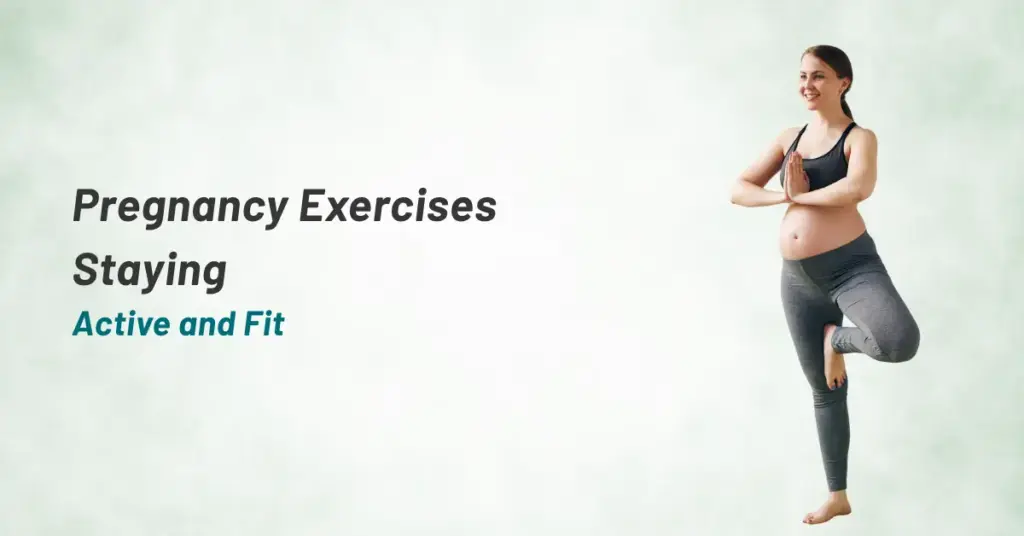
The journey of pregnancy is a remarkable experience that brings with it a multitude of changes. Maintaining a healthy level of physical activity is one aspect that continues to be essential for the well-being of both the expectant mother and the baby. The purpose of this blog is to provide you with information about the advantages of pregnancy exercises, including pregnancy exercises at home, appropriate workout routines, and expert advice that will assist you in remaining active and fit throughout your pregnancy journey.
Benefits of Pregnancy Exercises
- Boosting Energy Levels: Engaging in regular, moderate-intensity exercises, including pregnancy exercises at home, can alleviate feelings of fatigue and boost overall energy levels, essential for navigating the demands of pregnancy.
- Improving Mood and Mental Well-being: Exercise, along with pregnancy breathing exercises, stimulates the release of endorphins, promoting a positive mood and reducing stress and anxiety levels, contributing to a healthier mental state during pregnancy.
- Enhancing Posture and Stability: Targeted exercises can strengthen core muscles, improving posture and providing better support for the additional weight gained during pregnancy.
- Aiding in Labor and Delivery: Building strength and endurance through prenatal exercises can contribute to an easier labor and delivery process, as well as a quicker recovery postpartum.
Suitable Pregnancy Workout Routines
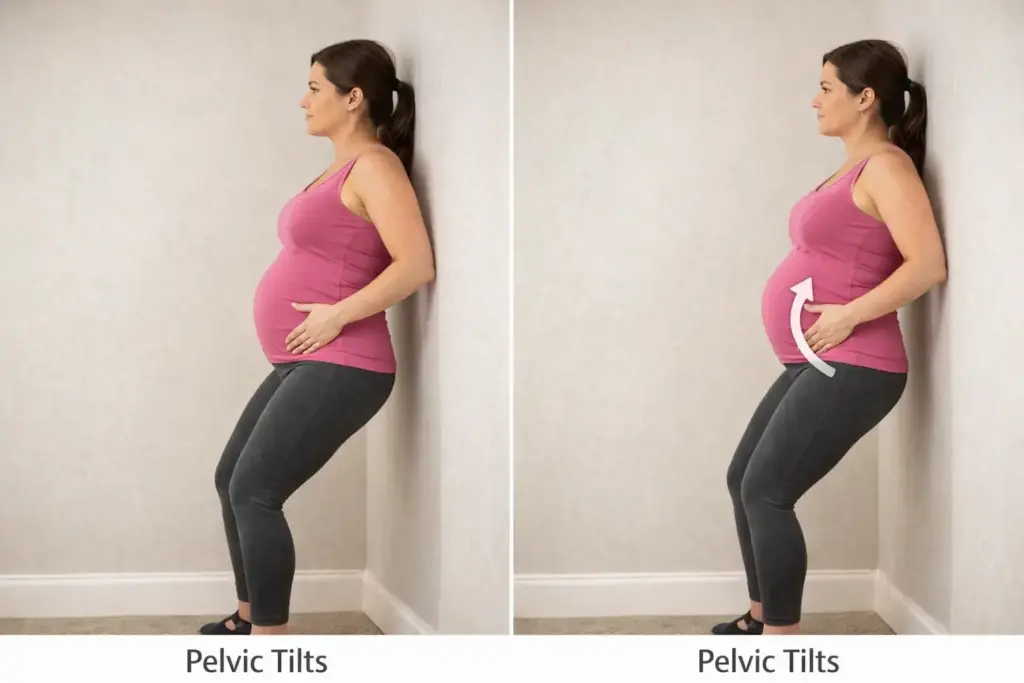
1. Pelvic Tilts (Wall Support)
How to do:
Stand with your back against a wall. Keep your feet slightly away from the wall. Gently tilt your pelvis by flattening your lower back against the wall. Hold for 5 seconds and release.
Repeat 10–15 times. Move slowly and breathe normally.
Why it helps:
This reduces lower back pain. It strengthens abdominal muscles gently. It also improves posture as your belly grows.
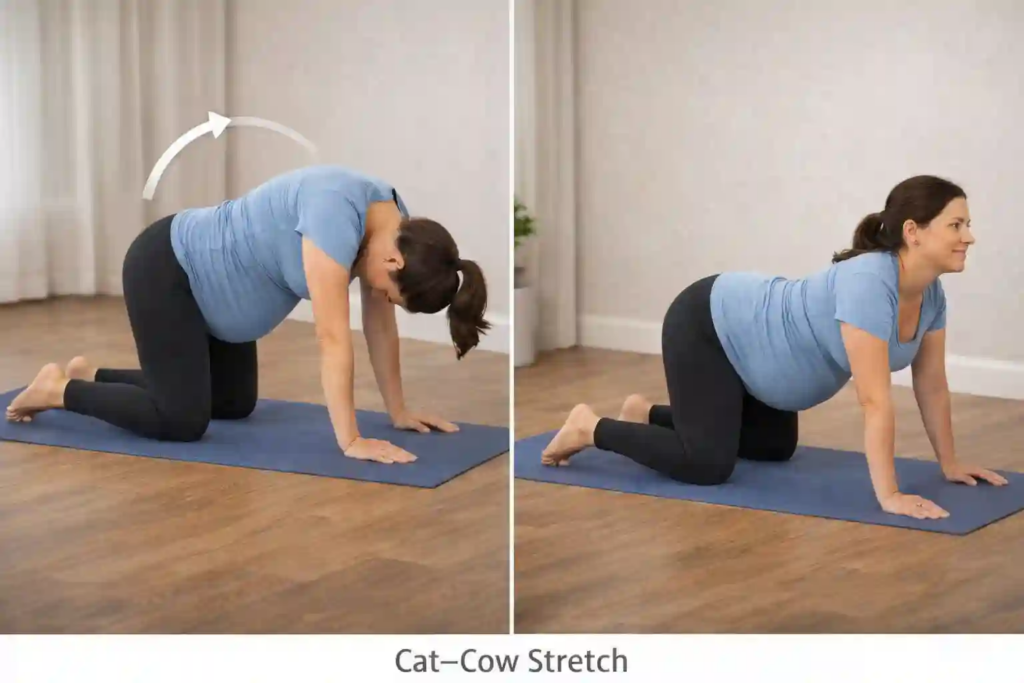
2. Cat–Cow Stretch (On Floor)
How to do:
Get on your hands and knees. Inhale and gently lift your head and tailbone (Cow pose). Exhale and round your back like a cat.
Move slowly with your breath. Repeat for 8–10 rounds.
Why it helps:
It relieves back tension. It improves spinal flexibility. It also helps baby settle into a good position.
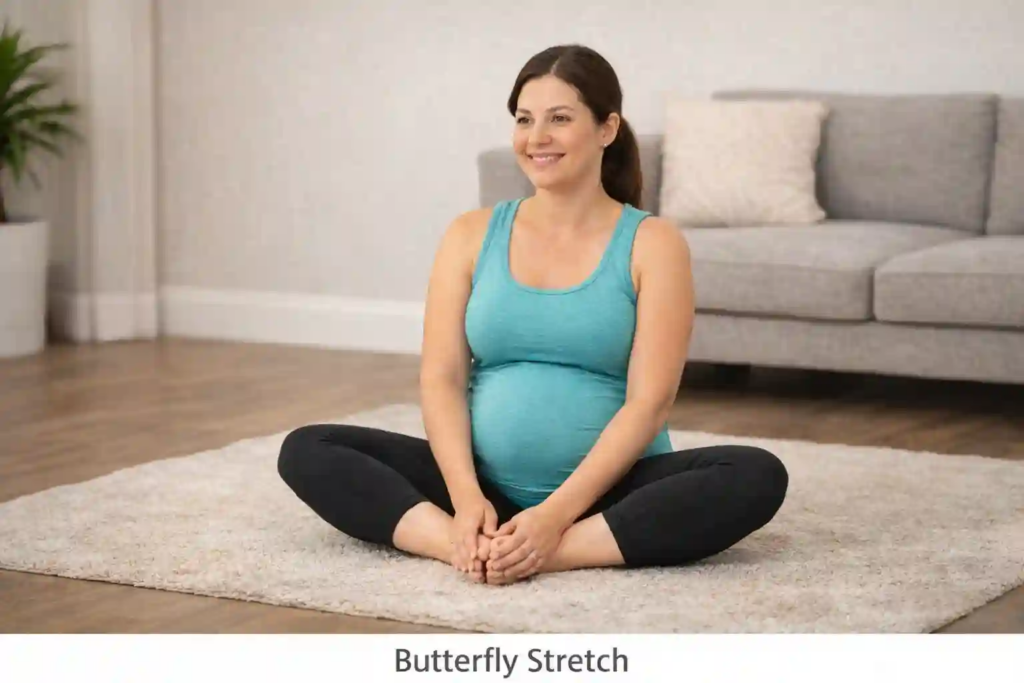
3. Butterfly Stretch (Seated)
How to do:
Sit on the floor. Bring the soles of your feet together. Hold your feet and gently move your knees up and down like butterfly wings.
Do this for 1–2 minutes slowly.
Why it helps:
It opens the hips. It improves blood circulation. It prepares pelvic muscles for delivery.
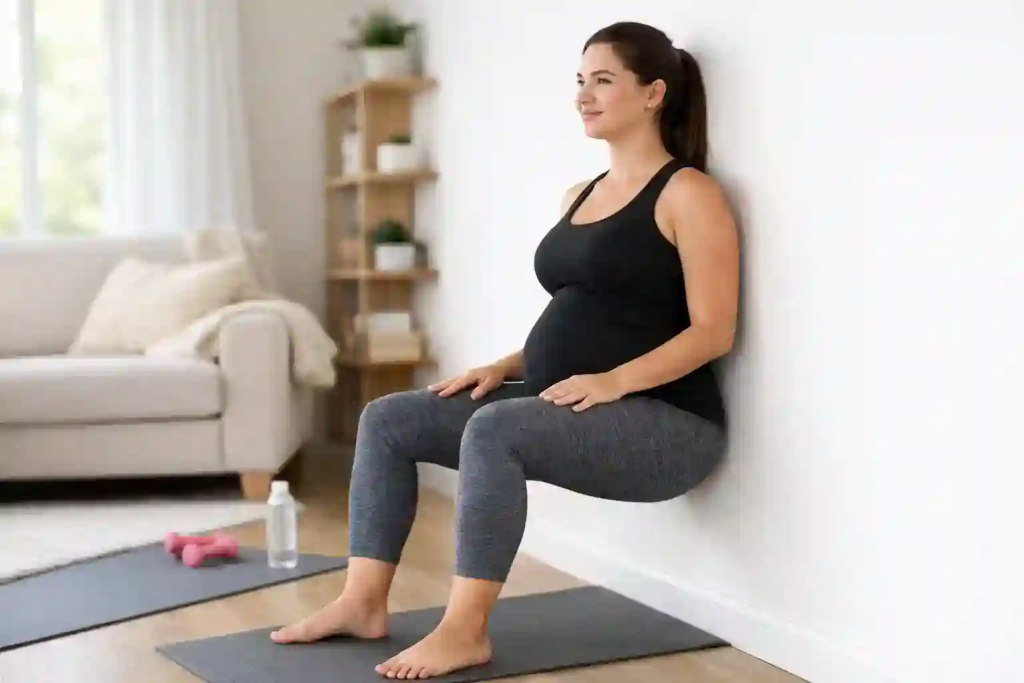
4. Wall Squats (Using Wall)
How to do:
Stand with your back against the wall. Slowly slide down into a squat position. Keep knees behind toes. Hold for 5–10 seconds and slowly come up.
Repeat 8–10 times.
Why it helps:
It strengthens thighs and pelvic muscles. It improves stamina for labor. It supports lower body strength safely.
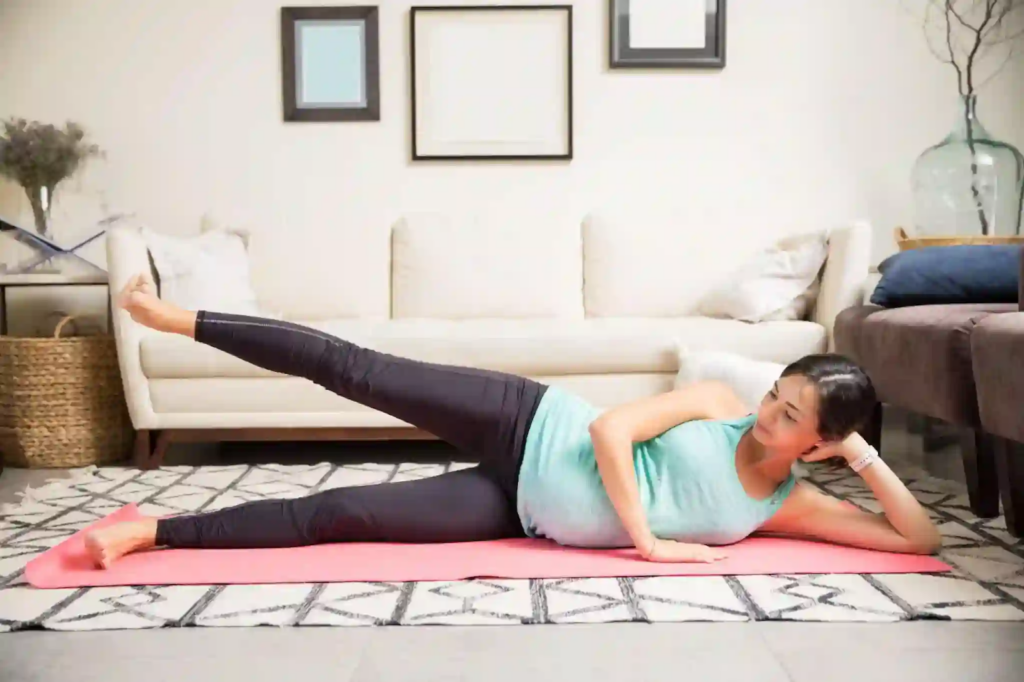
5. Side-Lying Leg Lifts (Using Pillow)
How to do:
Lie on your side with a pillow under your head. Keep your lower leg bent and top leg straight. Slowly lift the top leg and bring it down.
Do 10 repetitions on each side.
Why it helps:
It strengthens hip muscles. It reduces pelvic instability. It supports better balance.
6. Kegel Exercises (Anywhere)
How to do:
Tighten the muscles you use to stop urine flow. Hold for 5 seconds. Relax for 5 seconds.
Repeat 10–15 times. Do this 3 times daily.
Why it helps:
It strengthens pelvic floor muscles. It helps during labor. It reduces urine leakage after delivery.
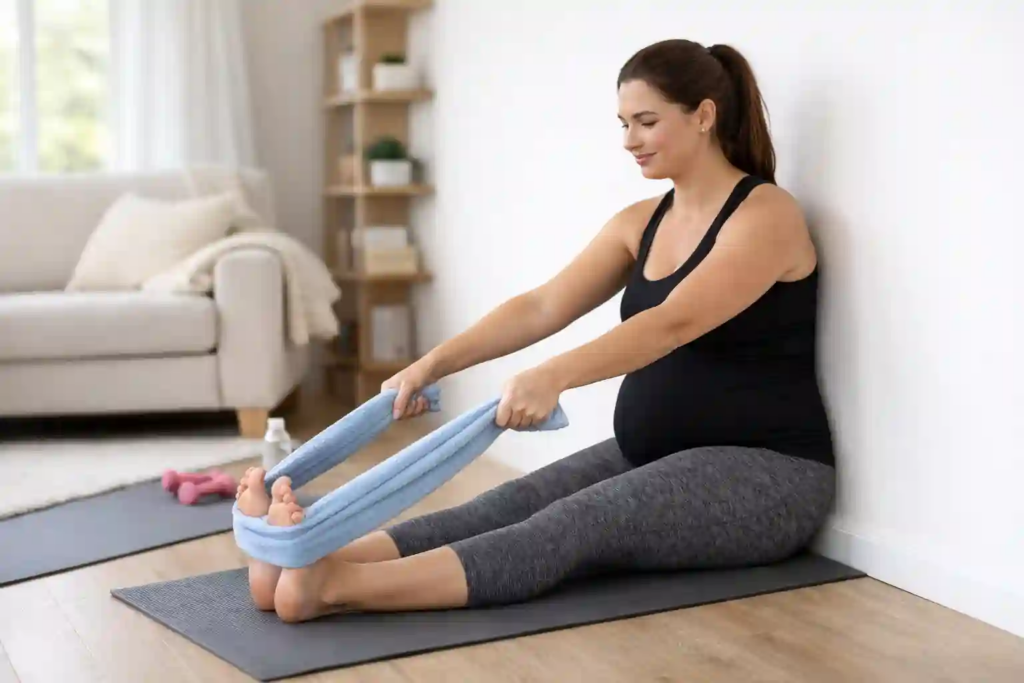
7. Seated Forward Stretch (Using Towel)
How to do:
Sit with legs slightly apart. Hold a towel around your feet. Gently lean forward while keeping your back straight.
Hold for 10 seconds and release. Repeat 5 times.
Why it helps:
It stretches hamstrings gently. It reduces leg stiffness. It improves flexibility safely.
8. Standing Side Stretch
How to do:
Stand with feet hip-width apart. Raise one arm overhead. Slowly bend to the opposite side.
Hold for 5–10 seconds. Repeat on the other side.
Why it helps:
It reduces side body tightness. It improves breathing space. It helps posture as belly grows.
9. Glute Bridge (Using Pillow)
How to do:
Lie on your back with knees bent (only in first and early second trimester). Place a pillow under your hips. Lift your hips gently and lower down.
Repeat 8–10 times slowly.
Why it helps:
It strengthens lower back and glutes. It supports pelvic stability. Avoid this after mid-pregnancy.
10. Gentle Marching in Place (Using Chair Support)
How to do:
Stand holding a chair. Slowly lift one knee up and lower it. Then switch legs.
Continue for 1–2 minutes at a slow pace.
Why it helps:
It improves blood circulation. It reduces swelling. It keeps energy levels stable.
Expert Tips for a Safe and Healthy Pregnancy Exercise Routine
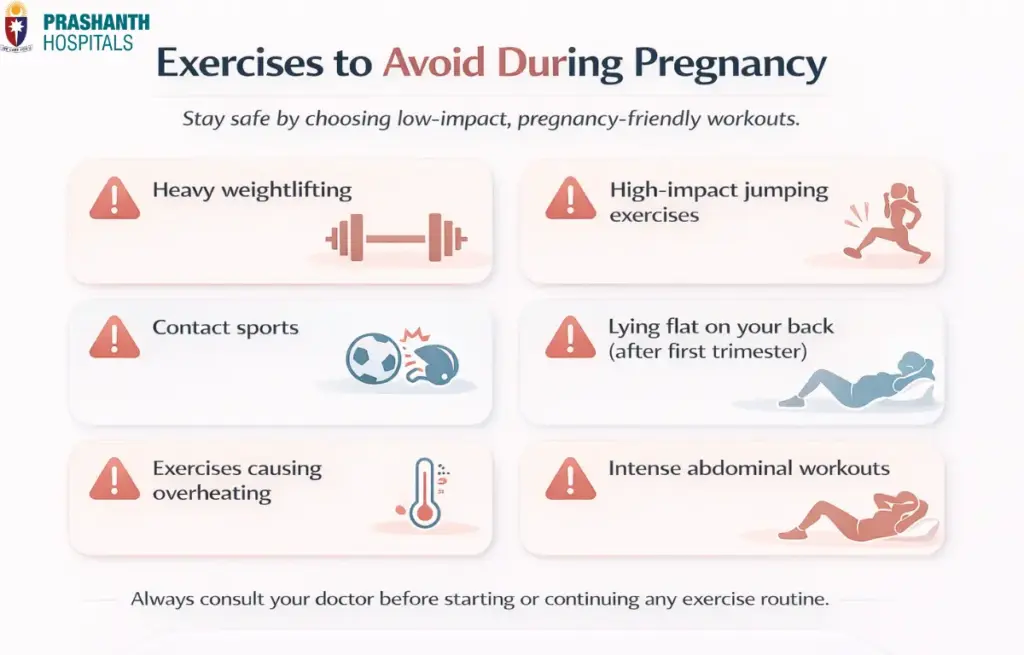
Consult with Your Healthcare Provider – Always seek approval from your healthcare provider before starting or continuing any exercise routine during pregnancy, including pregnancy exercises at home.
- Stay Hydrated – Drink plenty of water to stay hydrated, especially as your body goes through the additional demands of pregnancy.
- Listen to Your Body – Pay attention to your body’s signals and modify or skip exercises that cause discomfort or strain.
- Warm-Up and Cool Down – Include adequate warm-up and cool-down sessions in your workout routine to prepare and soothe your muscles.
- Watch for Warning Signs – Stop exercising immediately if you experience any unusual symptoms such as chest pain, shortness of breath, or persistent contractions.
- Focus on Balance and Stability – Engage in exercises that enhance balance and stability, as your center of gravity shifts during pregnancy.
- Prenatal Fitness Classes – Consider joining prenatal fitness classes led by certified antenatal trainers who are trained to work with pregnant women and can guide you safely, especially when practicing 8 month pregnancy exercise for normal delivery.
Staying active and fit during pregnancy is not only beneficial for the expectant mother but also contributes to a healthier pregnancy overall. By incorporating pregnancy-safe exercises, including pregnancy exercises at home, into your routine, you can navigate the physical and emotional changes with confidence, setting the foundation for a smoother transition into motherhood. Always get approval from your healthcare provider before starting or continuing any exercise routine during pregnancy. Discuss any pre-existing medical conditions, complications, or concerns. Remember, every pregnancy is unique, so it’s crucial to tailor your exercise routine to your individual needs and comfort level.