

For most people, a fever instantly raises the suspicion of an infection. After all, it’s one of the body’s classic responses to fight bacteria or viruses. But is that always the case? Is fever always due to an infection? The short answer is no, not every fever comes from an infection. Understanding the common causes of fever can help you respond appropriately and seek medical help when needed.
This article explores the non infectious causes of fever, explains what non-infectious fever means, and outlines when fever symptoms might require medical attention.
Understanding Fever: What It Really Means
Fever is defined as a temporary rise in body temperature, usually above 100.4°F (38°C). It’s a sign that something abnormal is happening inside your body. Most commonly, fever is part of the immune system’s response to an infection, often linked to the causes of cold and fever, but it’s not exclusive to infections.
When your immune system detects something harmful, it releases chemicals called pyrogens that signal your brain to raise your body temperature. This higher temperature helps your body fight off the invader. But sometimes, your body raises its temperature even when there is no infection present. That’s where the confusion begins.
Is Fever Always Due to an Infection?
It’s a common misconception that fever always means an infection. Although infections are the most frequent cause, they’re not the only reason. Various medical conditions and other factors can also lead to a fever without an infection, highlighting several non infectious causes of fever.
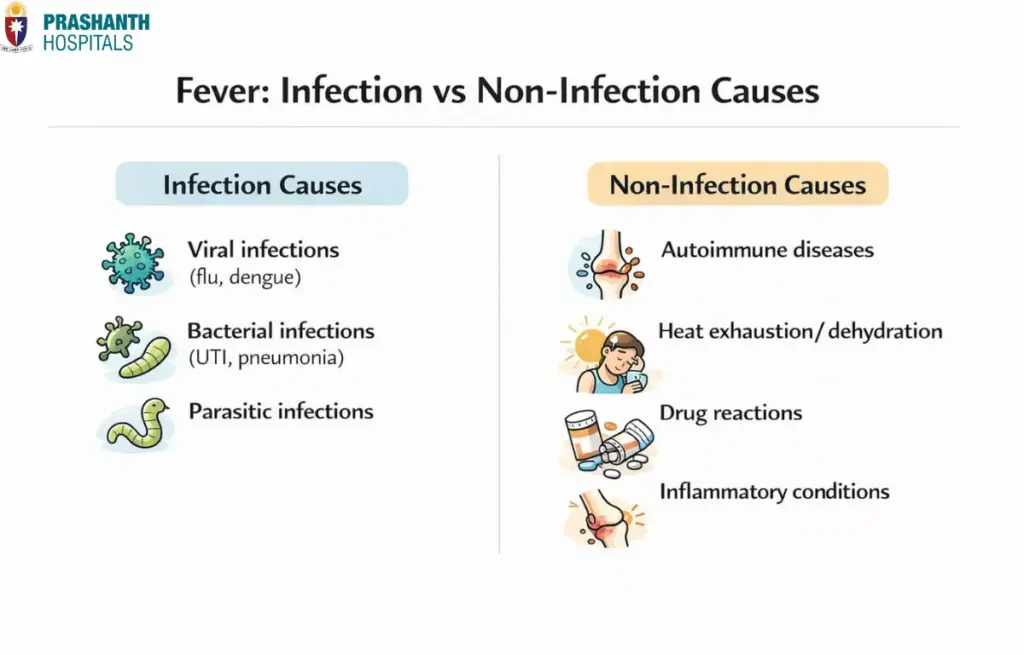
Below are some of the most common non-infectious causes of fever:
5 Common Non-Infectious Causes of Fever
Autoimmune Diseases
Certain autoimmune disorders, like lupus, rheumatoid arthritis, and vasculitis, can cause recurrent fevers. In these conditions, the immune system mistakenly attacks the body’s own tissues, creating inflammation and raising the body’s temperature. These are important non infectious causes of fever that are often overlooked.
Heat-Related Illness
Heat exhaustion and heatstroke occur when your body overheats due to high external temperatures and dehydration. In severe heatstroke, the body loses its ability to regulate temperature, resulting in high fever without infection.
Cancer
Some types of cancer, such as lymphoma and leukemia, can lead to persistent or unexplained fevers. These are also considered serious causes of high fever in adults and require medical evaluation.
Medications
Certain drugs can trigger what’s called a “drug fever.” Some antibiotics, anti-seizure medications, and other drugs may cause your immune system to react abnormally, leading to fever.
Inflammatory Conditions
Conditions like inflammatory bowel disease (Crohn’s disease and ulcerative colitis) can also result in periodic fevers as part of their flare-ups, representing another group of non infectious causes of fever.
These examples show that fever without infection is entirely possible and sometimes signals a serious underlying condition.
When Is a Fever a Sign of Infection?
Although not all fevers come from infections, they still remain the most common cause. Infections that frequently cause fever include:
- Viral infections like the flu, COVID-19, or common cold (common causes of cold and fever)
- Bacterial infections like strep throat, pneumonia, or urinary tract infections
- Parasitic infections such as malaria
If you develop other symptoms alongside your fever, such as cough, sore throat, burning while urinating, or diarrhea, it’s more likely due to an infection.
When to Worry About Fever
Sometimes, fever is a harmless and temporary response that resolves on its own. But there are situations when a fever can indicate a serious medical issue. Here are some warning signs that mean you should seek medical care immediately:
- Fever higher than 104°F (40°C)
- Fever lasting more than 3 days without improvement
- Severe headache, stiff neck, or confusion
- Difficulty breathing or chest pain
- Seizures
- Rash that rapidly spreads
- Severe dehydration or inability to drink fluids
These symptoms may indicate a dangerous infection, inflammatory condition, or another medical emergency. Understanding when to worry about fever can make a critical difference in getting timely treatment.
How to Approach a Fever
If you or someone you care for has a fever, here’s what you can do:
- Rest and stay hydrated.
- Use over-the-counter fever reducers if recommended by your doctor.
- Monitor symptoms and watch for warning signs.
- Avoid overdressing or staying in hot environments.
If you’re unsure about the cause, especially if there are no clear signs of infection, consult a healthcare professional. They may order blood tests, imaging, or other diagnostic procedures to find the root cause.
Can Fever Occur Without Infection?
Yes, fever can occur even without an infection. While many people link fever only to viral or bacterial illness, the body can raise its temperature for other reasons as well. Fever is actually a natural response controlled by the brain when it senses something unusual in the body.
In some cases, this response is triggered by inflammation rather than infection. Conditions like autoimmune disorders, where the body’s immune system becomes overactive, can cause fever. Certain medications can also lead to what is known as drug-related fever. In addition, long-term conditions such as cancer or chronic inflammatory diseases may present with fever without a clear infection.
This is why not every fever needs antibiotics. Understanding that fever can have multiple causes helps avoid unnecessary treatment and ensures the right evaluation is done at the right time.
How to Tell if Fever is Infectious or Non-Infectious
It is not always easy to tell the exact cause of fever at home, but certain patterns can give useful clues. Fever caused by infection usually comes on quickly and may be associated with symptoms like chills, body aches, sore throat, cough, or burning during urination. These signs often point towards a viral or bacterial cause. The fever may settle within a few days with appropriate care.
On the other hand, non-infectious fever tends to be more persistent or recurring without a clear reason. It may not always be associated with typical infection symptoms. Some people may notice fatigue, joint pain, weight loss, or general discomfort without obvious signs of infection. Another key difference is duration. If fever continues beyond a few days or keeps coming back without a clear cause, it is important to look beyond infections. In such cases, doctors may evaluate for underlying conditions like inflammation, medication effects, or other systemic issues.
If you are unsure about the cause of your fever, or if it lasts longer than expected, seeking medical advice is the safest approach. Early evaluation helps identify the cause and ensures proper treatment.
Final Thoughts
So, is fever always due to an infection? No, while infections are the most frequent cause, fevers can also arise from autoimmune diseases, heat-related illnesses, certain cancers, medications, and more, including several non infectious causes of fever. That’s why it’s important to see fever not just as a symptom, but as a clue your body is giving you that something needs attention.
If you’re ever in doubt, or if the fever is high, persistent, or accompanied by serious symptoms, seek medical help right away. By understanding fever and what it signals, you can take the right steps to protect your health and well-being.