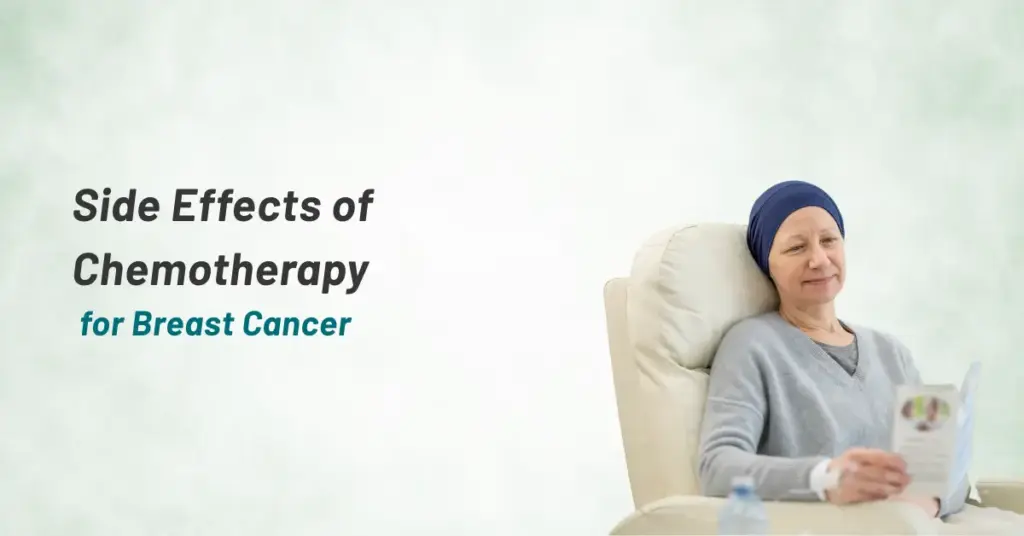
Chemotherapy is a widely used treatment for breast cancer. It helps destroy cancer cells and lower the risk of the disease coming back. Still, many patients and families worry about the side effects of chemotherapy for breast cancer before treatment begins.
That concern is natural. The good news is this: most side effects are expected, temporary, and treatable. Knowing what may happen helps patients feel more prepared and less anxious during treatment.
How Chemotherapy Works & Why Side Effects Happen
Chemotherapy medicines move through the bloodstream to reach cancer cells. Their goal is to stop these fast-growing cells from multiplying.
However, some healthy cells also grow quickly. These include:
- Blood cells
- Hair roots
- Cells in the mouth and digestive system
When these healthy cells are affected, side effects of chemotherapy for breast cancer can occur. The type and intensity of side effects depend on the medicines used, treatment length, and individual health. Most effects improve after chemotherapy ends.
Common Physical Side Effects
Every patient’s experience is different. Some notice only mild discomfort. Others may feel stronger changes during treatment.
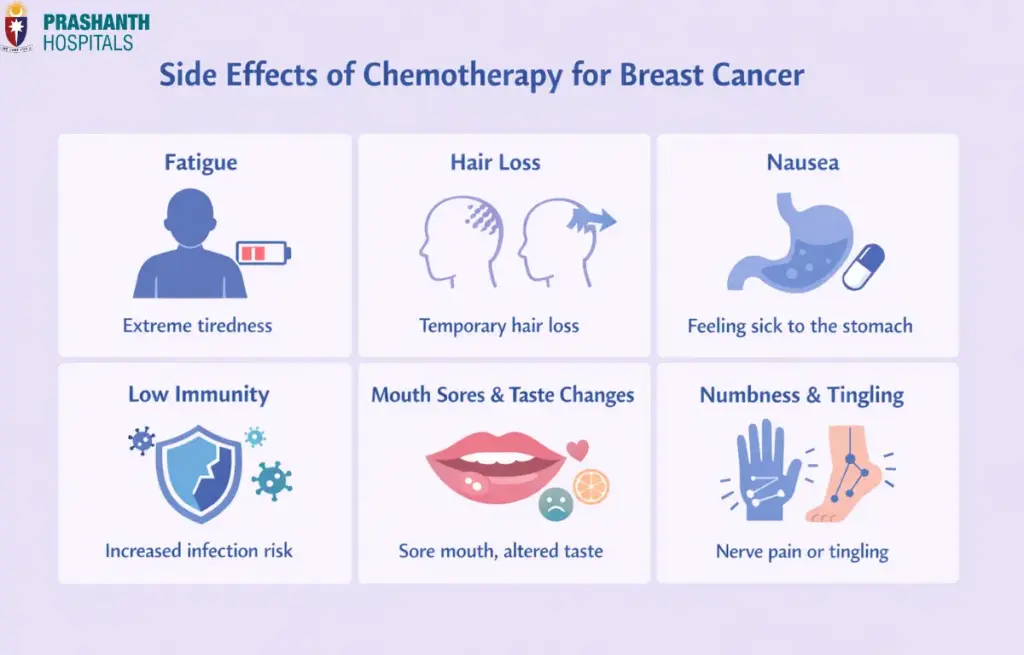
In general, the side effects of chemotherapy for breast cancer affect a few main areas of the body. Understanding them helps patients respond early and seek support when needed.
Blood & Infection-Related Effects
Chemotherapy can lower white blood cell levels. This reduces the body’s ability to fight infections.
You may notice:
- Fever
- Chills
- Frequent infections
- Feeling unwell suddenly
These risks can occur even during chemotherapy for breast cancer stage 1, as the medicines still affect the immune system.
Doctors monitor blood counts closely. If symptoms appear, timely medical care helps prevent complications.
Digestive & Appetite Changes
Digestive problems are common during chemotherapy. Some patients feel sick to the stomach, while others notice bowel changes.
Possible issues include:
- Nausea or vomiting
- Constipation or loose stools
- Loss of appetite
- Changes in taste
These effects may become more noticeable during longer treatments such as 8 cycles of chemotherapy for breast cancer. Eating small meals, staying hydrated, and choosing soft foods can help reduce discomfort.
Hair, Skin & Nail Changes
Hair loss is one of the most well-known effects of chemotherapy. Hair may thin gradually or fall out completely. Skin can become dry or sensitive, and nails may turn brittle or dark.
These changes are common in stronger treatments like chemotherapy for breast cancer stage 3.
It is important to know:
- Hair usually starts growing back after treatment
- Skin and nail changes also improve with time
Gentle care and patience are key during this phase.
Fatigue & Weakness
Fatigue during chemotherapy is different from regular tiredness. It can feel deep and persistent, even after rest.
This is one of the most common side effects of chemotherapy for breast cancer.
Patients may feel:
- Low energy
- Body weakness
- Difficulty completing daily tasks
Helpful steps include resting when needed, doing light activity if possible, and accepting help from family. Managing fatigue is about balance, not pushing too hard.
Hormonal & Reproductive Effects
Chemotherapy can affect hormones, especially in women. Some may notice changes in menstrual cycles or symptoms similar to menopause.
Possible changes include:
- Irregular or stopped periods
- Hot flashes
- Mood changes
These effects can occur even with chemotherapy for breast cancer stage 1, depending on age and medicines used. Patients with fertility concerns should discuss options with their doctor before or during treatment.
Less Common or Long-Term Side Effects
Some side effects may appear later or last longer after treatment ends. These are less common but still important to monitor.
They may include:
- Tingling or numbness in hands and feet
- Joint or bone discomfort
- Heart or lung strain in rare cases
Such effects are monitored closely, especially during chemotherapy for breast cancer stage 3. Regular follow-up visits help detect and manage these issues early.
Management, Support & When to Seek Help
Many side effects of chemotherapy for breast cancer can be controlled with the right care. Doctors may prescribe medicines to reduce nausea, prevent infections, or ease pain.
Self-care also plays an important role:
- Eat nutritious foods
- Drink enough fluids
- Rest well
During longer treatments like 8 cycles of chemotherapy for breast cancer, staying connected with the care team is essential. Contact your doctor if symptoms worsen, feel unusual, or interfere with daily life.
Emotional & Psychological Impact
Chemotherapy affects emotional health as well. Patients may feel anxious, low, or overwhelmed at times. These feelings are common and understandable.
Emotional stress is also part of the side effects of chemotherapy for breast cancer. Support from family, friends, counselors, or support groups can help patients feel less alone during treatment.
Talking openly about feelings is a strong step toward healing.
Conclusion
Chemotherapy plays a vital role in treating breast cancer. While side effects can be challenging, most are temporary and manageable with proper care.
Understanding the side effects of chemotherapy for breast cancer helps patients and families feel informed and reassured. Always share concerns with your doctor and seek help when needed.
With guidance, support, and patience, patients can move through treatment with strength and confidence.
Check out Top 10 Causes of Cancer