
When people hear the word “robotic,” they often imagine machines replacing doctors.
In real clinical practice, that is not how robotic surgery works. Robotic surgery is simply another tool that helps surgeons operate with more control and clarity.
The surgeon plans every step. The technology supports their hands.
At Prashanth Hospitals, we see patients from different age groups—young adults, working professionals, parents, and seniors—who want safe, well-explained surgical options. This article explains robotic surgery in simple terms, answers common doubts, and helps you decide what questions to ask your doctor about robotic surgery in Chennai.
What Is Robotic Surgery
Robotic surgery is a type of minimally invasive surgery. It uses advanced tools to help the surgeon operate with better control. The robot does not work on its own. Your surgeon guides every step.
Here is how it works, in simple terms:
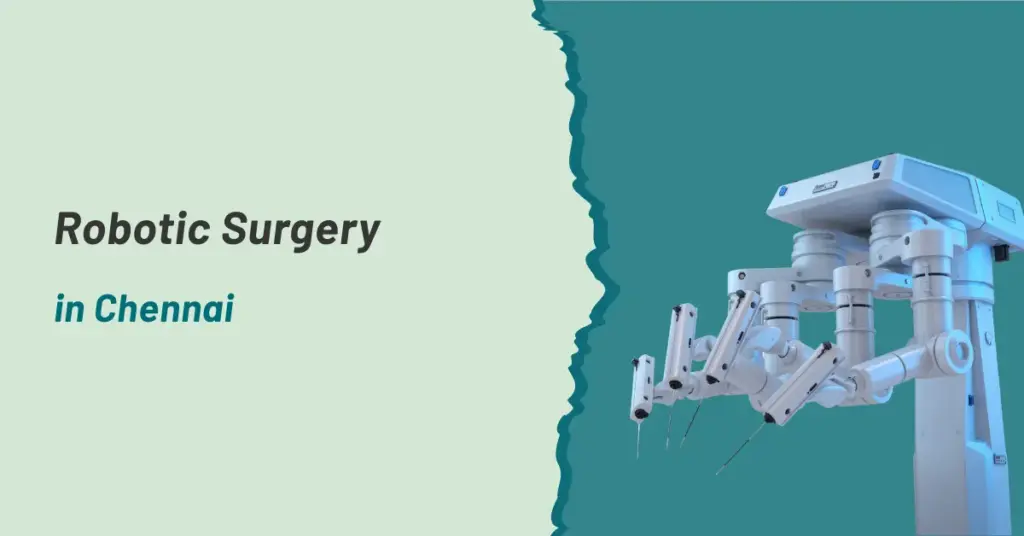
- Robotic arms hold very small surgical instruments. These arms move exactly as the surgeon moves their hands.
- A high-definition camera shows a clear, enlarged, 3D view of the area being treated. This helps the surgeon see fine details clearly.
- A surgical console is where the surgeon sits and controls both the instruments and the camera throughout the surgery.
Think of it like this:
It is similar to driving a car with power steering and advanced safety features. You are still fully in control, but the system helps you drive more smoothly.
For many patients considering Robotic surgery in Chennai, this approach helps surgeons operate in tight or delicate areas where the human hand alone may have limitations.
Conditions Treated
Robotic surgery is used across multiple medical specialties. Not every patient needs it, but for selected cases, it can be helpful.
General and Gastrointestinal Surgery
- Hernia repair
- Gallbladder removal
- Appendix surgery
- Surgery for acid reflux
- Bariatric (weight-loss) procedures
- Colorectal surgeries for non-cancer and cancer conditions
Urology
- Prostate surgery
- Kidney surgery
- Bladder surgery
- Surgery for urinary obstruction or narrowing
Gynecology
- Hysterectomy
- Fibroid removal
- Endometriosis surgery
- Ovarian cyst surgery
Eye Care
- Selected eye procedures, including robotic cataract surgery in Chennai, where precision plays an important role in lens placement
Cancer-Related Procedures
- Certain cancers of the colon, prostate, uterus, and kidney, when suitable
Patients often ask whether robotic surgery is “better” than traditional surgery. The right surgical approach is carefully tailored to your individual condition, anatomy, and overall health after a thorough evaluation by your surgeon.
This is why consultation at an experienced Robotic Surgery Hospital In Chennai matters more than the technology itself.
What Happens During Robot-Assisted Surgery
Understanding the process reduces fear.
Here is what typically happens.
Before Surgery
Before surgery, your doctor clearly explains why robotic assistance is being considered for your condition. You will undergo routine pre-surgery tests, just like any other operation, to ensure you are fit for the procedure. You are also given enough time to ask questions, understand the steps involved, and discuss recovery expectations with confidence.
During Surgery
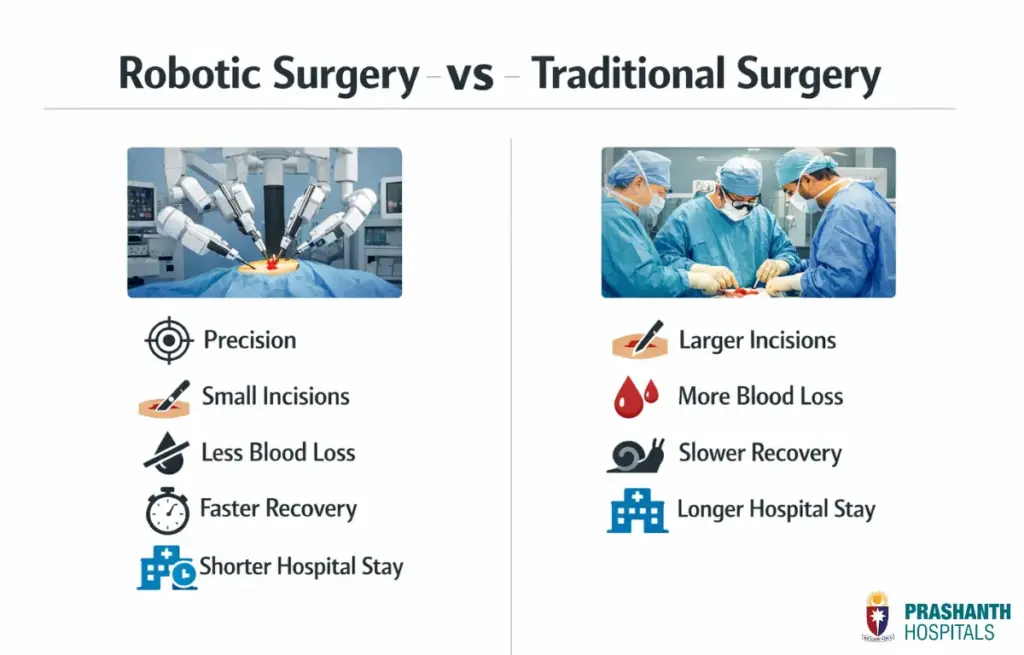
During the procedure, small incisions are made instead of a single large cut. A high-definition camera provides a magnified, three-dimensional view of the surgical area, allowing better precision. The surgeon controls the robotic instruments in real time, and every movement is guided by the surgeon — not automated. Patients undergoing robotic surgery in Chennai are often reassured to know that the surgeon remains in the operating room and is fully responsible for every step.
After Surgery
After surgery, you are moved to the recovery area where your vital signs are monitored closely. Pain control measures are provided, and early movement is encouraged when appropriate. Most patients are able to resume light activities sooner, depending on the type of procedure and their overall health.
Benefits and Risks of Robotic Surgery
No surgery is risk-free. Robotic surgery has advantages, but it also has limitations. Understanding both helps you make a confident and informed decision.
Possible Benefits
Robotic surgery uses smaller cuts, which often means less tissue damage and a smoother recovery. The system provides better precision, especially in delicate areas, allowing the surgeon to work with enhanced control. In many cases, patients experience less blood loss and reduced pain after surgery. For selected procedures, hospital stays may also be shorter.
For example, patients undergoing prostate or colorectal procedures often report a faster return to daily activities when robotic assistance is used appropriately and under expert guidance.
Possible Risks
Like any surgery, robotic procedures carry general risks such as infection or bleeding. It may also not be suitable for every patient or every medical condition. Most importantly, the results depend largely on the surgeon’s experience and the hospital’s surgical expertise.
Choosing a trusted robotic surgery hospital in Chennai with a skilled and coordinated surgical team helps reduce these risks and ensures safe, patient-focused care.
How Long Will It Take to Recover From Robotic Surgery?
Recovery is not the same for everyone.
It depends on the type of surgery, your health, and how well post-surgery advice is followed.
Typical Recovery Patterns
- Many patients walk within a day of surgery
- Hospital stay may be shorter for certain procedures
- Pain is often manageable with simple medications
- Return to work may range from a few days to a few weeks
For eye procedures like robotic cataract surgery in Chennai, recovery is usually quicker, with most patients noticing vision improvement within days.
Your doctor will guide you on:
- When to resume normal food
- When to return to work
- Activity restrictions, if any
- Follow-up visits
Patients considering Robotic surgery in Chennai should always discuss recovery expectations before surgery, not after.
Why Choose Prashanth Hospitals
Technology alone does not define good care. People recover better when they feel informed, supported, and safe. At Prashanth Hospitals, surgical decisions are always based on patient needs, not trends. Our doctors take time to explain every option clearly, so you understand what is best for your condition.
Our multidisciplinary teams work together to provide coordinated treatment and smooth recovery. Post-surgery follow-up is structured and patient-focused, ensuring you continue to receive guidance even after discharge. Many patients come to us after consulting elsewhere, unsure if robotic surgery is right for them. We believe that clarity reduces anxiety and helps families feel reassured.
Our goal is to offer the most appropriate surgical approach for each patient, based on careful clinical evaluation and individual health needs. Every procedure is guided by experienced hands, including a trained robotic surgeon in Chennai who understands both advanced technology and patient concerns. If you are exploring robotic surgery in Chennai, a detailed consultation can help you make a confident and well-informed decision.
Conclusion
Robotic surgery is not about machines replacing doctors. It is about giving surgeons better tools to care for patients with greater precision and control. For selected conditions, robotic-assisted surgery can offer improved accuracy, comfort, and smoother recovery. For others, traditional surgical methods may still be the better choice. The key is informed decision-making based on your individual health needs.
Ask questions. Understand the benefits and possible risks. Know your options clearly before making a decision. If you or a family member is considering surgery, speak with a specialist at Prashanth Hospitals to understand whether robotic assistance is suitable for your condition. A calm and detailed consultation is often the first step toward confident, trusted care. Medical decisions should always be made after personal evaluation and guidance from your doctor.