Robotic surgery in India is transforming the way complex procedures are performed, offering a new level of precision, safety, and faster recovery for patients. With over 75+ advanced robotic systems and hundreds of trained surgeons across the country, this technology is now widely used in specialties like urology, oncology, gynecology, and gastrointestinal surgery.
At Prashanth Hospitals, robotic-assisted procedures are designed to enhance surgical accuracy while minimizing pain, complications, and hospital stay. Using advanced robotic platforms, surgeons can perform highly precise movements through small incisions, improving patient outcomes and recovery experience.
What is Robotic Surgery?
Robotic surgery is a form of minimally invasive surgery. The surgeon uses a robotic system to perform the procedure with high precision. The robot does not act on its own. Every movement is controlled by the surgeon. This technology helps translate hand movements into smaller, more accurate actions. It is often used in areas where precision matters, such as delicate organs or complex procedures.
What is Robotic Surgery in India?
Robotic surgery in India refers to advanced, surgeon-controlled procedures performed using robotic systems in specialized hospitals. It allows for smaller incisions, better precision, and faster recovery compared to traditional surgery, when used appropriately for the patient’s condition.
How Robotic Surgery Works
Surgeon-Controlled Console
The surgeon sits at a specialised console and controls the robotic instruments with complete precision. Every movement made by the surgeon is translated into smaller, steadier actions by the system, helping reduce hand tremors. This level of control is especially useful in complex procedures where accuracy is critical for better outcomes.
Robotic Arms with High Precision
Robotic arms are fitted with tiny surgical instruments that can rotate and move with greater flexibility than the human hand. This allows the surgeon to access hard-to-reach areas with minimal disruption to surrounding tissues. As a result, procedures can be performed with improved precision and less strain on the body.
3D High-Definition Visualization
The system provides a magnified, high-definition 3D view of the surgical area. This enhanced vision helps the surgeon clearly identify delicate structures like nerves and blood vessels. Better visibility supports more accurate decision-making during surgery and can contribute to safer procedures and smoother recovery.
Robotic Surgery Services at Prashanth Hospitals
At Prashanth Hospitals, robotic-assisted surgery is delivered with a clear focus on precision, patient safety, and predictable outcomes. Each case is handled through a structured and transparent approach, ensuring patients feel informed and confident at every stage.
What Makes the Approach Different?
- Detailed Pre-Surgical Evaluation: Every patient undergoes a thorough assessment to determine suitability for robotic surgery and to plan the safest treatment pathway.
- Step-by-Step Treatment Clarity: Surgeons explain the procedure, risks, and expected recovery in simple terms, helping patients make informed decisions without confusion.
- Advanced Robotic Procedures Across Specialties: Expertise extends to complex surgeries, including robotic cardiac surgery in India, along with applications in urology, oncology, and gastrointestinal care.
- Real-Time Monitoring & Surgical Precision: During surgery, advanced robotic systems allow highly controlled movements, supported by continuous monitoring for added safety.
- Focused Post-Surgical Care & Recovery: Patients receive structured follow-up care, aimed at faster healing, reduced complications, and better long-term results.
Why Patients Are Choosing Robotic Surgery Today
Today, many patients are more informed and actively involved in their treatment decisions. They often look for options that are safe, less painful, and allow them to return to their normal routine as quickly as possible. Robotic surgery supports these needs by offering better precision, smaller incisions, and a more comfortable recovery experience.
For example, a working professional may prefer a procedure that helps them get back to work sooner with minimal downtime. A parent may choose a treatment that reduces hospital stay and allows them to resume family responsibilities quickly. Older adults may value reduced strain on the body and a smoother recovery process.
In addition, patients are increasingly choosing robotic surgery because it can lead to less blood loss, lower risk of complications, and shorter hospital stays. With growing awareness and access across India, more families are considering this approach as a reliable and patient-focused option for surgical care.
Why Robotic Surgery is Growing in India
The rapid growth of robotic surgery in India is not accidental—it’s driven by a combination of technology adoption, skilled specialists, and rising patient awareness. Today, more hospitals are investing in advanced robotic systems, and more patients are actively asking for minimally invasive options during consultations.
At Prashanth Hospitals, this shift is clearly visible. Patients are no longer waiting for doctors to suggest options—they come informed, often specifically asking about robotic-assisted procedures for safer and faster recovery.
Key Factors Driving Growth
- Increased Access to Advanced Technology: Robotic systems are no longer limited to a few metro hospitals. Many leading centres are adopting this technology, making it more accessible to patients across different regions.
- Rise in Skilled and Trained Surgeons: India now has a growing number of surgeons trained in robotic techniques, allowing more patients to benefit from precision-driven procedures across multiple specialties.
- Higher Patient Awareness and Demand: With better access to information online, patients understand the benefits—less pain, smaller incisions, and quicker recovery—and actively choose robotic surgery.
- Expansion Across Specialties: Robotic surgery is widely used in urology, gynecology, oncology, cardiology, and gastrointestinal procedures, making it a versatile solution for complex conditions.
- Improved Outcomes and Trust: As more success stories and positive outcomes emerge, patient confidence in robotic surgery continues to increase.
Key Benefits of Robotic Surgery
Robotic-assisted procedures are increasingly chosen because they focus on precision, safety, and a smoother recovery experience. For many patients, especially those worried about pain or long hospital stays, this approach offers a more comfortable alternative when suitable.
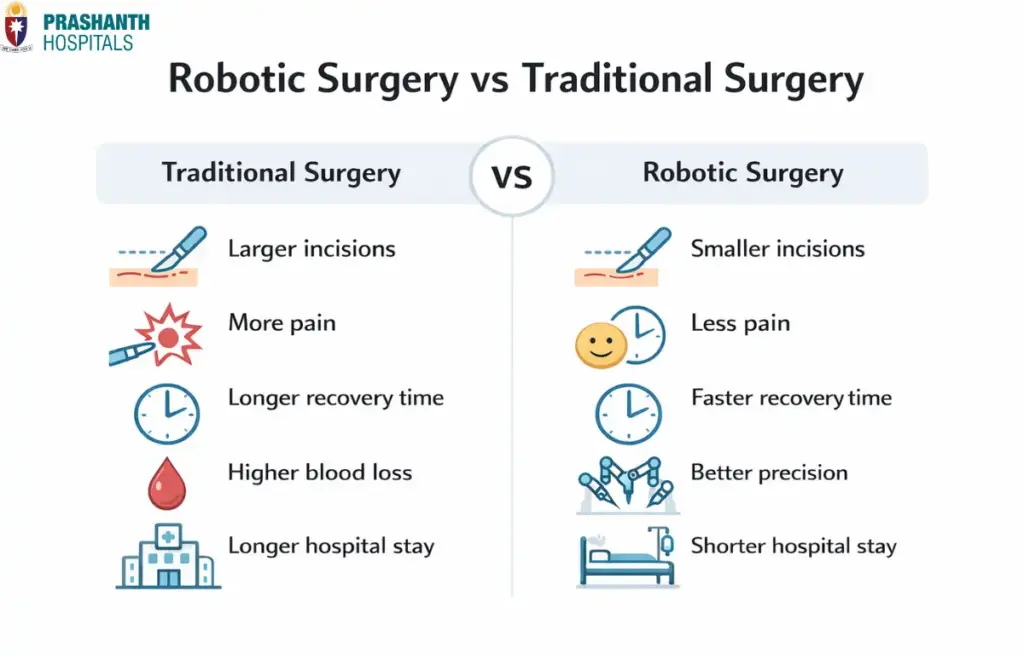
One of the most noticeable advantages is smaller incisions and minimal scarring. Instead of large cuts, surgeons work through tiny openings, which can lead to better healing and less visible marks. This also supports quicker recovery in many cases.
Another important advantage is higher precision and accuracy. The robotic system allows the surgeon to perform controlled and steady movements, which is especially useful in delicate areas of the body. This level of precision can help protect surrounding tissues.
Patients also benefit from less pain and reduced blood loss after surgery. Smaller incisions and careful handling of tissues often result in less discomfort during recovery. This means patients may need fewer pain medications and can feel more at ease after the procedure.
A key reason many people consider this option is the faster recovery time. Patients are often able to return to their daily routine sooner compared to traditional open surgery. In many cases, hospital stays are shorter, which can reduce overall stress for both patients and families.
There is also a lower risk of complications in selected cases. With proper planning and experienced surgical teams, robotic-assisted procedures can support safer outcomes.
In simple terms, the main benefits of robotic surgery include smaller incisions, reduced pain, faster recovery, better precision, and shorter hospital stays. These factors together can improve the overall patient experience when the procedure is appropriate.
Common Procedures Done Using Robotic Surgery
Robotic-assisted surgery is now used across multiple specialties, especially for procedures that require high precision and minimal tissue damage. At Prashanth Hospitals, robotic techniques are applied in both routine and complex surgeries to improve safety, accuracy, and recovery outcomes.
- Urology Surgeries (Prostate, Kidney, Bladder): Used for procedures like prostate cancer surgery, kidney tumor removal, and bladder reconstruction. Robotic precision helps protect nerves, improving outcomes like continence and function.
- Gynecology Surgeries (Fibroids, Hysterectomy, Endometriosis): Commonly used for fibroid removal, hysterectomy, and treatment of endometriosis. Smaller incisions and careful tissue handling support faster recovery and less post-operative discomfort.
- Gastrointestinal Surgeries: Includes procedures involving the stomach, intestines, liver, and pancreas. It allows surgeons to operate in tight spaces with better visualization and control.
- Cardiac Procedures: Selected heart surgeries, including robotic cardiac surgery in India, can be performed without large chest incisions in suitable patients, reducing recovery time and surgical trauma.
- Cancer (Onco) Surgeries: Used for precise tumor removal in cancers such as prostate, colorectal, kidney, and gynecologic cancers. Helps preserve surrounding healthy tissue while ensuring accurate excision.
- Colorectal Surgeries: Applied in surgeries involving the colon and rectum, especially in cancer and complex bowel conditions where access is limited.
- ENT (Head & Neck) Surgeries: Used in selected throat, tongue, and head & neck procedures. Robotic systems support delicate movements in confined anatomical areas.
- Bariatric (Weight Loss) Surgeries: Used for procedures like gastric bypass and sleeve gastrectomy. Smaller incisions help improve recovery and reduce complications in obese patients.
Additional Procedures Using Robotic Surgery
- Thoracic (Chest & Lung) Surgeries: Includes lung tumor removal and mediastinal surgeries. Offers better access inside the chest with minimal invasion.
- Hepatobiliary Surgeries (Liver & Gallbladder): Used for complex liver resections, bile duct procedures, and advanced gallbladder surgeries requiring high precision.
- Pancreatic Surgeries: Helpful in selected pancreatic tumor surgeries where precision is critical due to surrounding vital structures.
- Hernia Repair Surgeries: Used in inguinal, umbilical, and complex hernia repairs, offering improved mesh placement and faster recovery.
- Vascular Surgeries: In selected cases, robotic assistance is used for procedures involving blood vessels, improving accuracy in delicate areas.
- Pediatric Surgeries: Used in carefully selected pediatric cases where minimal invasion and precision are essential for better healing.
- Spine Surgeries (Selected Cases): Robotic guidance can assist in spinal procedures like screw placement, improving accuracy and reducing complications.
- Transplant-Related Procedures (Emerging Use): In advanced centres, robotic techniques are being explored in kidney and liver transplant-related surgeries for improved precision.
Is Robotic Surgery Safe?
Safety is a common concern. Robotic surgery is widely used and follows strict medical protocols. The surgeon remains fully in control throughout the procedure.
Global health bodies, including the World Health Organization (WHO), support the use of minimally invasive techniques when appropriate, as they can reduce complications and support recovery. However, proper patient selection is essential.
What to Expect Before, During, and After Robotic Surgery
Before Surgery (Consultation and Tests)
Doctors evaluate your condition, review your medical history, and suggest necessary tests like scans or blood work. They explain why robotic surgery is recommended and guide you on preparation steps such as fasting or medication changes.
During Surgery (Procedure Overview)
The surgeon performs the procedure using robotic instruments through small incisions. A high-definition 3D view allows precise movements, helping reduce damage to surrounding tissues and improving surgical accuracy.
After Surgery (Recovery and Follow-Up)
Patients are monitored for recovery, with less pain and faster healing compared to traditional surgery. Doctors provide guidance on medications, activity levels, and follow-up visits to ensure smooth recovery.
Who is Suitable for Robotic Surgery?
Robotic surgery may be suitable for:
- Patients needing precise surgical care.
- Individuals looking for faster recovery.
- Conditions where minimally invasive methods are beneficial.
A doctor’s evaluation is important to decide suitability.
Cost of Robotic Surgery in India
The cost of robotic surgery in India can vary based on several factors, including the type of procedure, hospital infrastructure, and the experience of the surgical team. More complex surgeries or those involving advanced care may require higher resources.
While this approach may cost more than traditional surgery, many patients consider the overall value. Shorter hospital stays, faster recovery, and an earlier return to daily activities can reduce indirect costs such as time away from work and long-term care needs.
Risks and Limitations of Robotic Surgery
Robotic surgery is advanced, but it’s not a one-size-fits-all solution. Certain complex conditions, patient health factors, or emergency situations may still require traditional or open surgery. It also depends heavily on the surgeon’s expertise. Specialized training and access to advanced robotic systems are essential, which means not every hospital is equipped to offer it.
In some regions, availability can be limited, and the cost may be higher compared to conventional procedures. That’s why understanding both the benefits and limitations helps patients make informed, realistic decisions about their treatment.
What Global Health Experts Say About Robotic Surgery
Trusted organizations highlight that minimally invasive procedures can improve surgical outcomes when used appropriately. Research suggests that robotic-assisted techniques may reduce recovery time and improve precision in selected cases.
However, experts also stress that results depend on the surgeon’s experience and proper patient selection.
Why Choose Prashanth Hospitals for Robotic Surgery?
Milestone Achievement in Robotic Orthopedics
Prashanth Hospitals marked a major milestone with the launch of Chennai’s first fourth-generation robotic system for knee replacement – VELYS by Johnson & Johnson. This advanced system sets a new benchmark in precision-driven orthopedic care.
The inauguration of the Robotic Joint Reconstruction Centre by Dr. Mayilvahanan Natarajan highlights the hospital’s commitment to bringing next-generation surgical technology to patients.
With this innovation, knee replacement procedures are performed with enhanced accuracy, better implant alignment, and improved overall outcomes—helping patients achieve smoother recovery and long-term joint function.
What Sets Prashanth Hospitals Apart?
- 700+ Bed Advanced Infrastructure: Equipped to manage complex robotic surgeries with continuous clinical support and multidisciplinary care.
- Patient-First Approach: Patients are guided through every stage—from diagnosis to recovery—with clear communication and structured support.
- Careful Treatment Planning: Every case is evaluated in detail to ensure robotic surgery is the most suitable and safest option.
- Precision-Driven Robotic Technology: Advanced systems enable controlled, accurate surgical movements, reducing complications and supporting faster healing.
- End-to-End Surgical Care: From pre-operative evaluation to post-surgical rehabilitation, patients receive coordinated and continuous care.
- Focus on Long-Term Outcomes: Emphasis is placed on sustained recovery, improved mobility, and better quality of life after surgery.
Future of Robotic Surgery in India
The future of robotic surgery in India is growing steadily. More hospitals are adopting this technology, and awareness among patients continues to increase. With ongoing advancements, robotic-assisted procedures are expected to become more accessible across different regions.
Choosing the Right Hospital for Robotic Surgery
- Experience of the Surgical Team: Choose a hospital with trained and experienced surgeons who regularly perform robotic procedures. Their expertise helps ensure safer surgery and better outcomes.
- Availability of Advanced Systems: The hospital should have modern robotic systems and proper infrastructure. A well-equipped setup supports smooth and safe surgical care.
- Post-Surgery Care and Follow-Up: Good recovery care is important after surgery. Regular follow-ups and proper guidance help patients heal faster and avoid complications.
- Patient Support and Communication: Clear communication helps patients understand the procedure and feel confident. Supportive staff can make the overall experience more comfortable.
Conclusion
Surgery can feel stressful, but understanding your options can make a big difference. Advances like robotic-assisted procedures are helping patients go through surgery with more comfort and confidence. If you are considering treatment, it is always best to consult a qualified doctor to understand what is right for your condition. At Prashanth Hospitals, patients are supported with clear guidance and thoughtful care throughout their journey.