For more than a century, the image of surgery remained largely unchanged: a surgeon standing over a patient, making a precise incision to view and treat an internal health issue. This “open” method has saved countless lives and remains a cornerstone of modern medicine. However, the 21st century has introduced a quiet revolution in the operating room.
Today, technology has advanced to the point where surgeons can operate through tiny openings using high-definition cameras and robotic arms. If you or a family member has been told you need an operation, you are likely weighing the options between robotic surgery vs traditional surgery.
It is natural to feel a mix of curiosity and anxiety. Will a robot be as safe as a human hand? Is the extra cost worth it? This guide explores the evolution of the operating room, the science behind the technology, and how to decide which path is right for your unique health journey.
What is Robotic-Assisted Surgery?
The term “robotic surgery” can be a bit misleading. It often conjures up images of an autonomous machine programmed to perform an operation on its own. In reality, the technology is more like a highly advanced set of tools that respond to a human master. It is more accurately called robotic-assisted surgery.
How the System Works
The most common robotic systems consist of three main components:
- The Surgeon’s Console: This is the “brain” of the operation. The surgeon sits in a comfortable, ergonomic chair a few feet away from the patient. They look into a viewfinder that provides a high-definition, three-dimensional (3D) view of the surgical site.
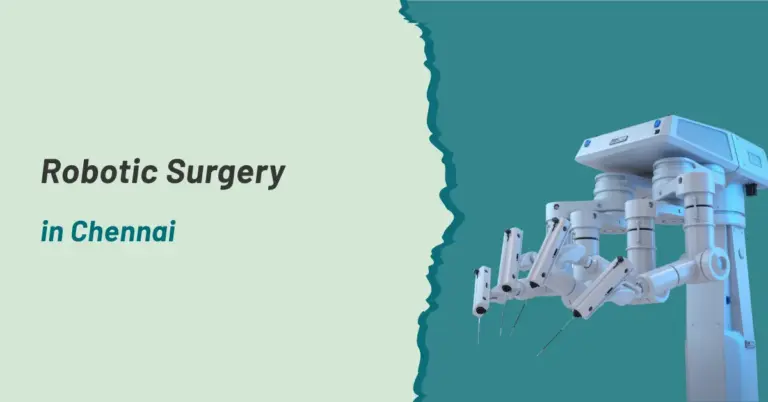
- The Patient-Side Cart: This cart holds several interactive robotic arms. One arm holds a 3D camera (endoscope), while the others hold tiny surgical instruments (such as scissors, graspers, or needles) that are much smaller than a human hand.
- The Interactive Controls: The surgeon uses hand and foot controls to move the robotic arms. The system translates these movements in real-time, filtering out any natural hand tremors. If the surgeon moves their hand one inch, the robotic instrument might move only a fraction of that distance, allowing for incredible precision.
What is Traditional Open Surgery?
While robotics is the “new kid on the block,” traditional open surgery is often referred to as the “gold standard.” It is the method most surgeons were originally trained in and has been refined over generations.
In traditional surgery, the surgeon makes a single incision that is large enough to see the surgical area directly with the naked eye. This allows the surgeon to reach in and manipulate tissues using standard surgical tools.
While the medical world is moving toward “minimally invasive” options, there are many scenarios where traditional surgery is still the safest and most effective choice. For example, in emergency trauma cases or complex organ reconstructions, the speed and direct access of open surgery are irreplaceable.
Robotic Surgery: Pros and Cons
When comparing robotic surgery vs traditional surgery, the robotic side of the scale is tipped heavily toward precision and recovery. However, no technology is without its drawbacks.
The Advantages
- Enhanced Precision and Range of Motion: Human wrists have limits. Robotic instruments, however, have technology that allows them to rotate 360 degrees and move in ways the human hand cannot.
- Superior Visualization: The 3D magnification allows surgeons to see tiny nerves and blood vessels that might be difficult to spot in traditional surgery.
- Minimally Invasive: Because the incisions are small (often no larger than a dime), there is significantly less trauma to the surrounding skin and muscle.
- Faster Recovery: Patients often experience less post-operative pain, lose less blood, and can return to their daily routines much sooner.
The Disadvantages
- The “Haptic” Gap: One of the biggest challenges is that the surgeon cannot “feel” the tissue. They rely entirely on visual cues.
- Cost and Accessibility: The cost of robotic surgery vs traditional surgery is a major factor. The equipment costs millions of dollars to purchase and maintain, which often leads to higher surgical fees.
- Learning Curve: Operating a robot requires specialized training. Not all surgeons are certified or experienced enough to use these systems for every procedure.
Traditional Surgery: Pros and Cons
Choosing traditional surgery vs robotic surgery is often a matter of clinical necessity rather than just preference.
The Advantages
- Direct Tactile Feedback: Surgeons can feel the difference between a hard tumor and soft healthy tissue. This “sense of touch” is a powerful tool in complex oncology or vascular cases.
- Lower Cost: Without the need for expensive robotic disposables and maintenance, traditional surgery is almost always the more affordable option.
- Proven Reliability: There are no technical “glitches” or system errors to worry about. If a complication arises, the surgeon is already in a position to handle it immediately.
The Disadvantages
- Longer Healing Time: A 6-inch incision takes much longer to knit back together than three half-inch incisions.
- Higher Risk of Infection: Larger wounds are exposed to the environment longer, which slightly increases the risk of post-surgical infections.
- Increased Pain and Scarring: More trauma to the body wall results in a greater need for pain medication and more visible permanent scarring.
Comparison Table: At a Glance
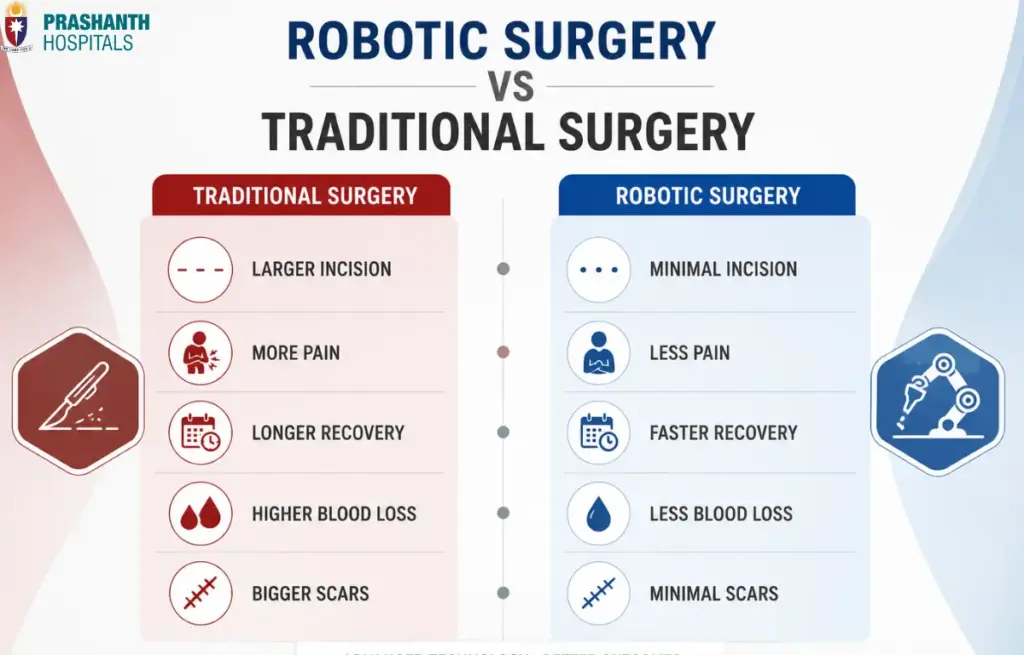
To help you visualize the differences, here is a summary of how robotic surgery vs traditional surgery compares across key patient concerns:
| Feature | Robotic-Assisted Surgery | Traditional Open Surgery |
| Incision Size | Tiny “keyhole” cuts (8mm to 12mm) | One large incision (several inches) |
| Blood Loss | Minimal | Moderate to High |
| Hospital Stay | Often 24 to 48 hours | Often 3 to 7 days |
| Precision | Computer-enhanced / Tremor-free | Human-manual |
| Surgeon’s View | 10x Magnified 3D HD Video | Direct line-of-sight |
| Tactile Feel | Visual only | Full sensory touch |
| Post-Op Pain | Generally lower | Generally higher |
The Decision Matrix: Which One is Right for You?
Selecting between traditional surgery vs robotic surgery is a decision that should be made in partnership with your surgical team. It is not a “one size fits all” answer.
1. The Type of Procedure
Some surgeries have seen a massive shift toward robotics because the benefits are so clear. For example, prostatectomies and certain gynecological surgeries are now almost exclusively robotic in many top-tier hospitals. However, for a simple appendectomy, traditional or standard laparoscopic surgery might be just as effective and much cheaper.
2. Robotic vs Traditional Knee Replacement Surgery
This is a common point of debate for orthopedic patients. In robotic vs traditional knee replacement surgery, the robot helps the surgeon plan the bone cuts with sub-millimeter accuracy based on a 3D model of your knee. While this can lead to a more “natural” feeling joint, many surgeons argue that a skilled hand can achieve the same result in traditional vs robotic knee replacement surgery without the extra expense.
3. Your Personal Health History
If you have had multiple abdominal surgeries in the past, you may have significant scar tissue (adhesions). In these cases, a robot might have difficulty navigating, and a traditional open approach might be safer to avoid accidental injury to nearby organs.
When to Consult a Specialist
If your doctor recommends surgery, ask for a consultation with a specialist who is trained in both techniques. This ensures you get a balanced opinion. You should seek a second opinion if:
- You are concerned about the recovery time of an open procedure.
- You have been told you are “not a candidate” for robotic surgery but want to understand why.
- You are worried about the cost of robotic surgery vs traditional surgery and need to explore more affordable alternatives.
Robotic Surgery Cost in India
For many patients, especially those paying out-of-pocket or with limited insurance, the financial aspect is significant. In India, the cost of robotic surgery vs traditional surgery typically reflects a premium of ₹1,50,000 to ₹4,00,000.
This price difference covers the specialized robotic instruments that are replaced after every few uses and the advanced software updates required for the machines. However, when you factor in the “hidden” savings (such as fewer days spent in an expensive hospital room and a faster return to your job), the total economic impact might be smaller than it appears on paper.
Conclusion
The debate of robotic surgery vs traditional surgery is not about replacing humans with machines. It is about giving human surgeons better “eyes” and more precise “hands.”
While robotic systems offer incredible benefits in terms of smaller scars and faster healing, traditional surgery remains a vital, life-saving tool that offers surgeons a physical connection to their patients that technology cannot yet replicate.
The most important factor is not the tool; it is the surgeon holding it. Whether you choose the high-tech precision of a robot or the time-tested reliability of an open incision, ensure you are working with a medical team you trust. Your health, comfort, and long-term quality of life are the only metrics that truly matter in the operating room.