Do your legs often feel cold, numb, or unusually tired? Poor circulation might be the reason. Many people experience reduced blood flow in their lower limbs without even realizing it. So, what causes poor circulation in the legs? And how can you recognize it early and get the right treatment?
This guide explains the common causes of leg circulation problems, key symptoms to watch out for, and treatments for improving blood circulation in legs to help you feel better and stay active.
Why Is Circulation Important for Your Legs?
Your circulatory system delivers oxygen-rich blood to every part of your body. In your legs, healthy circulation keeps tissues nourished, prevents cramps and fatigue, and promotes healing when you’re injured. When blood flow is impaired, it can lead to discomfort, ulcers, infections, or even serious complications if left untreated.
That’s why knowing what causes poor blood circulation in the legs is so important, early intervention can improve outcomes significantly.
What Causes Poor Blood Circulation in the Legs?
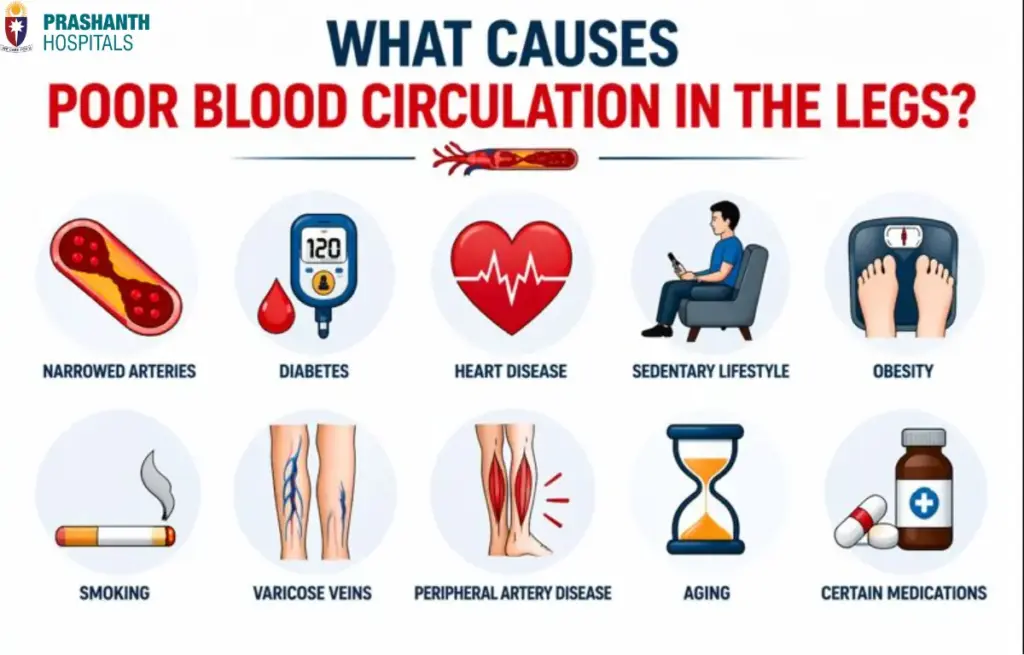
Several conditions can reduce blood flow to your lower limbs. Here are the most common causes of leg circulation problems:
Peripheral Artery Disease (PAD)
PAD is one of the leading causes of poor leg circulation. It occurs when arteries become narrowed or blocked due to plaque buildup (atherosclerosis). This limits blood flow, especially during physical activity, and can cause pain known as claudication.
Risk factors for PAD include smoking, high cholesterol, high blood pressure, diabetes, and obesity.
Diabetes
High blood sugar damages blood vessels and nerves, which can lead to reduced circulation. Diabetic neuropathy also makes it harder to feel injuries, increasing the risk of ulcers and infections in the legs and feet.
Deep Vein Thrombosis (DVT)
A blood clot in a deep vein can partially or completely block blood flow. This condition is serious because it can also lead to a pulmonary embolism if the clot travels to the lungs.
Chronic Venous Insufficiency (CVI)
In CVI, the veins in your legs have trouble returning blood to the heart. This causes blood to pool in the lower limbs, leading to swelling, varicose veins, and skin changes.
Other Factors
Other contributors to poor circulation include:
- Sedentary lifestyle
- Obesity
- Smoking
- Certain heart conditions
- Prolonged standing or sitting
By addressing these underlying issues, you can improve your circulation and reduce symptoms.
Symptoms of Poor Circulation in Legs
How do you know if you have a circulation problem? Here are some of the most common poor blood circulation symptoms in legs:
- Cold feet or legs
- Numbness or tingling (pins and needles sensation)
- Swelling in the lower legs, ankles, or feet
- Cramping or pain when walking (claudication)
- Weak or absent pulses in the feet
- Slow-healing wounds or ulcers on the legs or feet
- Shiny or discolored skin
If you notice these poor circulation signs and remedies like lifestyle changes don’t help, consult a doctor as soon as possible.
Why It’s Important to Act Early
Ignoring circulation problems can lead to serious complications, such as infections, tissue death (gangrene), or even limb amputation in severe cases. That’s why recognizing the symptoms and understanding what causes poor blood circulation in the legs is crucial for early treatment.
Treatments for Poor Circulation in Legs
The good news is that many treatments for poor circulation in legs are available, depending on the cause and severity of your condition.
Here are some of the most common approaches:
Lifestyle Changes
- Quit smoking — Smoking damages blood vessels and worsens circulation.
- Exercise regularly — Walking, swimming, or cycling improves blood flow and strengthens your heart.
- Eat a heart-healthy diet — Focus on fruits, vegetables, lean proteins, and whole grains.
- Manage chronic conditions — Control diabetes, high blood pressure, and high cholesterol.
- Maintain a healthy weight — Excess weight increases strain on your circulatory system.
Medications
Depending on your condition, your doctor may prescribe:
- Blood thinners to prevent clots
- Cholesterol-lowering drugs (statins)
- Medications to improve blood flow in PAD
- Diabetes medications to control blood sugar
Compression Therapy
For venous insufficiency, wearing compression stockings helps push blood back toward the heart and reduces swelling.
Medical Procedures
In severe cases, procedures such as angioplasty, stent placement, or bypass surgery may be needed to restore blood flow.
Risk Factors for Poor Blood Circulation in Legs
Several everyday habits and health conditions can increase the risk of reduced blood circulation in legs. Understanding these risk factors helps you take early steps to protect your vascular health.
- Smoking damages blood vessels and reduces oxygen supply, making circulation less efficient.
- Diabetes affects both blood vessels and nerves, increasing the chances of circulation problems.
- High blood pressure and cholesterol can narrow arteries over time.
- Obesity puts extra strain on the heart and reduces healthy blood flow.
- Sedentary lifestyle slows down blood circulation in legs, especially if you sit for long hours.
- Ageing naturally affects blood vessel elasticity and flow.
If you’ve been wondering what causes poor circulation, it is often a combination of these factors rather than a single issue. Managing them early can prevent complications later.
Exercises to Improve Blood Circulation in Legs
Regular movement is one of the simplest and most effective ways to improve blood circulation in legs. You don’t need intense workouts—consistent, gentle activity works well.
- Walking: A daily 20–30 minute walk helps pump blood efficiently through your legs.
- Ankle rotations: Rotate your ankles while sitting or lying down to keep blood moving.
- Calf raises: Standing on your toes and lowering slowly strengthens muscles and improves flow.
- Leg lifts: Lifting your legs while lying down supports better circulation.
These exercises are especially helpful if you notice early poor blood circulation symptoms like numbness, heaviness, or mild swelling. Staying active keeps your muscles engaged and supports healthy blood flow.
Foods That Improve Blood Circulation in Legs
What you eat plays a direct role in maintaining healthy blood circulation in legs. A balanced diet supports your blood vessels and reduces inflammation.
- Leafy greens like spinach and kale improve blood flow due to their nitrate content.
- Garlic helps relax blood vessels and supports smoother circulation.
- Berries are rich in antioxidants that protect vessel health.
- Fatty fish like salmon provide omega-3 fatty acids that improve circulation.
- Citrus fruits strengthen blood vessels and support heart health.
Choosing the right foods regularly can improve circulation naturally and support overall vascular function.
How to Improve Blood Flow in Legs Daily
Along with medical treatment, you can adopt simple habits to promote circulation:
- Elevate your legs when resting to reduce pooling of blood.
- Avoid sitting or standing for long periods — move every 30–60 minutes.
- Stay hydrated to keep your blood flowing easily.
- Wear comfortable shoes and avoid tight clothing that restricts blood flow.
These tips can help you maintain healthy circulation and prevent symptoms from worsening.
When to See a Doctor
Seek medical attention right away if you experience:
- Severe or sudden leg pain
- Skin ulcers or wounds that won’t heal
- Skin turning blue or black
- Swelling and warmth in one leg (possible DVT)
These could be signs of a serious condition that needs immediate treatment.
Final Thoughts
So, what causes poor blood circulation in the legs? The most common culprits are conditions like PAD, diabetes, venous insufficiency, and lifestyle factors like inactivity and smoking. Recognizing the symptoms of poor circulation in legs early and getting appropriate care can help prevent complications and improve your quality of life.
By making healthy lifestyle changes, following your doctor’s advice, and supporting better blood circulation in legs, you can keep your legs strong, healthy, and pain-free for years to come.
If you’re experiencing any signs of poor circulation, don’t wait schedule a checkup and take the first step toward better vascular health today.