
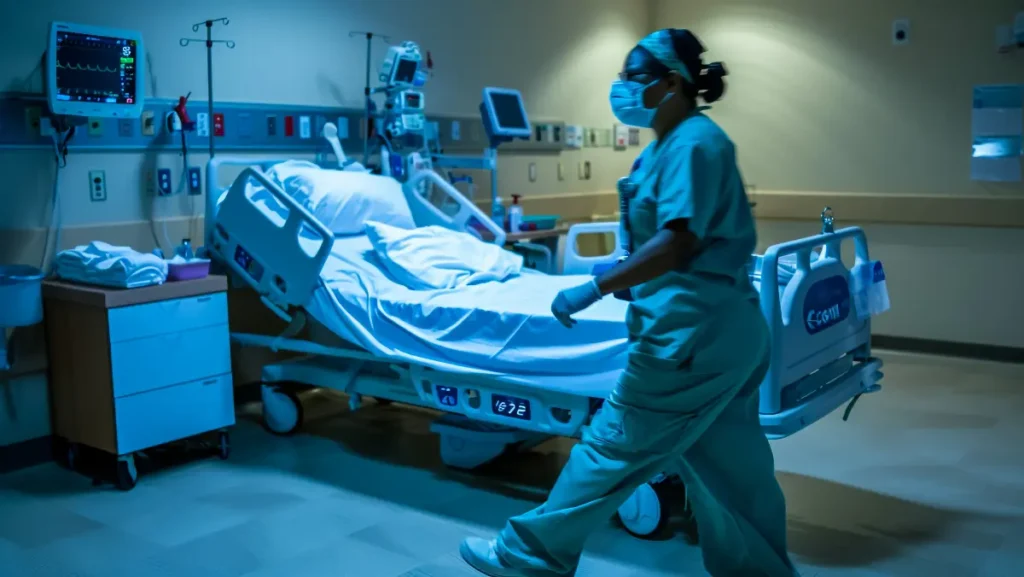
The Intensive Care Unit (ICU) at Prashanth Hospitals provides specialised, round the clock care for critically ill patients. Our ICU is equipped with advanced monitoring systems and life support technology, so patients with life threatening conditions receive close attention and timely treatment.
Our trained team of specialists, nurses and paramedics follows established guidelines such as Advanced Cardiac Life Support (ACLS) and Advanced Trauma Life Support (ATLS) to keep patients safe.
How Our ICU Helps Patients
- Constant watch: Heart rate, blood pressure, oxygen levels and breathing are monitored continuously, so any change in the patient’s condition can be noticed and treated quickly.
- Specialised units: We have separate ICUs for heart and chest surgery patients, newborns, children and transplant patients, so each patient is cared for by a team trained for their needs.
- Linked with the whole hospital: Our ICU works closely with the emergency department, operating theatres, diagnostic services and specialist doctors, so treatment decisions can be made without delay.
- Keeping families informed: Our team updates families regularly about the patient’s condition and treatment plan.
Types of Intensive Care Units
Cardiothoracic Intensive Care Unit (CTICU)
- Specialised care after heart and chest surgery
- Continuous heart monitoring, breathing support with ventilators, and monitoring of blood pressure inside the heart and blood vessels
- Advanced support such as intra aortic balloon pump (IABP), ventricular assist devices (VAD) and pacemaker monitoring
Neonatal Intensive Care Unit (NICU)
- Specialised care for premature and critically ill newborns
- Equipped with neonatal ventilators and monitoring systems
- Managed by neonatologists, paediatricians and trained nursing staff
- Dedicated breastfeeding support and nutrition guidance for new mothers
Paediatric Intensive Care Unit (PICU)
- Critical care for infants, children and teenagers with serious illnesses or injuries
- Treats heart conditions present from birth, neurological disorders, breathing problems and serious infections
- Equipped with intracranial pressure monitoring, ECMO (Extracorporeal Membrane Oxygenation) and mask ventilation (NIV)
- A child friendly environment with care that includes the family
Transplant Intensive Care Unit (TICU)
- Care before and after kidney, liver and pancreas transplants
- Ventilator support, close monitoring and pain management
- Ethical transplant protocols followed for patient safety
- A multidisciplinary transplant team available for continuous care
Advanced ICU Facilities
- Advanced ventilators and life support systems
- Continuous heart and blood pressure monitoring
- High frequency ventilation and mask ventilation (NIV)
- Dedicated infection control measures
- A 24/7 specialised critical care team
Infection Control in the ICU
Patients in the ICU are often weak and more likely to catch infections. Our ICU follows strict infection control steps, such as hand hygiene, careful cleaning and safe handling of lines and tubes. Families and visitors are asked to follow the hospital’s hand washing and visiting rules to help protect patients.
What Families Can Expect
Having a loved one in the ICU can be frightening. These points may help:
- The patient may be connected to machines, tubes and monitors. These help the team care for them and watch them closely.
- Alarms and beeping sounds are normal in the ICU and do not always mean there is a problem.
- Our doctors will explain the patient’s condition, treatment and next steps.
- Visiting may be limited to protect patients from infection and allow the team to work.
- Keep one family member as the main contact person, so updates can be shared clearly.
Moving Out of the ICU
When a patient’s condition becomes stable and they no longer need intensive monitoring, they are moved to a ward or a step down unit. Care continues there, and many patients also begin rehabilitation to rebuild strength after their ICU stay.
Why Choose Prashanth Hospitals for Intensive Care?
- Specialised ICUs for heart, newborn, child and transplant care
- A trained team following ACLS and ATLS guidelines
- Advanced monitoring and life support technology
- Strict infection control measures
- A critical care team available 24/7
Critical Care at Prashanth Hospitals
When a patient needs intensive care, the right team and equipment make an important difference. Our ICU in Chennai is committed to giving timely treatment and careful monitoring to every critically ill patient, while keeping families informed and supported.