
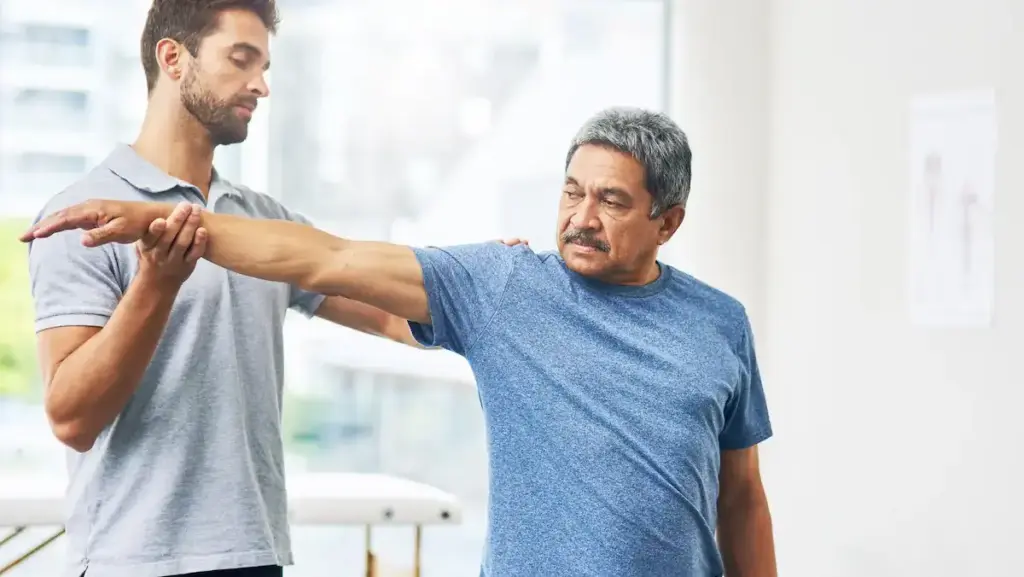
The Physiotherapy Department at Prashanth Hospitals offers specialised rehabilitation and pain management for patients recovering from injuries, surgeries, long term health conditions and movement problems. Our skilled physiotherapists assess each patient and create a personalised treatment plan to help restore strength, flexibility and overall wellbeing.
As part of a multispecialty hospital, our physiotherapy team works closely with doctors from other departments, so rehabilitation fits well with the patient’s overall treatment.
How Our Physiotherapy Helps Patients
- Less pain, better movement: Treatment focuses on easing pain and helping you move more freely, so daily tasks like walking, climbing stairs and sitting at work become easier.
- Care at every stage: We support patients from the ICU to the outpatient clinic and even at home, so rehabilitation can continue as the patient recovers.
- Linked with your doctors: Our physiotherapists work with orthopaedic surgeons, neurologists, cardiologists and other specialists, so your therapy matches your medical treatment.
- Goals that matter to you: Whether you want to walk without support, return to sport or get back to work, your plan is built around your own goals.
Conditions We Treat
- Back and Neck Pain: Treatment for pain caused by poor posture, long sitting hours, muscle strain and spine related problems.
- Joint Pain (Knee, Shoulder, Hip and Others): Therapy to reduce pain and stiffness and improve joint movement.
- Arthritis and Osteoporosis: Exercises and pain relief methods to keep joints active and improve strength and balance.
- Sports Injuries and Sprains: Care for ligament, muscle and joint injuries to help patients return to their activities safely.
- Post Surgical Rehabilitation: Guided therapy to rebuild strength and movement after surgery.
- Stroke and Neurological Conditions: Rehabilitation to improve movement, balance and daily function after a stroke or nerve related illness.
- Balance Problems and Vertigo: Exercises that help reduce dizziness and improve steadiness while standing and walking.
- Postpartum and Women’s Health Physiotherapy: Support for new mothers to rebuild core and pelvic strength and manage back pain.
- Geriatric Rehabilitation for Elderly Care: Therapy that helps older adults stay mobile, steady and independent.
- Cardiac and Pulmonary Rehabilitation: Supervised exercise and breathing care for patients recovering from heart and lung conditions.
Our Services
- Pain Management and Mobility Training: Reduces discomfort and improves movement so daily tasks become easier.
- Post Operative Rehabilitation: Strengthens muscles after surgeries such as knee and hip joint replacement.
- Neurological Physiotherapy: Helps with stroke recovery, paralysis and nerve disorders.
- ICU Physiotherapy: Early mobilisation and breathing support for critically ill patients.
- Customised Home Physiotherapy: Physiotherapy care at home for patients who find it difficult to travel, such as elderly patients and those recovering from surgery.
- Ergonomic Training: Guidance on posture correction and safe work habits to help prevent work related injuries.
Electrotherapy Treatments
Along with exercise therapy, we use electrotherapy methods to support recovery. The physiotherapist chooses the treatment based on the patient’s condition.
- Interferential Therapy (IFT): Helps relieve pain and relax tight muscles.
- Transcutaneous Electrical Nerve Stimulation (TENS): Sends gentle electrical pulses through the skin to help reduce pain.
- Ultrasound Therapy (UST): Uses sound waves to support healing of deep tissues such as muscles and ligaments.
- Shortwave Diathermy (SWD): Creates gentle deep heat to improve blood circulation and relieve muscle pain.
- Cryo Compression Therapy: Uses cold and compression to reduce swelling and inflammation.
- Continuous Passive Motion (CPM) Therapy: Gently moves the knee to help improve its range of movement after knee surgery.
Our Approach
Every treatment begins with a detailed assessment. The physiotherapist reviews the patient’s medical history and reports, checks movement, strength and posture, and then plans the sessions. Progress is reviewed regularly, and the plan is adjusted as the patient improves. Patients are also taught simple home exercises to continue their recovery between sessions.
Your First Visit
At your first session, the physiotherapist will:
- Ask about your pain, how it started and what makes it better or worse
- Review your medical reports, scans and any surgery details
- Check your posture, movement, strength and balance
- Explain the treatment plan and how many sessions may be needed
- Show you a few simple exercises to begin with
Wear loose, comfortable clothes so the affected area can be checked easily, and bring any previous reports and prescriptions.
When to See a Physiotherapist
You may benefit from physiotherapy if:
- Pain in your back, neck or joints has lasted more than a few weeks
- You feel stiff in the morning or after sitting for long hours
- You have had surgery and find it hard to move normally
- You feel unsteady while walking or have had a fall
- An old injury keeps troubling you
- A family member needs help with movement after a stroke
Physiotherapy Care at Prashanth Hospitals
If you are looking for physiotherapy in Chennai for pain, injury or recovery after surgery, Prashanth Hospitals is here to help. Contact our team to book an appointment with our physiotherapists.