Walk into any pharmacy in Chennai and you will find an entire shelf of hair growth supplements, biotin capsules, and keratin powders. Many of them are expensive. Most of them are unnecessary for people who are already eating well.
The right food for hair growth provides many of the nutrients your hair needs naturally. Your hair follicles depend on a steady supply of protein, iron, vitamins, and healthy fats to function properly. When your daily diet provides these nutrients consistently, your hair has what it needs. When it does not, you may start noticing thinning, breakage, or slower growth long before you connect it to what you eat.
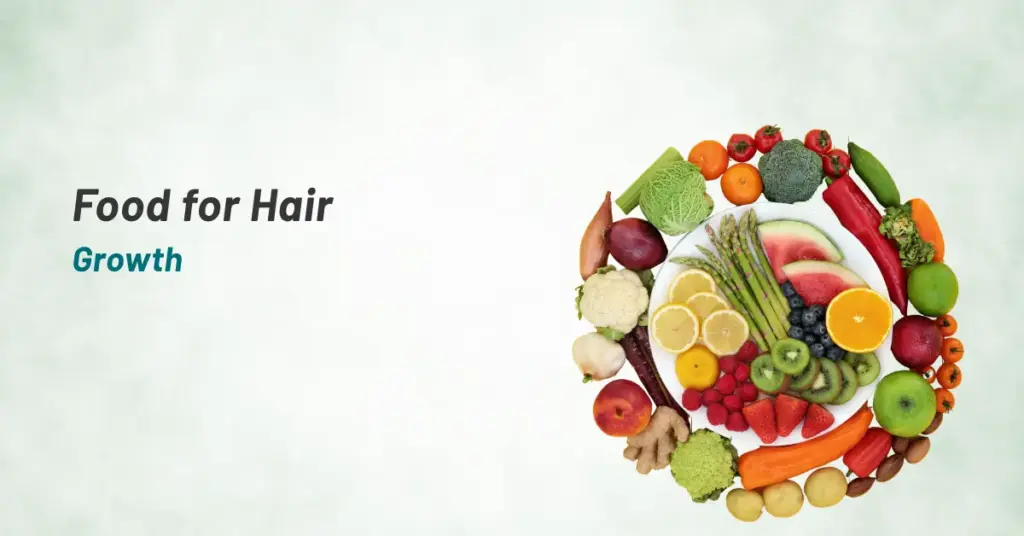
This guide is written specifically for people in India, and especially for families in Chennai and Tamil Nadu. Every food mentioned here is affordable, widely available in local markets, and already part of South Indian cooking traditions. No imported superfoods. No complicated meal plans. Just practical, science-backed guidance on the foods good for hair growth that you can start eating today.
It is also worth saying upfront: no single food or combination of foods will guarantee hair growth on its own. What matters most is the overall quality of your diet over time. Individual foods matter less than consistent, balanced eating across days and weeks.
Why Does Food Affect Hair Growth?
Your hair grows from follicles under your scalp. Each follicle is a living tissue that needs nutrients to keep working.
Hair is made mostly of a protein called keratin. When your diet is low in protein, your body supplies it to vital organs first. Follicles get what is left over. The result is weaker strands, slower growth, and more shedding.
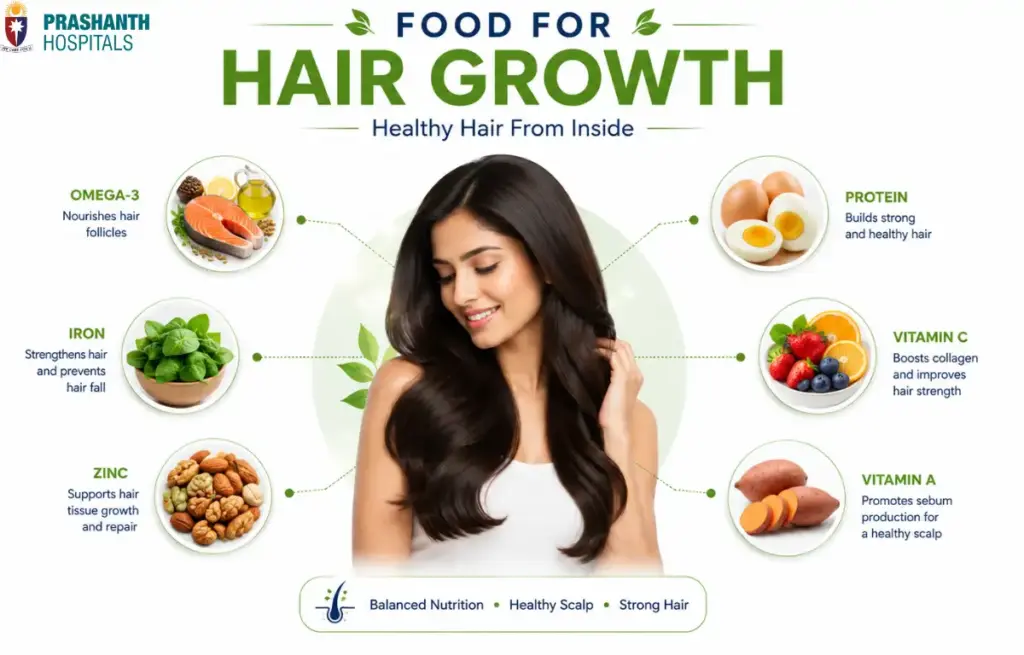
Iron carries oxygen to follicles through the blood. Zinc supports the oil glands around each follicle. Vitamin C helps your body absorb iron from plant foods and supports collagen formation around hair roots. Vitamin A keeps the scalp moisturised.
Nutritional deficiency is one of the most overlooked contributors to hair loss in India. Iron deficiency anaemia is very common among Indian women. Low protein intake is widespread among people following restrictive diets. These are fixable problems, and food is the right place to start.
Key Nutrients Your Hair Needs
| Nutrient | What it does | Common Indian source |
| Protein | Builds keratin, the main hair structure | Eggs, dal, paneer, chicken |
| Iron | Carries oxygen to follicles | Spinach, methi, rajma, liver |
| Biotin (Vitamin B7) | Supports keratin production | Eggs, peanuts, almonds |
| Zinc | Supports follicle repair and oil glands | Sesame seeds, chickpeas, meat |
| Vitamin C | Boosts iron absorption, builds collagen | Amla, guava, lemon |
| Omega-3 fatty acids | Supports scalp health | Flaxseeds, walnuts, local fish |
| Vitamin A | Keeps scalp moisturised | Sweet potato, carrot, methi |
| Vitamin D | Linked to hair follicle cycling | Eggs, fortified milk, sunlight |
Note on biotin: True biotin deficiency is uncommon in people eating a varied diet. Biotin supplements mainly benefit those with a confirmed deficiency. Getting biotin through food is safer and more balanced.
12 Indian Foods for Hair Growth
1. Eggs
Eggs provide protein, biotin, zinc, selenium, and vitamin D in one affordable food. The yolk holds most of the fat-soluble nutrients. The white provides complete protein needed for keratin production. Two boiled eggs at breakfast is one of the simplest habits you can build for hair health.
2. Curry Leaves (Karuvepilai)
Curry leaves are a nutritious food containing iron, antioxidants, and beta-carotene, making them a healthy addition to a balanced diet. Iron supports oxygen delivery to follicles. Beta-carotene converts to vitamin A in the body, which helps maintain a healthy scalp. They are already in your sambar and kootu every day. Eat them rather than push them to the side of the plate.
3. Dal (Lentils and Pulses)
Toor dal, moong dal, masoor dal, chana dal. These everyday staples are among the foods good for hair growth that most people already eat. Dal provides plant protein, iron, zinc, biotin, and folate. For vegetarians especially, dal eaten at both lunch and dinner makes a real difference to total daily protein intake. Adding a squeeze of lemon improves iron absorption from the same meal.
4. Spinach and Methi (Fenugreek Leaves)
Iron deficiency is among the most common nutritional contributors to hair loss in Indian women. Spinach and methi are two of the most accessible iron-rich plant foods available year-round in Chennai markets. The vitamin C naturally present in spinach also supports collagen formation around hair roots and improves iron absorption. Methi rice, palak dal, or a simple stir-fried greens dish three to four times a week makes a practical difference.
5. Amla (Nellikai)
Amla is a rich natural source of vitamin C. Its vitamin C content supports collagen formation around hair roots and improves iron absorption from plant-based foods eaten in the same meal, both important for overall hair health. To be clear, amla does not directly stimulate hair growth. It contributes to the nutritional environment that healthy follicles require. Nellikai pickle, amla juice, or dried amla are all easy ways to include it daily at very low cost.
6. Peanuts (Verkadalai)
Peanuts provide biotin, plant protein, and vitamin E in one affordable snack. They fit naturally into South Indian eating through groundnut chutney, peanut rice, boiled peanuts, and sundal. A small handful of roasted or boiled peanuts in the afternoon is one of the easiest sustainable habits you can add for hair health.
7. Sesame Seeds (Ellu)
Sesame seeds provide iron, zinc, calcium, and omega-3 fatty acids. Zinc in particular maintains the oil glands around each follicle. Ellu urundai, ellu sadam, and ellu chutney powder are all familiar in Tamil Nadu. A teaspoon of sesame seeds over rice daily is a simple way to include these nutrients without changing how you cook.
8. Curd (Thayir)
Curd provides protein, vitamin B5, and probiotics. Vitamin B5 supports blood flow to the scalp. The probiotics in curd support gut health, which influences how well your body absorbs nutrients like iron, zinc, and vitamin D. Curd rice with amla or lemon pickle is a genuinely hair-friendly meal that most Tamil households already eat daily.
9. Sweet Potato (Sakkaravalli Kizhangu)
Sweet potato is a good source of beta-carotene, which converts to vitamin A in the body. Vitamin A helps the scalp produce its natural oil and prevents dryness and breakage. Getting vitamin A from food rather than supplements is important. High-dose vitamin A supplements can paradoxically cause hair loss, which food sources naturally avoid. Sweet potatoes are available in most Chennai vegetable markets and are far more affordable than avocados, which global articles often recommend.
10. Flaxseeds (Aazhi Vithai)
For people who do not eat fish, flaxseeds are among the best plant-based sources of omega-3 fatty acids in India. Omega-3s may help support scalp health by contributing to normal inflammatory regulation. Ground flaxseeds are absorbed more easily than whole ones. Mix a teaspoon into curd, roti atta, or use flaxseed chutney powder, which is now easy to find in Chennai markets.
11. Local Fish (Mathi, Bangda, Vanjaram)
For non-vegetarians, local fish are among the most complete foods to eat for hair growth. Mathi (sardines) and bangda (mackerel) are rich in omega-3 fatty acids and far more affordable in Chennai than salmon. Vanjaram provides good protein and healthy fats. These fish also contain vitamin D, which research associates with hair follicle cycling. Meen kulambu, fish fry, and grilled mackerel are everyday Tamil Nadu dishes that also happen to be excellent for hair.
12. Chickpeas (Kondakadalai)
Chickpeas provide plant protein, iron, zinc, and biotin together. For vegetarians, this combination makes chickpeas particularly valuable. Kondakadalai sundal, a familiar Tamil Nadu festival food made with boiled chickpeas, curry leaves, and coconut, is one of the most nutritionally complete snacks for hair health you can eat. Rajma chawal and chole curry are equally good options across the week.
Foods Worth Limiting
These do not need to be avoided entirely, but eating them in excess regularly may work against your hair health.
Excess sugar and refined maida-based snacks replace nutritious foods in your diet without providing the vitamins and minerals follicles need. High sugar intake is also linked to increased androgen activity, which is associated with hair thinning.
Crash dieting significantly reduces calorie intake, and the body responds by stopping hair growth. Hair shedding usually begins two to three months after the triggering event because of the normal hair growth cycle. This delayed response, known as telogen effluvium, often confuses people because the shedding seems to start without an obvious recent cause.
High-dose vitamin A supplements taken without medical supervision can also cause hair loss as a side effect.
A Simple Daily Diet Plan
This is a flexible pattern, not a strict prescription.
- Morning: Two boiled eggs with a small glass of amla juice.
- Breakfast: Methi dosa or palak paratha with curd.
- Snack: A handful of roasted peanuts or almonds.
- Lunch: Dal rice with spinach sabzi or fish curry and curd rice. Add lemon for better iron absorption.
- Evening snack: Boiled groundnuts or kondakadalai sundal.
- Dinner: Chicken or rajma curry with roti and ellu chutney powder.
- Throughout the day: Eight to ten glasses of water. Adequate hydration supports scalp and skin health and is easy to overlook when focusing only on food.
Individual needs vary, especially for people managing PCOS, thyroid conditions, or anaemia. A doctor or registered dietitian can provide personalised guidance.
When Food Alone is Not Enough
Diet is an important foundation, but sometimes hair loss has a medical cause that food cannot address.
Common medical causes include iron deficiency anaemia, thyroid disorders, PCOS, and vitamin D deficiency. Research shows an association between vitamin D deficiency and some types of hair loss, but supplementation only benefits people who are genuinely deficient.
If your hair has been falling for more than two to three months, is coming out in patches, or feels sudden and significant, a medical evaluation is the right next step. A blood test checking ferritin, vitamin D, thyroid function, and zinc levels takes the guesswork out of what your hair actually needs.
The Bottom Line
The food for hair growth you need is not expensive or hard to find. It is already in your kitchen. The dal your family has always cooked. The curd rice that ends most South Indian meals. The curry leaves you were told to eat as a child. The amla pickle on the side of the plate.
What makes the difference is not any one ingredient. It is the overall pattern of eating these foods consistently, day after day, alongside good hydration and a broadly balanced diet.
If dietary changes have not helped and hair fall continues, do not ignore it. At Prashanth Hospitals, our doctors are here to help you find the right answers. Book an appointment today.