Diabetes is on the rise worldwide and is a serious, lifelong condition that needs proper care. Many families feel worried when they hear this diagnosis, but with the right understanding, it can be managed well. This guide explains how many types of diabetes are there, what they mean, and how they affect the body. Knowing the differences helps you take the right steps early and avoid complications.
What is Diabetes?
Diabetes is a condition where the level of sugar (glucose) in the blood becomes too high.
Insulin is a hormone that regulates the amount of blood sugar in your body. It is produced by an organ called the pancreas. When your body does not make enough insulin, or when insulin does not work properly, sugar builds up in the blood.
Over time, high blood sugar can affect the heart, eyes, nerves, and kidneys. Early awareness and regular monitoring help reduce these risks.
What are the Types of Diabetes?
There are several forms of diabetes. Many people ask, how many types of diabetes are there. The answer is more than just two. While Type 1 and Type 2 are the most common, there are other forms that also need attention.
Each type affects the body in a different way. Some develop slowly, while others appear suddenly. Understanding these types helps you recognize symptoms early, avoid complications, and choose the right care at the right time.
Type 2 Diabetes
Type 2 diabetes is the most common form and is increasing rapidly, especially in India. It usually develops over time and may not show clear symptoms in the early stages. Many people discover it during routine health checkups.
In this condition, the body becomes resistant to insulin. This means insulin is present, but it does not work effectively. As a result, sugar builds up in the blood instead of being used for energy.
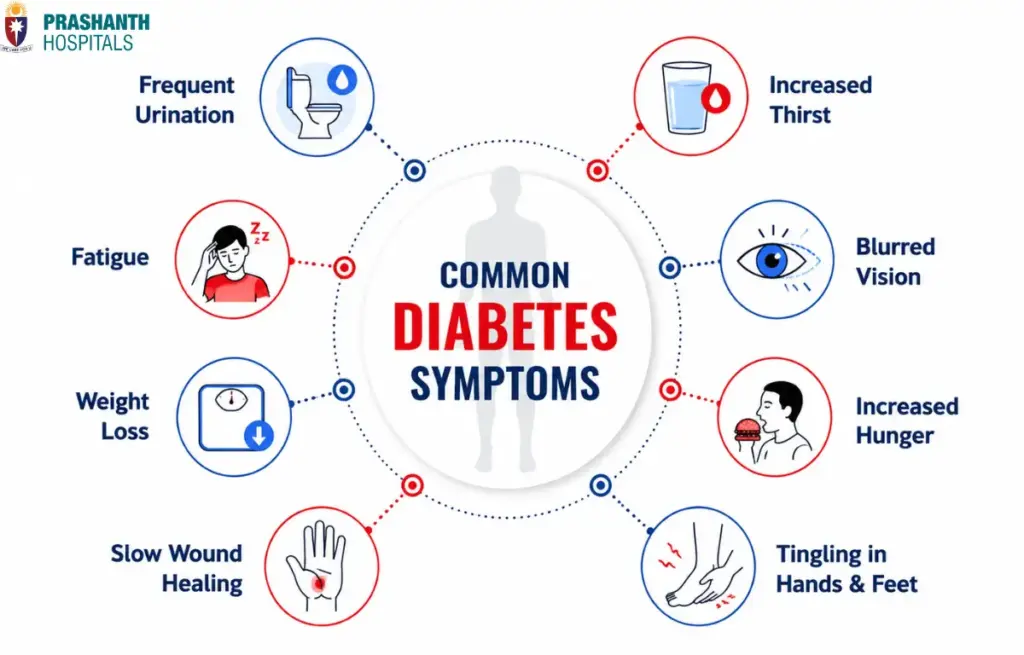
Common signs include increased thirst, frequent urination, tiredness, and slow healing of wounds. Lifestyle plays a major role in its development. Many people ask about how to reverse type 2 diabetes. In early stages, weight control, regular exercise, and healthy eating can significantly improve blood sugar levels.
Prediabetes
Prediabetes is often called a “warning stage.” Blood sugar levels are higher than normal but not high enough to be diagnosed as diabetes. It is very common, but many people are unaware they have it.
This stage usually does not cause noticeable symptoms, which makes regular screening important. Without action, prediabetes can slowly progress to Type 2 diabetes.
The positive side is that prediabetes can often be reversed. Small lifestyle changes like daily walking, balanced meals, and weight management can help bring sugar levels back to normal. Early action can prevent long-term health issues.
Type 1 Diabetes
Type 1 diabetes is less common but more sudden in onset. It can occur at any age but is often seen in children, teenagers, and young adults. Symptoms may appear quickly and require immediate attention.
In this condition, the body produces little or no insulin. This happens because the immune system mistakenly attacks the cells that produce insulin.
People with Type 1 diabetes need daily insulin to survive. Without it, blood sugar levels can rise dangerously. Understanding the type 1 and type 2 diabetes difference is important, as Type 1 requires lifelong insulin, while Type 2 is often managed with lifestyle changes and medicines.
Gestational Diabetes
Gestational diabetes develops during pregnancy and usually appears in the second or third trimester. It happens because of hormonal changes that affect how the body uses insulin.
Many women may not notice symptoms, which is why routine screening during pregnancy is essential. If not managed properly, it can affect both the mother and the baby.
The condition often goes away after delivery, but it increases the risk of developing Type 2 diabetes later in life. Healthy eating, regular monitoring, and medical guidance can help ensure a safe pregnancy.
Other Types
Type 3c Diabetes
Type 3c diabetes occurs when the pancreas is damaged due to conditions like pancreatitis, injury, or surgery. Since the pancreas plays a key role in insulin production, any damage can affect blood sugar control.
People with this type may also have digestion problems, as the pancreas helps with both insulin and digestive enzymes. Treatment usually involves managing both blood sugar and digestive health. Early diagnosis can improve long-term outcomes.
Latent Autoimmune Diabetes in Adults (LADA)
LADA is a slow-progressing form of Type 1 diabetes that develops in adults. It may initially look like Type 2 diabetes, which can delay correct diagnosis.
Over time, the body gradually loses its ability to produce insulin. People with LADA may start with tablets but later require insulin therapy. Because it develops slowly, regular follow-up is important. Recognizing this condition early helps in choosing the right treatment plan.
Maturity-Onset Diabetes of the Young (MODY)
MODY is a rare genetic form of diabetes that runs in families. It usually develops before the age of 25 and is often mistaken for Type 1 or Type 2 diabetes.
Unlike other types, MODY is caused by a single gene change. Symptoms are usually mild, and some people may not even realize they have it. Treatment depends on the specific gene involved. In many cases, it can be managed with simple medication or lifestyle care.
Neonatal Diabetes
Neonatal diabetes is a rare condition seen in babies within the first six months of life. It is usually caused by genetic changes that affect insulin production.
Some forms are temporary and may improve as the child grows, while others are permanent and require lifelong care.
Early diagnosis is important for proper treatment and growth. With the right care, children with this condition can lead healthy lives.
Brittle Diabetes
Brittle diabetes is a term used when blood sugar levels fluctuate widely and are difficult to control. It is not a separate type but a pattern seen in some people with diabetes.
These sudden changes can cause frequent highs and lows, which may affect daily life and overall health. It often requires close monitoring and frequent adjustments in treatment.
Support from a healthcare team is essential to manage this condition safely and effectively.
How Common is Diabetes?
Diabetes is becoming more common across the world. Lifestyle changes, unhealthy eating habits, and reduced physical activity are major reasons.
In India, the numbers are especially concerning. According to the World Health Organization, more than 77 million adults in India are living with diabetes, and around 25 million people are at risk (prediabetes).
Data from the International Diabetes Federation shows that about 10.5% of adults in India have diabetes, which means nearly 1 in 10 people is affected. In older age groups, the numbers are even higher. Studies show that nearly 19.8% of adults above 45 years in India have diabetes.
Many people still ask, how many types of diabetes are there, but awareness about all forms remains low.
Conclusion
Diabetes is a serious condition, but it can be managed with the right knowledge and care. Understanding how many types of diabetes are there helps you stay informed and prepared. Each type has different causes and treatment approaches. Early diagnosis, regular checkups, and healthy lifestyle choices make a big difference.
If you are concerned about symptoms or wondering about how to reverse type 2 diabetes, speak with a doctor. Timely guidance can help you take control of your health and prevent complications.