
You just got your blood test report back, and one number stands out. Your white blood cell (WBC) count is higher than normal. It is easy to feel anxious when you see that. But a high WBC count does not automatically mean something serious is wrong. In many cases, it is your body’s normal response to an infection or physical stress.
This article explains what a high white blood cell count means, what numbers are normal, the common causes, and when you need to act.
Leukocyte is just the medical word for a white blood cell. A leukocyte count is the blood test that measures how many you have. When that test comes back higher than normal, doctors call it leukocytosis, which is what this article covers.
Quick answer: A high white blood cell count, or leukocytosis, means your body is making more white cells than usual, usually to fight off an infection or respond to stress or inflammation. A mild rise often needs no treatment and settles on its own. See a doctor if your count is above 30,000 cells per microliter, keeps rising, or comes with fever, unexplained weight loss, or unusual bruising.
What Does a High White Blood Cell Count Mean?
A high white blood cell count, also called leukocytosis, means your body is producing more white blood cells than usual. White blood cells are your immune system’s first line of defence. They fight off bacteria, viruses, and other harmful invaders.
When your immune system detects a threat, it ramps up production. This is often your body doing exactly what it should. However, a very high count or one that stays elevated without explanation can sometimes signal a condition that needs medical attention.
WBC Normal Range by Age and Group
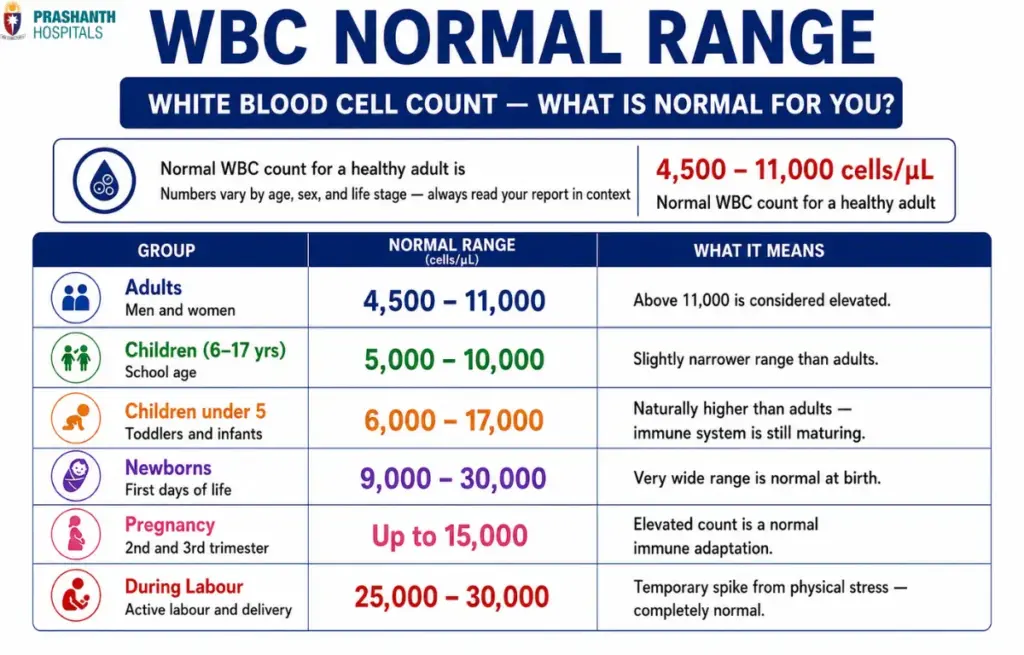
The table below shows general reference ranges used by most labs. Your doctor may use slightly different values based on your clinical history.
| Group | Normal WBC Range |
|---|---|
| Adults (men and women) | 4,500 – 11,000 cells/µL |
| Children (6–17 years) | 5,000 – 10,000 cells/µL |
| Children under 5 years | 6,000 – 17,000 cells/µL |
| Newborns | 9,000 – 30,000 cells/µL |
| Pregnant women (2nd/3rd trimester) | Up to 15,000 cells/µL |
| Pregnant women (during labour) | Can reach 25,000–30,000 cells/µL |
A count above 11,000 cells/µL in a non-pregnant adult is generally considered elevated. The higher the number, the more urgently it needs investigation.
What Do Specific Numbers Mean?
| Count | What It Suggests |
|---|---|
| 11,000 – 15,000 | Mildly elevated. Often a minor infection, stress, or medication effect. |
| 15,000 – 20,000 | Moderately elevated. Active infection or inflammation. Doctor review needed. |
| 20,000 – 30,000 | Significantly elevated. Severe infection, inflammatory condition, or bone marrow issue. |
| Above 30,000 | Severely elevated. Needs urgent medical evaluation. |
| Above 100,000 | Medical emergency. Immediate hospital care required. |
What is Leukocytosis?
Leukocytosis is the medical term for a WBC count above the normal range. It is not a disease, it is a finding. It tells your doctor that your leukocytes, your infection fighting cells, are more active than usual. The important question is always: why?
The type of white blood cell that is elevated matters as much as the number itself.
- Neutrophilia: too many neutrophils, usually from bacterial infections or physical stress
- Lymphocytosis: too many lymphocytes, common in viral infections and some blood cancers
- Monocytosis: too many monocytes, linked to chronic infections or inflammatory conditions
- Eosinophilia: too many eosinophils, triggered by allergies or parasitic infections
- Basophilia: too many basophils, can sometimes signal a bone marrow disorder
Your WBC differential, the breakdown of each cell type, gives your doctor far more information than the total count alone.
Common Causes of High White Blood Cell Count
Infections The most common cause. Bacterial infections tend to push counts higher than viral ones. Your immune system is simply producing more cells to fight the infection.
Inflammation Ongoing conditions like rheumatoid arthritis, inflammatory bowel disease, or vasculitis keep the immune system in a state of low-level activation, which sustains elevated WBC levels.
Stress and physical trauma Intense exercise, surgery, injury, or emotional stress can temporarily spike WBC counts. This usually settles within hours to days.
Medications Corticosteroids, epinephrine, and some other drugs are known to raise WBC levels. Always mention long-term medications to your doctor when reviewing blood results.
Allergic reactions Severe allergies or asthma attacks raise eosinophil counts specifically.
Smoking Smokers consistently show slightly higher baseline WBC counts due to chronic airway inflammation.
Bone marrow disorders and blood cancers In rare cases, conditions like leukaemia cause the bone marrow to overproduce white blood cells. This typically results in very high counts, above 30,000 to 50,000 cells/µL, and is usually accompanied by other symptoms like fatigue, easy bruising, or night sweats.
Types of White Blood Cells (Leukocytes)
There are five types of white blood cells, each with a specific role:
| Type | Role | % in Healthy Adults |
|---|---|---|
| Neutrophils | Fight bacterial and fungal infections | 50–70% |
| Lymphocytes | Produce antibodies, fight viruses | 20–40% |
| Monocytes | Clean up dead cells and pathogens in tissues | 2–8% |
| Eosinophils | Respond to parasites and allergies | 1–4% |
| Basophils | Release histamine during allergic reactions | Less than 1% |
What Is a Dangerous White Blood Cell Count?
Above 30,000 cells/µL without a known cause is considered dangerously high and needs urgent evaluation. Above 100,000 cells/µL is a medical emergency called hyperleukocytosis. This can cause blood clots and strokes and requires immediate hospital care.
Context matters. A count of 25,000 in someone with a known severe infection is very different from the same number in someone who feels completely well. Your doctor will always interpret the number alongside your symptoms and full clinical picture.
High White Blood Cell Count During Pregnancy
A moderately elevated count is normal during pregnancy. The immune system adapts to protect both the mother and the growing baby.
- Up to 15,000 cells/µL is within the expected range during pregnancy
- During labour, counts can temporarily reach 25,000–30,000 cells/µL, this is normal
See a doctor promptly if you are pregnant and have: fever, chills, burning during urination, or unusual abdominal pain alongside an elevated count. These symptoms may point to an infection that needs treatment.
WBC Count in Infections: Bacterial vs Viral
The pattern of elevation gives your doctor useful clues:
- Bacterial infection: Usually pushes counts significantly higher (15,000–30,000), with a rise in neutrophils. Doctors call this a “left shift.”
- Viral infection: The total count may be normal or only slightly raised. In some viral illnesses, the count is actually lower than normal.
- Sepsis (severe infection): Count can go very high or very low — both are warning signs that need immediate attention.
Symptoms of High White Blood Cell Count
A mildly elevated count often causes no symptoms at all, you only find out through a blood test. When symptoms do appear, they usually reflect the underlying cause:
- Persistent fever or chills
- Unusual tiredness or weakness
- Night sweats
- Unexplained weight loss
- Frequent or severe infections
- Easy bruising or bleeding
- Swollen lymph nodes
Seek Urgent Care If You Have Any of These
Go to a doctor without delay if:
- Your count is above 30,000 cells/µL with no clear cause
- You have a fever lasting more than 3 days
- You notice unexplained weight loss, night sweats, or extreme fatigue
- You have unusual bruising, bleeding, or swollen lymph nodes
- Your count is rising across repeated blood tests
- You are pregnant with a count significantly above 15,000 cells/µL
How Is a High WBC Count Treated?
Treatment targets the root cause, not the number itself.
- Infections: Antibiotics for bacterial, antifungals for fungal. Viral infections usually resolve without medication.
- Inflammation: Anti-inflammatory or immunosuppressive drugs for autoimmune conditions.
- Medication-related: Your doctor may adjust the dose or switch to a different drug.
- Blood cancers or bone marrow disorders: An oncologist or haematologist will guide a treatment plan, which may include chemotherapy, targeted therapy, or bone marrow transplant.
- Stress or lifestyle-related: The count usually returns to normal once the trigger is removed. No specific treatment needed.
How to Support Healthy WBC Levels
These steps help if your elevation is mild and linked to lifestyle:
- Stay well hydrated
- Get consistent, restful sleep
- Quit smoking
- Manage chronic stress
- Eat a balanced diet with vegetables, whole grains, and lean protein
These are supportive measures only. They do not replace medical treatment for a significantly elevated count.
Final Thoughts
Your WBC count is a signal, not a verdict. In most cases, an elevated reading points to something your body is already dealing with, an infection, stress, or inflammation. With the right diagnosis, most causes are treatable.
If your count is mildly elevated and you have no worrying symptoms, a follow-up test is usually all that is needed. If it is significantly high, rising, or comes with fever, fatigue, or unexplained weight loss, do not wait, get it checked.
Concerned about your blood test results? The haematology and oncology team at Prashanth Hospitals can help you understand your report and get the right care. Book an appointment at our Chennai centre today.