

When it comes to managing health, many adults and caregivers wonder: what does an internal medicine doctor treat? Often called internists, these physicians specialize in diagnosing, treating, and preventing a wide range of illnesses that affect adults. Many people also search what internal medicine doctors treat to better understand their role. Their expertise makes them a vital part of long-term, comprehensive healthcare.
In this article, we’ll explain the role of an internist, outline the conditions treated by internal medicine, and help you understand when it’s the right choice to consult one.
Who is an Internal Medicine Doctor?
An internal medicine doctor, or internist, is a physician trained specifically in the care of adults. Unlike family doctors who see patients of all ages, internists focus solely on adult health, from young adulthood through old age. They are skilled at managing complex medical conditions, providing preventive care, and coordinating treatment plans for chronic illnesses.
Think of an internist as your go-to doctor for most common adult health issues and as someone who helps you navigate more specialized care if needed.
What Does an Internal Medicine Doctor Treat?
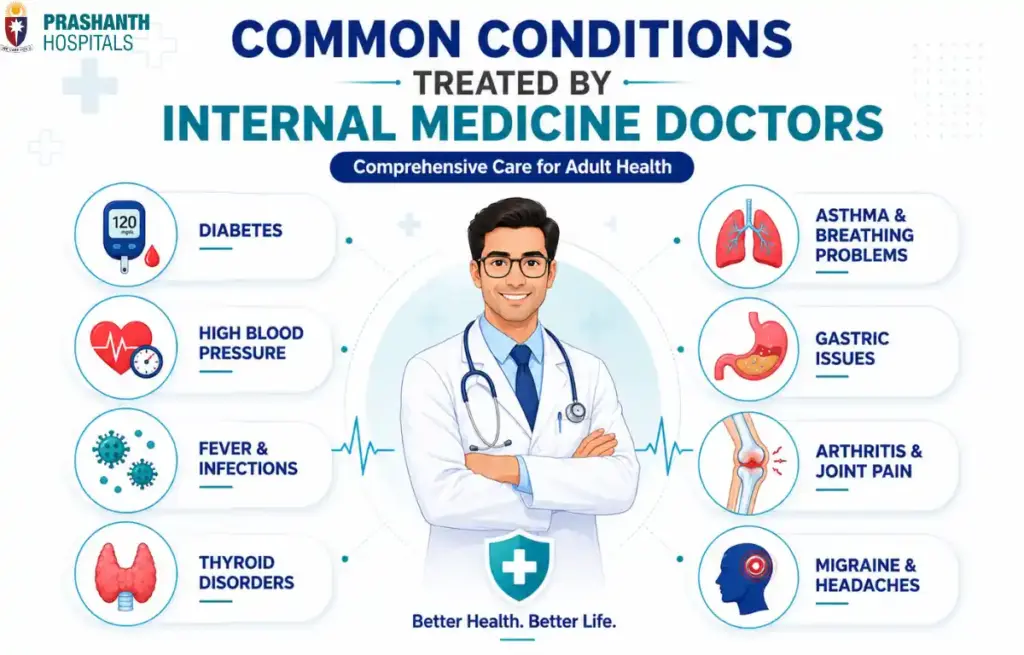
So, what does an internal medicine doctor treat exactly? The short answer: a lot. Many patients ask what do internal medicine doctors treat when choosing a healthcare provider. Internists are trained to diagnose and treat a broad spectrum of diseases and disorders — both acute and chronic — as well as provide routine preventive care. Below, we break it down into categories, including what diseases do internal medicine doctors treat.
Chronic Diseases
Managing long-term health conditions is a cornerstone of internal medicine care. Internists help patients live better lives by controlling chronic diseases, monitoring progress, and adjusting treatments as needed. Some of the most common conditions they treat include:
- Diabetes
- Hypertension (high blood pressure)
- High cholesterol
- Asthma and chronic obstructive pulmonary disease (COPD)
- Thyroid disorders
- Heart disease
These long-term conditions are a major part of what internal medicine doctors treat in everyday practice. Internists often coordinate care between other specialists to ensure the best outcomes for patients with multiple health concerns.
Acute Illnesses and Infections
Internists are also your first point of contact when you’re feeling unwell. They diagnose and treat acute illnesses such as:
- Respiratory infections (flu, pneumonia, bronchitis)
- Urinary tract infections (UTIs)
- Gastrointestinal problems like food poisoning or gastritis
- Allergic reactions
By addressing common adult health issues early, they help prevent complications and promote faster recovery.
Preventive Care and Screenings
One of the most important aspects of internal medicine for adults is preventive care. Internists help you stay ahead of potential health problems by offering:
- Routine physical exams
- Vaccinations
- Cancer screenings (like colonoscopies and mammograms)
- Blood pressure and cholesterol checks
This proactive approach is another key part of what internal medicine doctors treat, focusing on early detection and prevention.
Mental Health Concerns
Internists are also equipped to recognize and manage common mental health conditions that often go hand-in-hand with physical illnesses, such as:
- Depression
- Anxiety
- Sleep disorders
They can provide initial treatment and refer you to mental health specialists if needed.
Geriatric Care
As people age, their healthcare needs become more complex. Internists often provide care for older adults, managing age-related issues such as:
- Arthritis
- Osteoporosis
- Memory loss and dementia
- Falls and mobility issues
This makes them an essential resource for caregivers looking after aging family members and highlights another aspect of what internal medicine doctors treat.
Why Choose an Internist?
Internists are known for their ability to see the big picture. They are particularly skilled at managing patients with multiple conditions and medications. Here are a few reasons why choosing an internist makes sense:
- Expertise in adult health
- Focus on long-term care
- Coordination with specialists when needed
- Emphasis on prevention and wellness
They’re not just treating diseases — they’re helping you live your healthiest life.
How Internal Medicine Doctors Coordinate Your Care
Internal medicine doctors do more than treat individual health problems. They look at your overall health and help manage it in a structured way. This is especially helpful if you have multiple conditions or need ongoing care.
They support you by:
- Reviewing your complete medical history
- Managing multiple medications safely
- Monitoring chronic conditions over time
- Referring you to the right specialists when needed
- Keeping all aspects of your care connected
For example, if you have diabetes along with heart issues, an internist ensures both conditions are managed together, not separately. This coordinated approach reduces risks and improves long-term health.
If you are managing more than one health concern or need regular follow-up, consulting an internal medicine doctor can help you stay on track with your health goals.
Internal Medicine vs. Family Medicine: What’s the Difference?
It’s common to confuse the two. Both types of doctors provide primary care, but family medicine physicians see patients of all ages, from newborns to seniors, while internists focus solely on adults. If you’re an adult or caring for one with chronic or complex medical needs, an internist may be the better choice.
When to See an Internal Medicine Doctor?
Here are some situations where seeing an internist is appropriate:
- You have a chronic illness that needs ongoing management.
- You’re experiencing unexplained symptoms like fatigue, weight loss, or persistent pain.
- You need annual physicals and preventive screenings.
- You’re caring for an older adult with multiple health issues.
Knowing what internal medicine doctors treat can help you make informed decisions about your healthcare.
Final Thoughts
So, what does an internal medicine doctor treat? From everyday illnesses to chronic diseases and preventive care, internists are trained to handle a wide range of adult health needs. Their holistic approach ensures you get the care you need at every stage of adulthood.
For adults and caregivers alike, having an internist as part of your healthcare team provides peace of mind and continuity of care. If you haven’t already, consider making an appointment with an internal medicine doctor to discuss your health goals and concerns. It’s a step toward a healthier, more informed future.