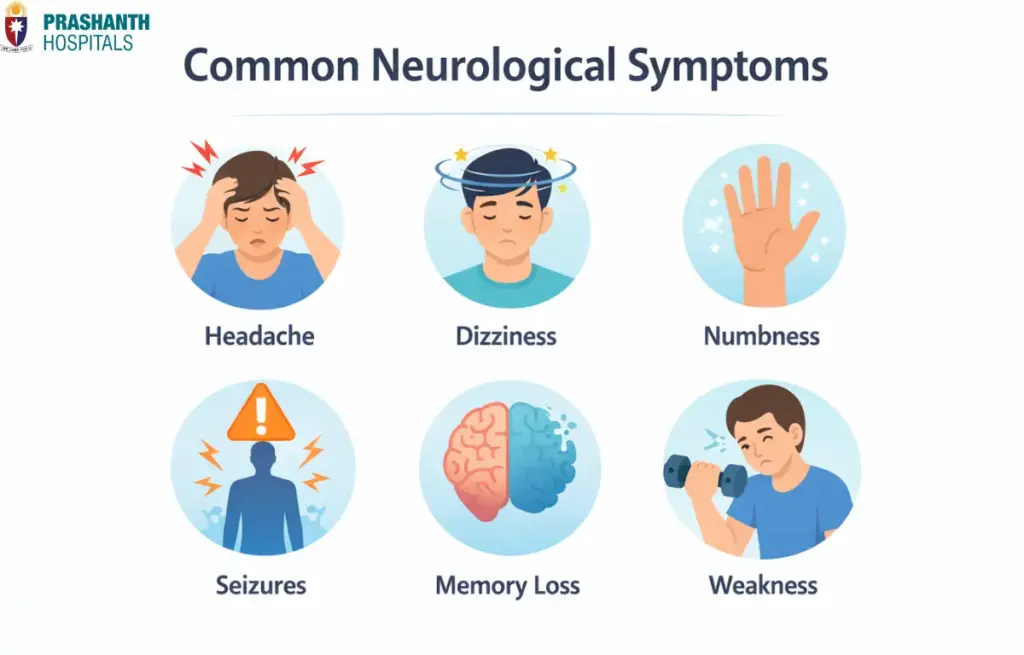
Headaches that do not go away, sudden weakness in the arm or episodes of dizziness can feel confusing and even frightening. Many people ignore these early signs, thinking they are due to stress or tiredness. But the brain and nervous system are delicate, and even small symptoms can point to something that needs attention.
If you are looking for a neurology hospital in Kolathur, it helps to choose a place where care is timely, clear and supportive. At Prashanth Hospitals, the focus is not just on treatment, but also on helping patients and families understand what is happening and what to do next. Early evaluation can make a real difference to recovery and peace of mind.
What is Neurology?
Neurology is the branch of medicine that deals with the brain, spinal cord and nerves. These systems control everything we do, from movement and speech to memory and emotions.
When something affects this system, the symptoms may not always be obvious. A simple tingling feeling, a change in the way you walk or frequent headaches can all be early signs. Visiting a neurology hospital in Kolathur at the right time helps find the cause early and lower the risk of complications. Neurologists are trained to recognise these patterns. They connect symptoms, test results and the patient’s history to guide the next steps in a safe and structured way.
Neurology Care at Prashanth Hospitals, Kolathur
At Prashanth Hospitals, neurology care is designed to be clear, supportive and focused on the patient’s real needs. Many people come in feeling anxious about symptoms like headaches, dizziness or sudden weakness. The approach here is to listen carefully first, understand the concern and then guide patients step by step. This helps reduce fear and makes the treatment process easier to follow.
- Qualified neurologists who take time to understand each patient’s symptoms, concerns and medical history before suggesting treatment.
- Care for common conditions like headaches and migraines, as well as more complex neurological disorders that need close monitoring.
- Diagnostic tests such as brain scans and nerve studies in one place, reducing the need to visit several centres.
- Clear, step by step explanation of the diagnosis, so patients and families understand what is happening and what to expect next.
- Treatment plans that are practical and easy to follow, taking into account daily routines, work and family support.
- A focus on early detection, which can help lower the risk of complications in conditions like stroke, epilepsy and nerve disorders.
- Long term support for chronic conditions, including regular follow up visits and guidance on medicines.
- Attention to both physical and emotional wellbeing, especially for patients living with long term neurological conditions.
- Care for all age groups, including older patients who may need extra support and monitoring.
- A team approach where doctors, nurses and support staff work together to coordinate care.
Why Choose Prashanth Hospitals for Neurology Care?
When choosing a neurology hospital in Kolathur, patients often look for more than just treatment. They look for clarity, timely care and a team that explains things well. Prashanth Hospitals focuses on these needs by offering structured neurological care that is easy to understand and follow, especially during stressful times.
Care begins with a careful evaluation, where symptoms are not rushed or overlooked. Patients are guided step by step, from diagnosis to treatment and follow up, so they always know what is happening and why. This approach is especially helpful for conditions like stroke, epilepsy or long term nerve disorders that need ongoing attention.
The hospital also supports continuity of care, making it easier for families to manage regular visits, medicine plans and recovery. This makes it a practical choice as a neurologist hospital for long term neurological care and monitoring. If you or a loved one has neurological symptoms, seeking timely care can make a real difference to recovery and daily life.
Patient-Centric Care Approach at Prashanth Hospitals
Care at Prashanth Hospitals is designed around the patient’s comfort and understanding. Doctors explain conditions in simple language and involve families in decisions.
Treatment plans are practical. They take into account daily routines, work life and emotional wellbeing. This helps patients follow the plan more easily and feel supported throughout their care.
Meet the Neurology Team at Prashanth Hospitals
Dr. P. Sampath Kumar: Dr. P. Sampath Kumar is a neurologist with over 22 years of clinical practice. His work covers stroke care, epilepsy, multiple sclerosis, vertigo, movement disorders and headaches. He explains each condition and treatment option clearly, and focuses on long term care through regular follow up.
Dr. Preetha P: Dr. Preetha P is a Consultant Neurologist with 17 years of clinical practice. She treats epilepsy, headache and movement disorders, and manages stroke with medicines and other non surgical care. Her work also includes botulinum toxin (Botox) injections and neurocritical care, and she explains each treatment option and its risks clearly.
Dr. Priyadharshan K P: Dr. Priyadharshan K P is a Senior Consultant Neurosurgeon with over 6 years of experience. His work includes surgery for brain and spine tumours, head and spine injuries and children’s brain and spine conditions. He also treats stroke and brain aneurysms and performs endoscopic (minimally invasive) procedures, and explains each option, its risks and recovery clearly to patients and families.
Common Neurological Conditions Treated
Neurological conditions can affect the brain, spine and nerves, often affecting movement, feeling and daily life. Early diagnosis and the right care can help manage symptoms and improve quality of life.
Stroke and Brain Attack
A sudden interruption of blood flow to the brain, caused by a blocked blood vessel or bleeding. Immediate medical care is critical, as early treatment can reduce long term damage and support recovery. Physiotherapy plays an important role in recovery by helping improve movement, strength and coordination after a stroke.
Epilepsy and Seizures
A condition with repeated episodes of abnormal electrical activity in the brain. It can cause jerking movements, confusion or loss of awareness, and often needs long term treatment and monitoring.
Migraine and Chronic Headaches
More than just a regular headache, migraines can cause severe pain, sensitivity to light and nausea. Frequent headaches can affect sleep, work and daily routines if not properly treated.
Parkinson’s Disease
A progressive neurological disorder that affects movement and coordination. Symptoms such as tremors, stiffness and slow movements can gradually affect daily activities. Regular physiotherapy can help improve mobility, balance and flexibility, supporting independence over time.
Neuropathy and Nerve Disorders
Damage to the nerves outside the brain and spinal cord, often seen in people with diabetes or after an injury. It can cause numbness, tingling, burning or weakness, especially in the hands and feet.
Spine and Disc Problems
Conditions affecting the spine, such as slipped discs or nerve compression. These problems can lead to back pain, pain spreading down the leg, weakness or difficulty moving. Physiotherapy is often a key part of treatment, helping reduce pain, improve posture and strengthen supporting muscles.
Alzheimer’s Disease and Memory Disorders
A condition that affects memory, thinking and behaviour over time. Early signs include forgetfulness and confusion, which may gradually affect daily life.
Multiple Sclerosis (MS)
An autoimmune condition where the immune system damages the protective covering of the nerves. It can lead to tiredness, vision problems, poor coordination and muscle weakness.
Brain Tumours
An abnormal growth of cells in the brain, which can be non cancerous or cancerous. Symptoms may include headaches, seizures, vision problems or changes in behaviour, depending on the location.
Vertigo and Balance Disorders
A condition that causes a spinning feeling or loss of balance. It can make simple activities like walking or standing difficult and may increase the risk of falls.
Bell’s Palsy
Sudden weakness or paralysis of the face muscles, usually on one side. It can affect facial expressions, eye closure and speech, but it often improves, especially with timely treatment.
Sciatica
Pain that spreads along the sciatic nerve from the lower back down the leg. It is commonly caused by nerve compression and may come with numbness or weakness.
If you have symptoms related to these conditions, seeking medical advice early can help manage the condition and lower the risk of complications.
Physiotherapy and Rehabilitation Support
Physiotherapy plays an important role in neurological recovery. Conditions affecting the brain, spine or nerves can affect movement, balance and strength. With the right rehabilitation, many patients can gradually regain independence in their daily activities.
At Prashanth Hospitals, physiotherapy is included as part of the treatment plan when needed. The focus is on simple, structured exercises that are safe, guided and easy to follow.
- Helps improve strength and movement after a stroke or nerve injury
- Supports balance and coordination in conditions like Parkinson’s disease
- Reduces pain and improves flexibility in spine and nerve problems
- Supports recovery after brain or spine surgery
- Exercise plans based on each patient’s condition and progress
This means care continues beyond diagnosis. Patients receive ongoing support to recover, build confidence and return to their normal routine step by step.
Warning Signs You Should Never Ignore
- Sudden weakness in the face, arm or leg
- Severe or persistent headaches
- Difficulty speaking or understanding words
- Loss of balance or coordination
- Unexplained seizures or blackouts
- Numbness or tingling that does not improve
Do not delay if you notice these symptoms. Seeing a doctor early at Prashanth Hospitals, a neurology hospital in Kolathur, can help find the cause and lower the risk of complications.
Signs of a stroke need emergency care. If someone suddenly has a drooping face, weakness in one arm or slurred speech, call an ambulance (108) straight away and note the time the symptoms started. Some stroke treatments work only if given within a few hours.
Diagnostic Tests and Technology Available
Correct diagnosis is the first step in neurological care. Doctors usually combine a clinical examination with scans and other tests. These may include MRI scans to look at the brain and spine, CT scans in emergencies and EEG tests to study brain activity.
Nerve conduction studies may also be used to check how well the nerves are working. These tests help doctors understand the exact problem rather than relying on symptoms alone.
According to the World Health Organization (WHO), early diagnosis and timely treatment are key to reducing disability from neurological conditions such as stroke and epilepsy.
Conclusion
Neurological symptoms can be easy to ignore at first, but they should not be taken lightly. Early evaluation, the right diagnosis and timely treatment can help lower the risk of long term complications. If you or a loved one has symptoms, visiting a neurology hospital in Kolathur can help you get clarity and the right care. You can consult the team at Prashanth Hospitals to understand your condition and take the next step.