

Joint pain is something most people brush off as a normal part of aging, an overuse injury, or the price of an active weekend. But sometimes it’s not wear and tear at all, it’s your immune system attacking your own body.
If your joint pain is persistent, affects both sides of your body, and shows up alongside other unusual symptoms, you might be asking yourself: can joint pain be a sign of an autoimmune disease?
The answer is yes. Joint pain is one of the earliest and most common warning signs of several autoimmune disorders. In this guide, we’ll break down how joint pain and autoimmune disease are connected, how to prevent autoimmune diseases where possible, and what you can do about it.
What is an Autoimmune Disease?
Your immune system exists to protect you. It constantly scans your body for harmful invaders — bacteria, viruses, and other threats — and eliminates them before they can cause harm.
In an autoimmune disease, this defense system malfunctions. Instead of attacking only foreign invaders, the immune system mistakenly targets your own healthy tissue, including your joints, skin, muscles, and internal organs.
This misdirected immune response triggers chronic inflammation, which can lead to pain, swelling, stiffness, and if left untreated, lasting tissue damage. More than 80 autoimmune diseases have been identified so far, and many of them share overlapping early symptoms, which is part of why they can be tricky to diagnose.
Researchers haven’t pinned down one single cause. The leading theory is that autoimmune disease develops from a mix of genetic susceptibility and environmental triggers, things like infections, smoking, or hormonal shifts that can throw immune function off balance. Because signs of autoimmune disease often overlap between conditions, they can be tricky to diagnose.
How Autoimmune Disease Can Affect the Body
| Body System | Common Effects |
| Joints | Pain, swelling, stiffness |
| Skin | Rashes, psoriasis, color changes |
| Eyes | Dryness, irritation, blurred vision |
| Digestive System | Abdominal pain, bloating, diarrhea |
| Thyroid | Fatigue, weight changes |
| Muscles | Weakness and muscle aches |
| Nervous System | Numbness, tingling, balance problems |
| Kidneys & Lungs | Reduced organ function, inflammation |
How are Joint Pain and Autoimmune Disease Related?
Healthy joints rely on cartilage and a thin lining called the synovium, which produces fluid that keeps movement smooth and pain-free. In many autoimmune diseases, the immune system attacks this protective lining, triggering inflammation inside the joint itself.
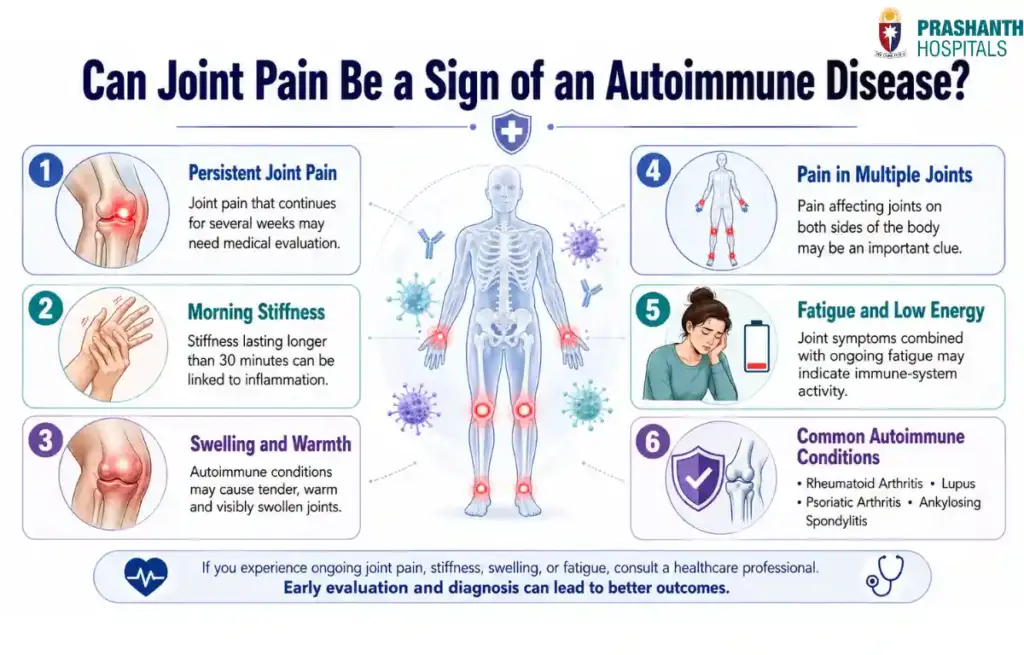
That’s a very different mechanism from the joint pain you’d get after a hard workout or a minor injury — and it tends to look and feel different too. Autoimmune-related joint pain is often:
- Symmetrical — affecting the same joints on both sides of the body
- Accompanied by stiffness, especially first thing in the morning
- Long-lasting, persisting for weeks or months rather than days
- Progressive without treatment, gradually worsening if the underlying inflammation isn’t addressed
That symmetry is actually one of the more useful clues doctors look for. Mechanical or injury-related joint pain usually shows up on one side — say, the knee you twisted on a run. Autoimmune joint pain is more likely to affect both knees, both wrists, or both sets of knuckles at once.
If left untreated, the ongoing inflammation can gradually erode cartilage and bone, limiting mobility and making everyday tasks harder. That’s why persistent, symmetrical, or unusual joint pain should never be written off as “just getting older.”
Common Autoimmune Disorders That Cause Joint Symptoms
Not every autoimmune disease affects the joints the same way. Some attack the joint lining directly, while others involve the skin, spine, glands, or internal organs alongside the joints. Here’s a closer look at the conditions most commonly linked to joint symptoms.
Rheumatoid Arthritis (RA)
Rheumatoid arthritis is one of the most well-known autoimmune diseases, and it primarily targets the joints. Unlike osteoarthritis, which wears down over time from mechanical stress, RA develops because the immune system attacks the joint lining itself, causing ongoing inflammation.
RA typically starts in the small joints of the hands, wrists, and feet before potentially spreading to larger joints. Without treatment, the persistent inflammation can damage cartilage and bone. The good news is that early treatment has dramatically improved long-term outcomes for people living with RA.
Common symptoms include:
- Pain and swelling in multiple joints, often symmetrically
- Morning stiffness lasting longer than 30 minutes
- Warm or tender joints
- Fatigue
- Reduced grip strength
Lupus (Systemic Lupus Erythematosus)
Lupus doesn’t stop at the joints. It’s a systemic autoimmune disease that can involve the skin, kidneys, lungs, heart, and brain, which is part of why symptoms vary so much from person to person.
Joint pain and swelling are frequently among the earliest complaints, but many people also experience extreme fatigue, recurring low-grade fever, mouth ulcers, or the hallmark butterfly-shaped rash across the cheeks and nose. Because lupus can touch so many organ systems, diagnosis usually requires piecing together several symptoms rather than relying on one test.
Common symptoms include:
- Joint pain and swelling
- Butterfly-shaped facial rash
- Persistent fatigue
- Sensitivity to sunlight
- Mouth ulcers
- Episodes of unexplained fever
Psoriatic Arthritis
Psoriatic arthritis develops in some people who have psoriasis, a chronic skin condition. While many people notice joint symptoms after their skin changes appear, others experience joint pain and stiffness months or even years before psoriasis becomes visible.
This condition commonly affects the fingers, toes, knees, ankles, and lower back. Swollen fingers or toes — sometimes called “sausage digits” — are a distinguishing feature that helps separate psoriatic arthritis from other forms of joint disease.
Common symptoms include:
- Swollen fingers or toes
- Joint pain and stiffness
- Heel pain
- Nail pitting or separation
- Patches of scaly, psoriasis-affected skin
Sjögren’s Syndrome
Sjögren’s syndrome primarily targets the glands that produce tears and saliva, which is why persistent dry eyes and dry mouth are its most recognizable symptoms. But it doesn’t stop there — it can also affect the joints, muscles, lungs, kidneys, and nervous system.
Because the dryness develops gradually, it’s often mistaken for a normal part of aging. When it shows up alongside fatigue and recurring joint pain, though, it may point toward an underlying autoimmune condition.
Common symptoms include:
- Dry eyes
- Dry mouth
- Joint pain
- Fatigue
- Swollen salivary glands
Ankylosing Spondylitis
Ankylosing spondylitis mainly affects the spine and the sacroiliac joints connecting the spine to the pelvis, though other joints can be involved too. Unlike typical back pain, which usually worsens with activity, ankylosing spondylitis symptoms tend to improve with movement and worsen after periods of rest.
Over time, chronic inflammation can reduce spinal flexibility, which makes early diagnosis and treatment important for preserving posture and mobility.
Common symptoms include:
- Persistent lower back pain
- Morning stiffness
- Hip or shoulder pain
- Reduced spinal flexibility
- Fatigue
Other Early Signs of Autoimmune Disease
Joint pain is often what finally sends people to the doctor, but it’s rarely the only symptom. Because autoimmune diseases can affect multiple organ systems at once, the body tends to send out a combination of warning signs that might initially seem unconnected.
Watch for:
- Persistent fatigue that doesn’t improve with rest
- Low-grade fever
- Skin rashes or unusual sensitivity to sunlight
- Hair loss
- Dry eyes and dry mouth
- Muscle weakness or unexplained aches
- Digestive issues like abdominal pain or diarrhea
- Brain fog or difficulty concentrating
- Numbness or tingling in the hands or feet
- Unexplained weight changes
Not everyone experiences every symptom, and they often come and go in flare-ups rather than appearing all at once. But when several of these show up together, or stick around for weeks at a time, they’re worth paying attention to.
Chronic Joint Pain: When Should You See a Doctor?
Knowing the signs of autoimmune disease helps you tell the difference. Occasional aches after a long day or a tough workout are normal.
See a doctor if you experience:
- Joint pain lasting longer than six weeks
- Pain affecting multiple joints, especially symmetrically
- Morning stiffness lasting more than 30 minutes (and especially over an hour)
- Swelling, redness, or warmth in the joints
- Difficulty performing everyday activities
- Fatigue alongside persistent joint pain
- Recurrent skin rashes or mouth ulcers
- Ongoing fever without a clear cause
- Dry eyes or dry mouth that won’t go away
- A family history of autoimmune disease
These symptoms don’t automatically mean you have an autoimmune disorder, but they do warrant a closer look. Catching the cause early can help prevent complications and lead to better long-term outcomes.
How Autoimmune Joint Pain Is Diagnosed
Because the signs of autoimmune disease so often overlap between conditions, there’s no single test that confirms a diagnosis on its own. Instead, doctors build a complete picture using your medical history, a physical exam, blood work, and imaging when needed.
| Diagnostic Step | Why It Matters |
| Medical history | Reviews symptoms, duration, family history, and flare patterns |
| Physical examination | Checks for swollen joints, skin changes, or signs of organ involvement |
| Blood tests | Detect inflammation markers and disease-specific autoantibodies |
| Imaging (X-ray, MRI) | Identifies joint inflammation or existing tissue damage |
Depending on what your doctor finds, you may be referred to a rheumatologist or another specialist for further evaluation and a tailored treatment plan.
How to Treat Autoimmune Disease and Joint Pain
Learning how to treat autoimmune disease starts with understanding that a diagnosis can feel overwhelming, but autoimmune diseases are far more manageable today than they once were.
How to treat autoimmune disease depends on the specific condition, which organs are involved, and how severe your symptoms are.
| Treatment | How It Helps |
| NSAIDs | Relieve pain and reduce inflammation |
| Corticosteroids | Quickly control inflammation during flare-ups |
| DMARDs | Slow disease progression and help protect joints long-term |
| Biologic & Targeted Therapies | Block specific immune pathways driving inflammation |
| Physical & Occupational Therapy | Improve mobility, build strength, and ease daily activities |
Medication is only part of the picture. Long-term management also depends on daily habits that support your body and reduce the burden of chronic inflammation — regular low-impact movement like walking, swimming, or yoga; a balanced diet rich in vegetables, fruits, whole grains, and omega-3 fatty acids; consistent sleep; and stress management. Working closely with your healthcare team lets your treatment plan evolve as your condition does.
Can Autoimmune Diseases Be Prevented?
This is one of the most common questions people ask, and the honest answer is: not entirely. Genetics play a significant role in who develops autoimmune disease, and there’s no guaranteed way to prevent it.
That said, if you’re wondering how to prevent autoimmune diseases, researchers believe environmental and lifestyle factors also influence immune function, which means healthy habits may help reduce certain risk factors and support your immune system overall, even if they can’t eliminate risk entirely.
| Healthy Habit | Why It Matters |
| Avoid smoking | Linked to several autoimmune diseases and may worsen disease activity |
| Exercise regularly | Supports joint mobility, cardiovascular health, and immune regulation |
| Maintain a healthy weight | Reduces inflammatory stress throughout the body |
| Eat a balanced diet | Provides nutrients that support normal immune function |
| Sleep 7–9 hours a night | Helps regulate immune activity and recovery |
| Manage chronic stress | May help reduce flare-ups in some people |
| Get regular check-ups | Encourages early evaluation of persistent or unusual symptoms |
If you have a strong family history of autoimmune disease, paying close attention to early symptoms and seeking timely medical advice can make a real difference if a condition does develop. Understanding how to prevent autoimmune diseases starts with knowing what’s actually within your control.
Living Well With an Autoimmune Disease
A diagnosis isn’t the end of an active life, it’s the start of learning how to manage symptoms over the long term. With the right care and daily habits, many people continue to work, travel, exercise, and do everything they did before.
Part of how to treat autoimmune disease long-term is consistency. Sticking to your treatment plan matters most: take medications as prescribed, keep up with follow-up appointments, and report new or worsening symptoms so your care team can adjust as needed. Beyond medication, staying active, eating well, sleeping enough, and managing stress all support your energy levels and overall well-being. Many people also find it helpful to keep a simple symptom log to spot patterns or triggers behind their flare-ups.
Your emotional health matters just as much as the physical side. Living with a chronic condition isn’t always easy, and leaning on family, friends, your healthcare team, or a patient support group can make the day-to-day a lot more manageable.
Final Thoughts
So, can joint pain be a sign of an autoimmune disease? Yes, persistent, symmetrical, or otherwise unusual joint pain is often one of the very first clues that your immune system may be working against you instead of for you.
Paying attention to your symptoms and seeking care early gives you the best shot at an accurate diagnosis and treatment before lasting joint damage sets in. If you’ve been living with chronic joint pain that just won’t quit, don’t wait it out, talk to a doctor and get the answers you need.
Your joints are central to your independence and quality of life. Staying informed and proactive is one of the best ways to protect them. Knowing how to prevent autoimmune diseases isn’t always possible, but early awareness makes a real difference.