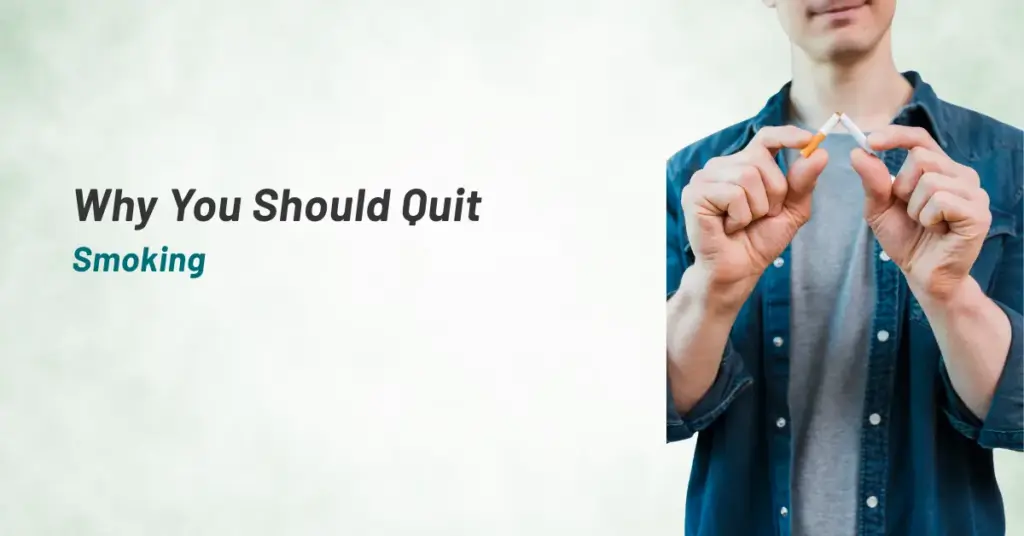
Quitting smoking is one of the hardest things a person can try to do. If you have tried and failed before, you are not alone. Most people need more than one attempt before they finally stop for good. The good news is that every time you try, you learn more about what works for you, and over time, you may discover the easy way to quit smoking that fits your lifestyle and habits best.
Tobacco is not just a bad habit. It is a real addiction. Nicotine changes the way your brain works, and over time, your body starts to depend on it. When you do not smoke, you feel restless, irritable, and anxious. That is withdrawal, not weakness.
The COVID-19 pandemic changed how many people think about their health. According to the World Health Organization, nearly 60% of tobacco users worldwide expressed a desire to quit during the pandemic. Smoking harms the immune system and weakens lung function, making smokers far more vulnerable to respiratory infections like influenza, pneumonia, tuberculosis, and COVID-19 itself. There has never been a more important reason to stop.
This guide gives you real, medically supported ways to quit smoking, answers the question many people ask about blood pressure, and helps you understand what your body goes through when you stop.
Does Quitting Smoking Lower Blood Pressure?
Yes, quitting smoking does lower blood pressure, and the change begins faster than most people expect. Every time you light a cigarette, your blood pressure rises within minutes. Nicotine triggers the release of adrenaline, which causes your heart to beat faster and your blood vessels to tighten.
Within 20 minutes of your last cigarette, your heart rate and blood pressure begin to drop. Within 24 hours, the carbon monoxide level in your blood falls significantly, making it easier for your heart to function. Over weeks and months, your risk of heart attack and stroke continues to go down.
Smoking is a direct risk factor for hypertension. Blood pressure spikes every single time you smoke. Quitting removes this repeated daily stress on your heart and arteries.
Some people worry that weight gain after quitting might raise their blood pressure. This can happen, but the cardiovascular benefit of quitting still outweighs this short-term change. Managing your diet and staying active after quitting helps keep both weight and blood pressure in check.
So does quitting smoking lower blood pressure? Yes, and it also reduces your risk of forming dangerous blood clots, lowers cholesterol, and reduces the workload on your heart over time.
Why Quitting Smoking Is So Hard
Understanding why quitting is difficult is actually the first step toward doing it successfully.
Nicotine is addictive in two ways. First, it causes a physical dependency — your brain starts to expect nicotine and reacts badly when it does not get it. Second, smoking becomes tied to your daily habits — your morning coffee, a break at work, or a moment of stress. These are called triggers, and they are often harder to manage than the physical cravings themselves.
Common withdrawal symptoms include:
- Feeling irritable or short-tempered
- Trouble sleeping at night
- Difficulty concentrating during the day
- Increased appetite and food cravings
- Feeling restless, anxious, or low in mood
- Mild cold or flu-like feelings in the first few days
These symptoms are not a sign that something is wrong. These changes show that your body is starting to recover and adjust to life without nicotine. For most people, the worst of withdrawal lasts a few days to a couple of weeks. Nicotine leaves your system within three days of quitting.
The Easy Way to Quit Smoking: Methods That Are Proven to Work
There is no single easy way to quit smoking that works for everyone. What works depends on how long you have smoked, how many cigarettes you smoke daily, your personality, and your support system. Below are the most effective approaches, backed by medical research.
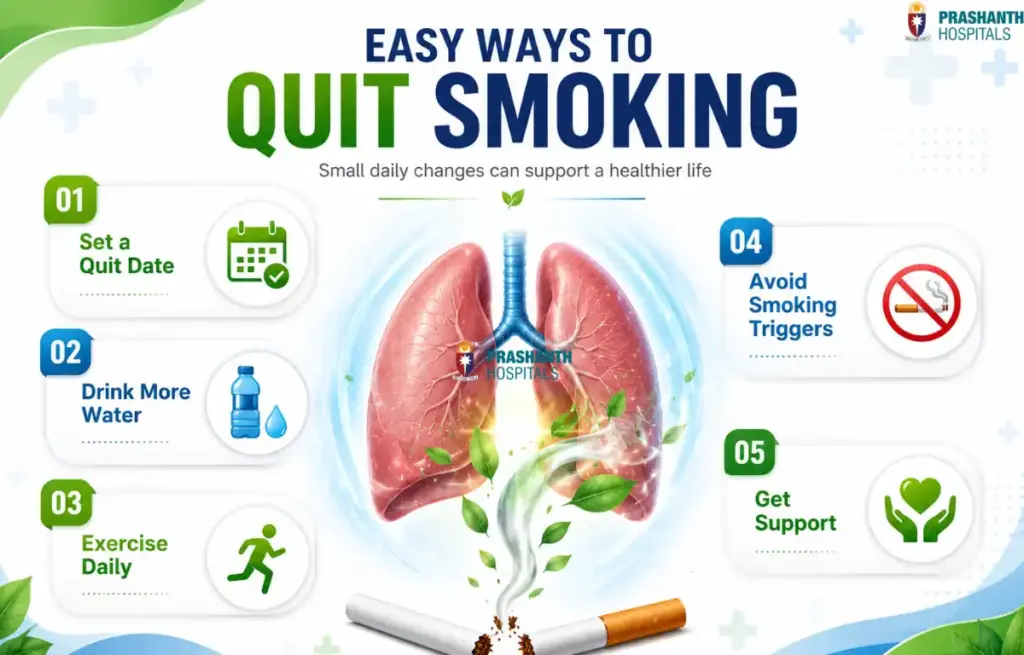
1. Set a Quit Date
Pick a specific date within the next seven days and commit to it. Tell people around you. Write it down. This simple step makes quitting feel real rather than something you will try someday. On your quit date, stop completely.
2. Try Gradual Reduction First
If stopping all at once feels too overwhelming, cut down slowly before your quit date. If you smoke 20 cigarettes a day, bring it down to 10 for a few days, then to 5. This is one easy way to quit smoking for people who find cold turkey too abrupt. Reducing the number of cigarettes also reduces the nicotine your body expects, making the final stop a little easier.
3. Use Nicotine Replacement Therapy (NRT)
Nicotine replacement therapy is one of the most well-researched tools for quitting. It gives your body a small, controlled amount of nicotine without the harmful chemicals in cigarette smoke. This helps manage cravings while you break the habit side of smoking.
NRT options available in India include:
- Nicotine patches: Worn on the skin, they release nicotine slowly throughout the day. Best for steady craving control.
- Nicotine gum: Chewed when a craving hits. Works quickly and is available over the counter.
- Nicotine lozenges: Dissolve in the mouth. Useful for moments when gum is not convenient.
NRT does not eliminate withdrawal. But it significantly reduces the intensity, making it one easy way to quit smoking without feeling completely overwhelmed.
4. Ask Your Doctor About Prescription Medications
For heavier smokers, prescription medications can make a real difference. The best way to quit smoking for many people, according to research from MD Anderson Cancer Center, is a combination of medication and counselling. Together, these two approaches double the chances of success compared to trying either one alone.
Two medications that are commonly prescribed:
- Varenicline (Champix): Works on the part of the brain that responds to nicotine, reducing the urge to smoke and making smoking less satisfying.
- Bupropion (Zyban): Originally an antidepressant, it reduces cravings and withdrawal symptoms. Requires a prescription and should be started before your quit date.
Always talk to your doctor before starting either of these. They are not suitable for everyone.
5. Get Counselling or Behavioural Support
Smoking is as much a mental habit as it is a physical addiction. Counselling helps you identify your triggers, build coping strategies, and stay on track when the urge to smoke hits hard. Studies consistently show that people who use behavioural support alongside medication have the highest quit rates.
One of the keys to quitting successfully is having someone to talk to. Reach out to supportive friends, family members, or healthcare professionals during your quit journey. You can also speak with trained counsellors at Prashanth Hospitals for guidance and support throughout your quit journey.
The Best Way to Quit Smoking: Combining Methods
Research is clear on this point. The best way to quit smoking is not willpower alone. It is using the right combination of tools, which usually means NRT or medication along with some form of counselling or support. Using both together more than doubles your chances of staying quit for good.
If you have tried cold turkey before and it did not work, that does not mean you cannot quit. It means you needed more support.
How to Handle Cravings: The 4 Ds
Cravings are intense but short. Most last only 3 to 5 minutes. When one hits, use the 4 Ds to get through it:
- Delay: Wait it out. Tell yourself you will wait 5 minutes. By then, the craving often passes.
- Deep breathe: Slowly breathe in through your nose for 3 counts and out through your mouth for 3 counts. Do this several times.
- Drink water: Sip water slowly. It keeps your hands and mouth busy and helps flush nicotine from your body.
- Do something else: Go for a short walk, call someone, or switch tasks. Distraction is one of the most underrated easy ways to quit smoking.
Remove Triggers From Your Environment
Your surroundings play a big role in keeping the urge alive. Before your quit date, take these steps:
- Get rid of all cigarettes, lighters, and ashtrays from your home and car
- Wash clothes and fabrics that smell of cigarette smoke
- Avoid situations where you are likely to be around smokers in the first few weeks
- Request the people around you to avoid leaving cigarettes visible inside the house.
- Change your routine slightly — if you smoked with morning coffee, try tea or go for a short walk instead
These small changes reduce the number of times your brain automatically connects a moment to a cigarette.
What Happens to Your Body After You Quit
Your body starts recovering from the moment you stop. This timeline can help motivate you when things feel hard:
- 20 minutes after quitting: Blood pressure drops and heart rate slows down
- 24 hours: Carbon monoxide leaves your blood, reducing heart attack risk
- 48 hours: Nicotine is out of your system. Taste and smell begin to improve
- 2 weeks to 3 months: Lung function improves. Breathing becomes easier
- 1 year: Risk of heart disease drops to half that of a smoker
- 10 years: Risk of lung cancer falls to roughly half that of someone who never quit
Within 20 minutes of your last cigarette, your body begins to heal. Withdrawal feels hard, but it is a clear sign that recovery has already started.
World No Tobacco Day and Why It Matters
Every year on May 31, the World Health Organization observes World No Tobacco Day to raise awareness about the dangers of tobacco use. It is a reminder that tobacco continues to be one of the most serious public health threats in the world.
Tobacco harms the immune system and impairs lung function, making smokers more susceptible to serious infections including influenza, tuberculosis, pneumonia, and COVID-19. It has long been linked to diabetes, heart disease, and multiple types of cancer. There is no safe level of cigarette smoke. When you smoke, the chemicals in tobacco enter your lungs instantly and are carried through your blood to every organ in your body.
The COVID-19 pandemic made this message louder. With countries around the world focused on protecting lung health, millions of smokers reconsidered their habit. If you are one of those people, this is the right time to act.
Manage Stress Without Cigarettes
Stress is one of the biggest reasons people go back to smoking after quitting. The COVID-19 pandemic brought enormous stress and uncertainty into daily life, and many people who had quit returned to cigarettes during that time.
If stress is a trigger for you, build a toolkit of alternatives:
- Practice deep breathing or simple mindfulness exercises
- Go for a walk when you feel the urge rising
- Talk to someone you trust instead of reaching for a cigarette
- Focus on what you can control right now, rather than worrying about what you cannot
Be kind to yourself during this process. If you slip and smoke one cigarette, it does not mean you have failed. Set a new quit date and try again. Many smokers make multiple quit attempts before they successfully stop smoking permanently.
When to See a Doctor
If you have been smoking for many years or have tried to quit multiple times without success, speaking to a doctor is a smart step. A doctor can assess your level of dependence, recommend the right NRT or medication, and connect you with counselling services.
At Prashanth Hospitals, our team includes specialists in internal medicine and pulmonology who can support your quit journey with a plan built around your health. Whether you need medication, breathing support, or just someone to talk to, we are here.
There Is No Perfect Time — Just Start
Quitting smoking is not easy. But it is absolutely possible. Millions of people have done it, including heavy smokers of 20 or 30 years. The body has a remarkable ability to heal once the damage stops.
Whether you choose the gradual reduction method, NRT, medication, counselling, or a combination of all of them, the most important step is the one you take today. Every cigarette you do not smoke is a step toward better lung health, a stronger heart, and a longer life.
Reach out to the team at Prashanth Hospitals if you need guidance, support, or medical help to quit. Our doctors are available for both in-person and online consultations. You do not have to do this alone.