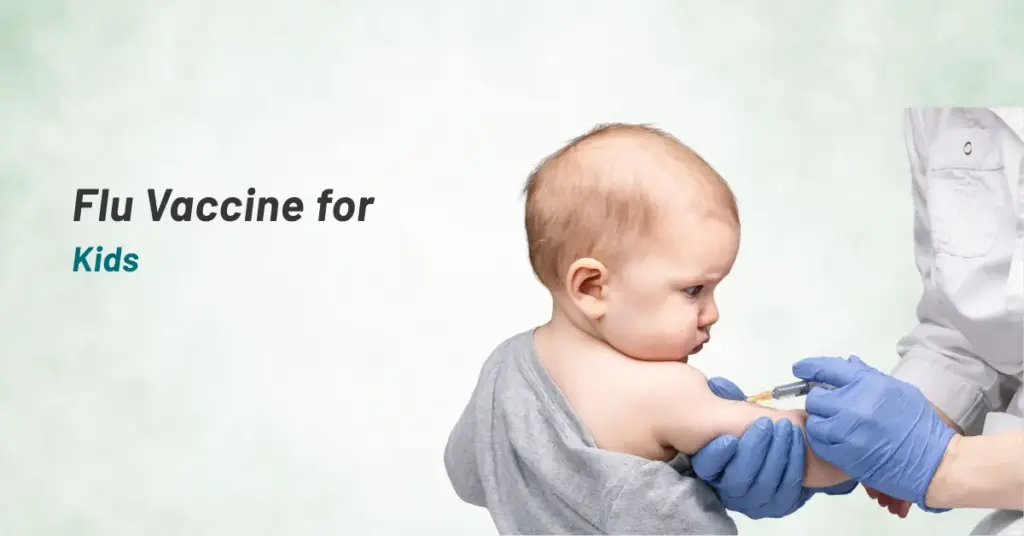
The flu is a common seasonal infection that spreads quickly among children. Getting a Flu vaccine for kids is one of the easiest ways to protect them from complications like high fever, breathing issues, and pneumonia. At Prashanth Hospitals, we offer clear and simple guidance to help families make confident, informed decisions about their child’s health
What Does a Flu Vaccine Do?
A flu vaccine helps your child’s immune system recognize the flu virus and fight it quickly.
It does not give your child the flu. Instead, it teaches the body to respond before the virus can cause severe symptoms.
The vaccine reduces:
- High fever
- Hospital visits
- Complications like ear infections, bronchitis, and pneumonia
It also protects siblings, elderly grandparents, and babies who are too young for vaccination, making the flu vaccine for kids an important step for family health.
Why Do We Need a New Flu Shot Every Year?
Flu viruses keep changing. This is why we see new flu strains every season.
A yearly flu shot is needed because:
- The virus mutates, and last year’s vaccine may no longer match.
- Protection fades with time, especially in children.
Parents often ask, “Can my child skip this year’s dose?”
The answer is no. A yearly shot ensures your child stays protected from the latest flu variants. This is especially important when choosing the flu vaccine for babies, as their immunity is still developing and they need consistent protection.
What Are the Types of Flu Vaccines?
Children can receive one of two main types of flu vaccines:
1. Flu Shot (Inactivated Vaccine)
- Given as an injection
- Safe for babies 6 months and older
- Recommended for most children, including those with asthma or chronic health problems
2. Nasal Spray Vaccine (Live Attenuated Vaccine)
- Given as a gentle nasal mist
- Suitable for kids above 2 years
- Not recommended for children with weak immune systems or certain health conditions
Your pediatrician will recommend the safest type based on your child’s age, allergies, medical history, and what suits them best. The flu vaccine for kids price may vary depending on the vaccine type and hospital.
Possible Side Effects of the Flu Vaccine
Most flu vaccine for kids side effects are mild and go away quickly. These reactions are normal and show that the body is building immunity.
Common side effects include:
- Low fever
- Mild muscle pain
- Redness or soreness at the injection site
- Tiredness
- Runny nose (for nasal spray)
Seek medical care if you notice trouble breathing, severe weakness, or swelling—these are rare.
Flu Shot Schedule for Babies
| Baby’s Age | Vaccines Given | Why It’s Important |
| At Birth | BCG, Hepatitis B (1st dose), OPV-0 | Guards newborns from TB, liver infection (Hep B), and polio. |
| 6 Weeks | DPT (1st dose), Hib (1st dose), IPV/OPV, Hepatitis B (2nd dose), Rotavirus (1st dose), PCV (1st dose) | Starts early protection from diphtheria, tetanus, whooping cough, brain infections, polio, severe diarrhea, and pneumonia. |
| 10 Weeks | DPT (2nd dose), Hib (2nd dose), IPV/OPV (2nd dose), Rotavirus (2nd dose), PCV (2nd dose) | Strengthens the immunity built at 6 weeks. |
| 14 Weeks | DPT (3rd dose), Hib (3rd dose), IPV/OPV (3rd dose), Hepatitis B (3rd dose), Rotavirus (if 3-dose schedule), PCV (3rd dose) | Provides deeper, long-lasting protection in infancy. |
| 6 Months | Influenza (Yearly flu shot) | Helps prevent seasonal flu and complications. |
| 9 Months | Measles or MMR (1st dose) | Prevents measles, mumps, and rubella. |
| 12–15 Months | MMR (2nd dose), Hib booster, PCV booster, Varicella (chickenpox), Hepatitis A (1st dose) | Boosts long-term immunity and protects from chickenpox and Hep A. |
| 18 Months | DPT booster, IPV/OPV booster, Hepatitis A (2nd dose) | Reinforces protection as the child grows. |
| 4–6 Years | DPT booster, IPV/OPV booster, MMR (3rd dose), Varicella (2nd dose) | Ensures strong immunity before starting school. |
This schedule is based on trusted pediatric recommendations to help protect infants from seasonal infections. Getting a flu vaccine for babies on time further strengthens their immunity and keeps them safer throughout the year.
Should Children Get the Flu Shot Every Year?
Yes. Children should get a flu shot every year because:
- Their immune system changes as they grow
- Flu viruses change every season
- Kids spread infections easily at school and daycare
Getting the flu vaccine for kids every year is one of the simplest ways to keep them protected from seasonal infections.
At What Age Can Kids Get the Flu Vaccine?
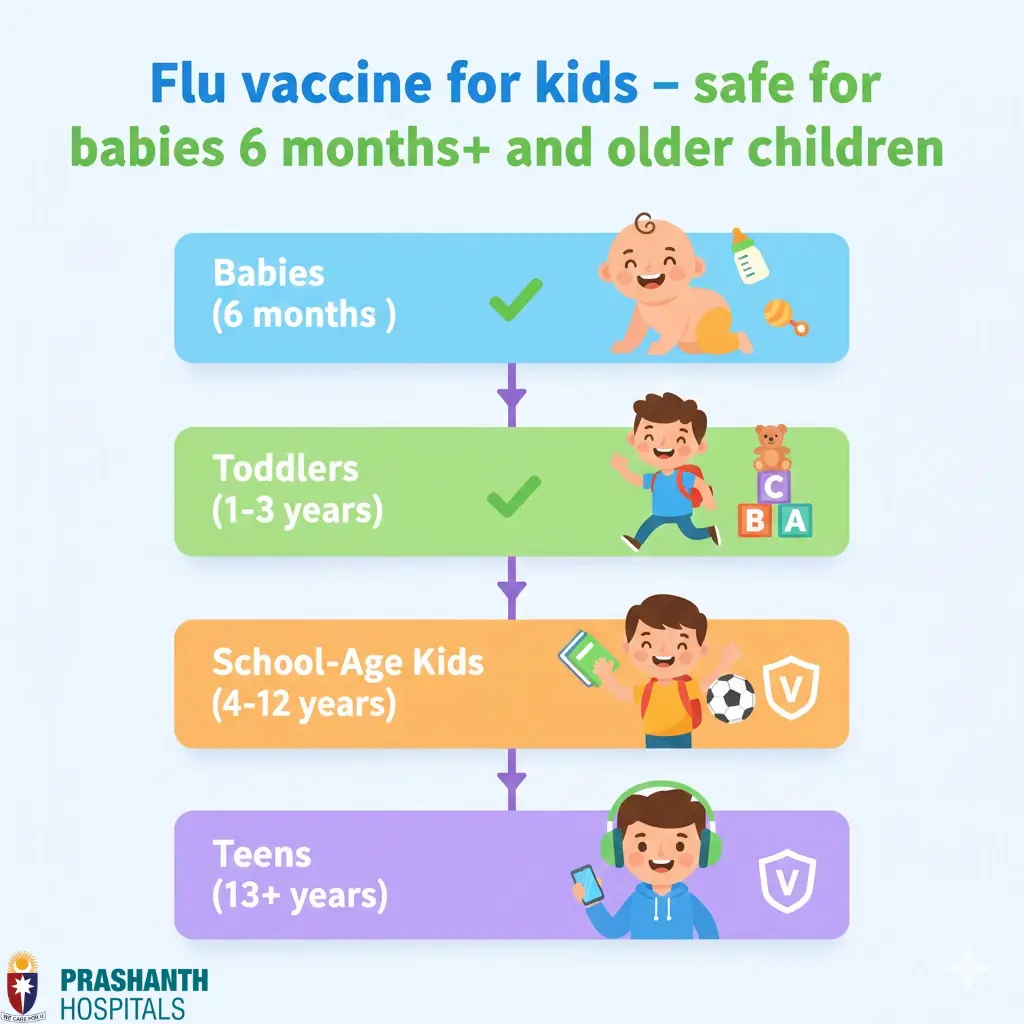
Children can receive the flu vaccine from 6 months of age.
Parents often ask:
- “Is it safe for a 6-month-old?” → Yes, the flu shot is safe.
- “Can teenagers get the same vaccine?” → Yes, children and teens up to 18 years receive yearly doses.
Kids under 6 months cannot get the vaccine, so family members should stay vaccinated to protect them.
Conclusion
The flu vaccine is a simple and effective way to protect your child from seasonal infections and related health problems. The flu vaccine for kids reduces the chances of severe symptoms and helps keep your family safe during flu season.
If you have questions, need guidance, or want help planning your child’s vaccination schedule, Prashanth Hospitals is here with trusted care and clear explanations for every family.