Kids frequently put things in their mouths, to start. Additionally, they don’t wash their hands after touching objects that could be contaminated. Infection resistance in children is also lower than in adults, which increases their chances of developing common childhood illnesses. With so many resources available today, parents can help keep the younger generation safe and healthy.
More than a dozen diseases, some of which were frequently fatal, have decreased to their lowest levels ever as a result of medical interventions and the introduction of vaccinations. In order to maintain this improvement in young children’s health, everyone must do their part. Preventing the spread of disease and saving a life may depend on how quickly you act.
What are the Most Common Childhood Illnesses?
Most infections are caused by germs called viruses and bacteria. Even though you might be able to stop the spread of germs, you can’t always prevent your child from getting sick. Knowing how to keep their kids healthy and what to do when they get sick is crucial for parents.
One of the most infamous disease carriers is children. Their hands are all over the place, and there’s a good chance they didn’t wash them after touching something unclean. Your child could become ill from one of the numerous common illnesses that affect kids. Here are just a few examples of those. Learn more about these prevalent diseases in the following paragraphs, as well as what you and your child can do to prevent or treat them.
1. Common Cold
It’s not surprising that the common cold is one of the most common childhood illnesses. Colds are caused by viruses and spread easily, especially in crowded environments like schools and daycare centers.
This infection mainly affects the nose and throat, making children feel tired and uncomfortable. It is usually mild but can spread quickly from one child to another.
Symptoms include:
- Runny nose
- Sneezing
- Fever
- Headache
- Muscle aches
Management:
Over-the-counter medicines can help relieve symptoms, along with rest, warm fluids, and proper hydration.
Prevention:
- Encourage frequent handwashing
- Avoid close contact with sick children
- Teach kids not to touch their face often
- Ensure proper sleep and nutrition
2. Sore Throat
Children often experience sore throats, which can be uncomfortable and irritating.
It is usually caused by viral infections and may occur along with a cold or flu. Most cases improve on their own without needing strong medications.
Important point:
Most sore throats are viral, and antibiotics are not required unless a bacterial infection is confirmed.
Symptoms:
- Pain while swallowing
- Throat irritation
- Mild fever
In most cases, children recover within 7 to 10 days without specific medication.
Prevention:
- Maintain good oral hygiene
- Avoid sharing food or utensils
- Keep children hydrated
- Protect from sudden temperature changes
3. Hand, Foot, and Mouth Disease
Children under the age of five are typically affected by this contagious viral illness.
It spreads quickly in close-contact settings and can cause discomfort due to mouth sores and skin rashes. Although it looks concerning, it usually resolves without complications and is one of the common childhood illnesses seen in young children.
It spreads through:
- Saliva
- Blisters
- Viral shedding from feces
Symptoms to watch for:
- Fever
- Sore throat
- Loss of appetite
- Skin rash on hands, feet, and mouth
Prevention:
- Wash hands after diaper changes and toilet use
- Disinfect toys and surfaces regularly
- Avoid sending infected children to school
- Prevent children from putting unclean objects in their mouth
4. Stomach Flu (Viral Gastroenteritis)
Also known as stomach flu, this condition is caused by various viruses and spreads easily through contaminated food, water, or contact.
It affects the digestive system and can make children feel weak due to fluid loss. Proper care is important to avoid dehydration.
Symptoms include:
- Diarrhea
- Vomiting
- Stomach pain
- Fever
This is one of the most common causes of diarrhea in children under five. Symptoms usually begin within two days and can last up to 10 days.
Important concern:
Children can become dehydrated quickly, so fluid intake and oral rehydration are crucial.
Prevention:
- Ensure safe drinking water
- Wash hands before eating
- Avoid contaminated or outside food
- Clean fruits and vegetables properly
5. Bronchitis
Bronchitis occurs when the airways in the lungs become inflamed and produce mucus, leading to breathing discomfort. It often develops after a cold and causes a persistent cough that may last for several days. Most cases are mild and improve with supportive care.
It is commonly seen in children as part of common childhood illnesses, especially during seasonal changes or after respiratory infections.
Symptoms include:
- Persistent cough
- Chest discomfort
- Fatigue
- Sore throat
Most cases are viral and often develop after an upper respiratory infection like a cold.
Prevention:
- Avoid exposure to cold air and pollution
- Keep children away from smoke
- Treat colds early
- Maintain clean indoor air
6. Ear Infections
Children are more likely than adults to develop ear infections due to shorter and more horizontal ear canals.
These infections can cause significant discomfort and may affect sleep and feeding in younger children. Early attention helps prevent complications.
Causes:
- Viral or bacterial infections
Symptoms include:
- Ear pain
- Fever
- Irritability
- Trouble sleeping
- Pulling or rubbing the ear
Prevention:
- Avoid feeding babies in a lying position
- Keep ears dry after bathing
- Manage colds early
- Follow vaccination schedule
7. Flu (Influenza)
Flu is more severe than the common cold and spreads quickly, especially during seasonal outbreaks.
It can affect the whole body, making children feel weak, tired, and less active. Some cases may require medical attention depending on severity.
Symptoms include:
- High fever
- Body aches
- Chills
- Fatigue
- Dry cough
Children may feel weak and require rest, hydration, and sometimes antiviral treatment based on severity.
Prevention:
- Annual flu vaccination
- Encourage hand hygiene
- Avoid crowded places during outbreaks
- Maintain good immunity through diet
8. Chickenpox
Chickenpox is a highly contagious viral infection, though less common today due to vaccination.
It causes itchy blisters that can spread across the body and may make children irritable. Proper care helps prevent scratching and infection.
Symptoms include:
- Itchy skin rash with fluid-filled blisters
- Fever
- Fatigue
- Loss of appetite
The rash usually starts on the face or chest and spreads across the body.
Prevention:
- Vaccination is the most effective protection
- Avoid contact with infected individuals
- Maintain hygiene
- Isolate infected children
9. Conjunctivitis (Pink Eye)
This is an infection or inflammation of the eye, commonly seen in children.
It spreads easily through contact and can affect one or both eyes. Maintaining hygiene is important to prevent it from spreading.
Symptoms include:
- Redness in the eye
- Watery or sticky discharge
- Itching or irritation
- Crusting of eyelids
It can spread easily through contact, so hygiene is important.
Prevention:
- Avoid touching or rubbing eyes
- Do not share towels or pillows
- Wash hands frequently
- Keep eyes clean
10. Skin Infections and Rashes
Children often develop minor skin infections due to exposure to germs and allergens. These conditions may vary from mild irritation to visible rashes and are usually manageable with proper care and hygiene.
They are also considered part of common childhood illnesses and are frequently seen due to environmental exposure and sensitive skin in children.
These may include:
- Fungal infections
- Allergic rashes
- Mild bacterial infections
Symptoms include:
- Redness
- Itching
- Swelling
- Dry or scaly skin
Prevention:
- Maintain daily hygiene
- Keep skin dry and clean
- Avoid allergens and irritants
- Use clean clothes and towels
Viral vs. Bacterial Infections – What’s the Difference?
Understanding the cause of an illness helps parents manage expectations regarding treatment.
- Viral Infections: Caused by viruses (like the cold or flu). These do not respond to antibiotics. Treatment focuses on rest, fluids, and managing symptoms.
- Bacterial Infections: Caused by bacteria (like Strep throat or some ear infections). These may require a course of antibiotics prescribed by a pediatrician to clear the infection.
Measures to Promote Good Hygiene in Children
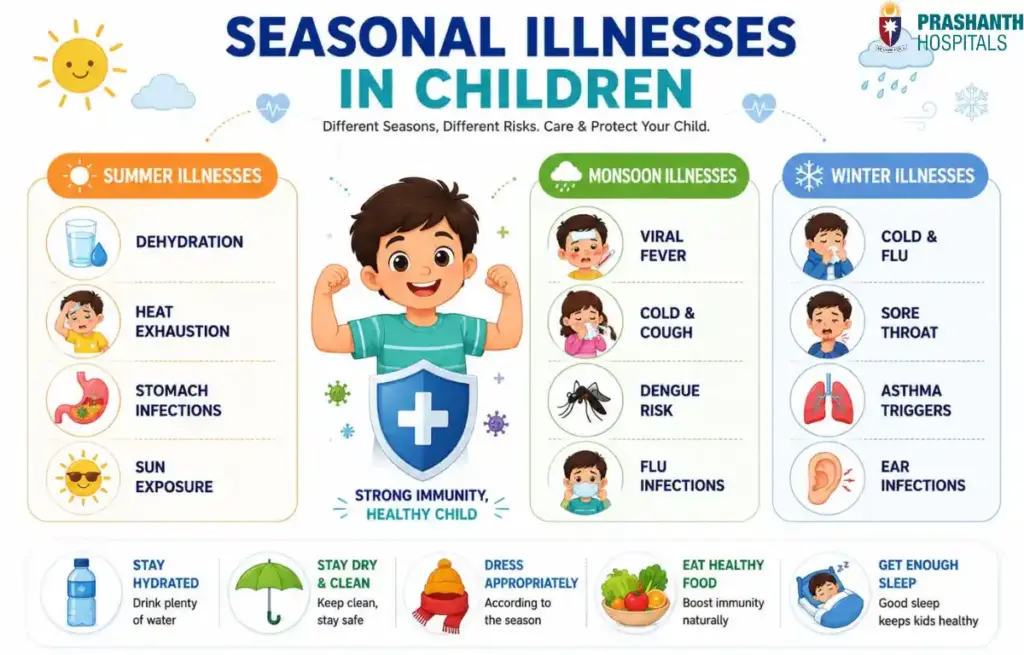
There are steps that can be taken to create a healthy environment for children. You can reduce your child’s risk of contracting these viruses and better manage common childhood illnesses and symptoms by doing the following:
- Nutrition: A well-balanced diet should include carbs, fats, proteins, vitamins, and minerals.
- Adequate Hydration: Should be maintained in children of all age groups.
- Vaccination: The child should be vaccinated as per the immunization schedule and any missed doses need to catch up which can be discussed with the pediatrician.
- Hygiene: Hand hygiene is the most important measure that needs to be taken seriously in order to avoid the transmission of harmful germs. Proper hygiene also ensures a decrease in worm infestation, skin and ear infections.
- Respiratory Habits: Teach the children to cover their mouths with tissue paper when coughing or sneezing.
- Sanitization: Clean the toys regularly. Both child and caregiver should frequently wash their hands with soap.
- Home Environment: Keeping your household germ-free can go a long way in reducing your child’s risk of contracting a contagious infection. Do not share eating utensils or drinking cups when the child is sick.
- Periodic Health Check: The child’s weight, height, body mass index (BMI), and other growth parameters, along with the completion of developmental milestones, should be monitored at regular intervals, and any deviation, if observed, should be addressed.
- Education: Health care visits should also be used to educate and reinforce good health practices in children and parents.
When to Call the Doctor
A sudden sickness will test the limits of your endurance and leave you worried and frustrated about the best course of action to treat your child. Most common childhood illnesses and symptoms run their course without any major complications. However, some signs may require timely consultation with a pediatrician. Watch out for the following:
- Preexisting Conditions: If your child has been diagnosed with asthma, diabetes, a suppressed immune system, or another chronic medical condition, speak to your pediatrician every time he comes down with a virus.
- Dehydration: Your child may appear very lethargic, have sunken eyes (or, if he’s a baby, a soft spot on his head), or have a mouth that feels sticky or tacky to the touch. Watch out if he’s only peeing three or four times a day or less.
- High Fever: In newborns, any elevated temperature warrants a visit to the doctor.
- Breathing Difficulty: If your child is wheezing, his breathing is rapid or labored, or there are long pauses in between each breath, reach out to a doctor right away.
- Loss of Appetite: A sick child’s lack of interest in food is typical. However, consult your doctor if your child is only consuming half as much food or liquids as usual for more than two days.
Home Care Essentials for Parents
While waiting for a virus to run its course, keep these items handy to keep your child comfortable:
- Digital Thermometer: To monitor fevers accurately.
- Oral Rehydration Salts (ORS): Essential for preventing dehydration during stomach flu.
- Saline Drops/Spray: To help clear nasal congestion in infants and toddlers.
- Humidifier: Adding moisture to the air can soothe a cough or sore throat.
Experience the Best Pediatric Care at Prashanth Hospitals
If your child has any of the symptoms mentioned above, we can help. Choosing a child specialist is one of the most important decisions a parent can make. That’s why Prashanth Hospitals, the best pediatric hospital in Chennai, offers unparalleled pediatric care round-the-clock.
Read also 6 to 12 Months Baby Food Chart