Your body gives you signals every single month. Most women know about their period. But very few know about the days that happen in the middle of their cycle. Those days are just as important.
Understanding the ovulation period for women can change the way you think about your health. Whether you are trying to get pregnant, trying to avoid pregnancy, or simply want to understand your body better, this guide is for you.
At Prashanth Hospitals, we believe every woman deserves clear, honest answers. So let us walk you through everything you need to know.
What Is Ovulation? A Simple Explanation
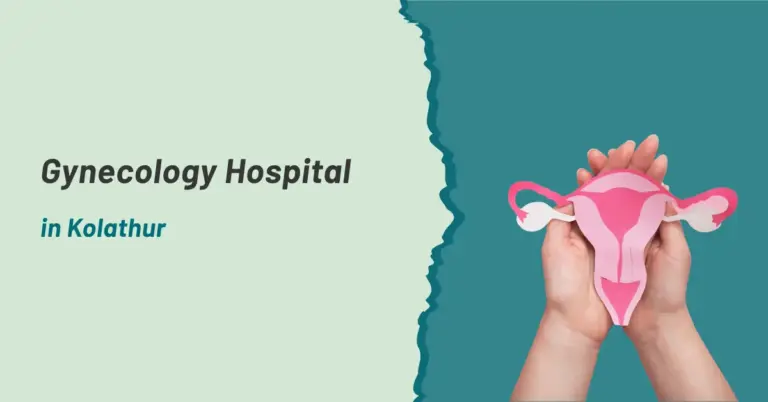
Ovulation is when one of your ovaries releases a mature egg. This egg then travels down the fallopian tube toward the uterus.
Your body gets a signal from a hormone called LH, or luteinising hormone. When LH rises sharply, it triggers the egg to be released. This usually happens around the middle of your menstrual cycle.
Once the egg is out, it survives for only 12 to 24 hours. If a sperm does not reach the egg in that time, it breaks down. Then your body starts preparing for the next cycle.
Many women wonder, is ovulation the same as a period? The short answer is no. Ovulation is when the egg is released. Your period happens about two weeks later if that egg was not fertilised. They are two different events in the same monthly cycle.
Ovulation Day vs. the Ovulation Period: What Is the Difference?
This is something that confuses a lot of women. Let us make it simple.
Ovulation Day is the exact day your egg is released. It is just one day.
The ovulation period for women is a wider window of about 5 to 6 days. This is also called your fertile window.
Why does this window exist? Because sperm can survive inside the body for 3 to 5 days. So even if you have sex a few days before the egg is released, pregnancy is still possible.
This is why the ovulation period for women matters more than just the single day of ovulation, especially when you are trying to conceive.
When Does Ovulation Happen in Your Cycle?
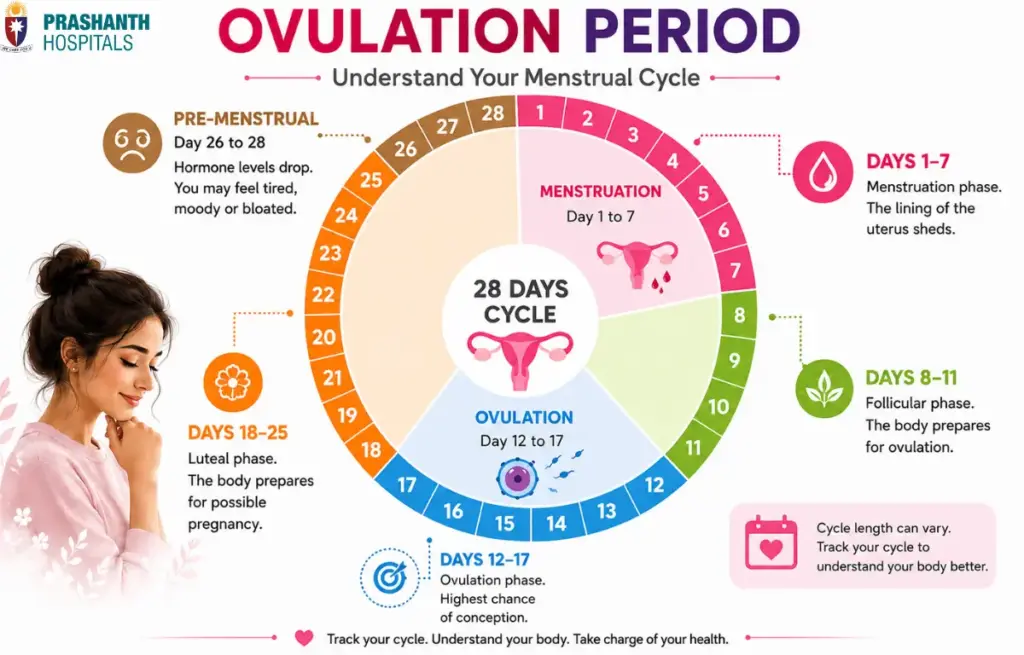
Most women have a cycle that lasts between 21 and 35 days. For a standard 28-day cycle, ovulation usually happens around day 14.
Here is a simple way to estimate your ovulation day. Take the date you expect your next period to start. Then count back 14 days. That is roughly when ovulation occurs.
But every woman is different. If your cycle is longer or shorter, your ovulation day shifts too. A woman with a 35-day cycle may ovulate around day 21. A woman with a 21-day cycle may ovulate as early as day 7.
Can you ovulate more than once per cycle? In most cases, no. The body usually releases only one egg per cycle. In rare cases, two eggs can be released within 24 hours of each other, which can lead to fraternal twins if both are fertilised.
Signs and Symptoms of Ovulation
Not every woman feels ovulation happening. But many notice one or more of these signs during their fertile window.
Physical Signs
- Changes in cervical mucus: Around ovulation, your vaginal discharge becomes clear, stretchy and slippery. It looks and feels similar to raw egg whites. This is one of the most reliable natural signs.
- Mild pelvic pain: Some women feel a dull ache or a sharp twinge on one side of the lower abdomen. This is called mittelschmerz, which means middle pain. It is usually harmless and lasts a few hours.
- Breast tenderness: Your breasts may feel slightly sore or sensitive around this time due to hormone changes.
- Light spotting: A small amount of spotting can occur when the egg is released. This is normal.
Other Signs
- A rise in basal body temperature after ovulation
- Increased sex drive
- Bloating
- Heightened sense of smell or taste
If you do not notice any of these signs, that is okay too. Every woman’s body is different.
How to Track Your Ovulation Period: 5 Methods
Knowing when you are in your ovulation period for women gives you more control over your health choices. Here are the most common ways to track it.
1. Ovulation Predictor Kits (OPKs)
These are urine tests you can buy at a pharmacy. They detect the LH surge in your body, which happens 24 to 36 hours before ovulation. Start testing a few days before your expected ovulation day. When the test line is as dark or darker than the control line, ovulation is coming soon.
2. Basal Body Temperature (BBT) Charting
Your resting body temperature rises slightly after ovulation, usually by 0.2 to 0.5 degrees Celsius. You need to take your temperature every morning before getting out of bed. Track it over several months to spot a pattern. This method tells you that ovulation has already happened, so it is best used to understand your cycle over time.
3. Cervical Mucus Monitoring
Check your vaginal discharge daily. As ovulation approaches, it becomes clearer and more slippery. When it looks like egg whites, you are likely in your fertile window. After ovulation, it becomes thicker and cloudy again.
4. Calendar or Rhythm Method
Track your cycle length over 6 or more months. Use the formula of subtracting 14 from your average cycle length to estimate ovulation day. This method works best if your cycles are regular.
5. Fertility Apps
Apps like Flo or Clue can help you log your symptoms, cycle dates, and temperature. They use this data to predict your fertile window. These apps improve in accuracy the more data you give them. However, they are an estimate and not a medical diagnosis.
Prashanth Hospitals Tip: If you want more precise results, our gynaecology team can help with ultrasound monitoring of your cycle. This is especially helpful if you are planning a pregnancy or undergoing fertility treatment.
What Happens During the Ovulation Period and Pregnancy
Understanding what happens during ovulation period helps you plan better for conception.
The egg survives for 12 to 24 hours. Sperm can survive for 3 to 5 days inside the reproductive tract. So the best time to try for a baby is in the 2 to 3 days just before ovulation and on ovulation day itself.
You do not need to try every day. Having sex every other day during the fertile window is enough for most couples. Sperm released earlier in the window can wait for the egg to arrive.
Can you get pregnant outside the fertile window? It is very unlikely, but not impossible if your cycle varies. This is why tracking your own cycle over several months gives you a more accurate picture.
Why You May Not Be Ovulating Regularly
Some women do not ovulate every month. This is called anovulation. It is more common than many people realise.
Common causes include:
- Polycystic Ovary Syndrome (PCOS): This is the most common hormonal condition affecting ovulation in women of reproductive age.
- Thyroid disorders: Both an underactive and overactive thyroid can disrupt hormone levels.
- High prolactin levels: This hormone, which is involved in breastfeeding, can suppress ovulation when elevated.
- Extreme exercise or very low body weight: The body needs adequate fat and energy to support a monthly cycle.
- High levels of stress: Chronic stress affects the hormones that control your cycle.
- Primary ovarian insufficiency: In some women, the ovaries stop functioning normally before age 40.
- Perimenopause or menopause: Ovulation becomes irregular and eventually stops as women age.
Signs that you may not be ovulating include very irregular periods, cycles shorter than 21 days or longer than 35 days, or no periods at all.
If you notice any of these patterns, speak to a doctor. Early support can make a real difference.
How to Support Regular Ovulation Naturally
There are practical things you can do to support your hormonal health and encourage regular ovulation.
- Keep a healthy body weight: Being significantly underweight or overweight can disrupt your cycle.
- Eat a balanced diet: Include plenty of whole grains, vegetables, healthy fats, and protein.
- Manage stress: Regular walks, yoga, and good sleep can help lower stress hormones.
- Avoid excessive exercise: Very intense training can suppress ovulation.
- Limit alcohol and smoking: Both have been shown to affect hormone balance and egg quality.
If lifestyle changes are not enough, a doctor may recommend medications such as clomiphene or letrozole to help stimulate ovulation. These are safe, well-studied options used widely in fertility care.
Ovulation, Birth Control and Special Situations
Many women have questions about how ovulation works in specific situations. Here are some honest, straightforward answers.
Does Birth Control Stop Ovulation?
Most combined oral contraceptive pills prevent ovulation. The hormones in the pill keep your LH levels steady so the egg is never released. Some other methods, like hormonal IUDs, work mainly by preventing sperm from reaching the egg rather than stopping ovulation entirely.
Can You Ovulate While Breastfeeding?
Breastfeeding, especially exclusive and frequent feeding, raises prolactin levels. This can delay the return of ovulation. But it is not a reliable method of contraception. Many women ovulate before their first postpartum period, which means pregnancy is possible before they even realise their cycle has returned.
Ovulation After Stopping the Pill
After stopping hormonal contraception, most women see their natural cycle return within 1 to 3 months. For some, it may take a little longer. If you are planning to conceive after coming off the pill, start tracking your cycle from the first month.
Is Ovulation the Same as a Period?
We hear this question often. Is ovulation the same as a period? No, they are not the same. Ovulation is when the egg is released, usually in the middle of your cycle. Your period is the shedding of the uterine lining that happens at the end of the cycle if the egg was not fertilised. Both are part of the same cycle but happen at very different times.
Ovulation and Fertility Treatments
For couples who need medical help to conceive, understanding what happens during ovulation period is the foundation of treatment planning.
In IUI (intrauterine insemination), the timing of ovulation is carefully tracked using ultrasound scans and blood tests. The procedure is done as close to ovulation as possible for the best chance of success.
In IVF (in vitro fertilisation), the ovaries are stimulated with hormonal injections to produce multiple eggs at once. The eggs are then collected before natural ovulation occurs and fertilised in a laboratory.
If you have been trying to conceive for 12 months without success (or 6 months if you are over 35), it is time to speak with a fertility specialist.
Prashanth Hospitals offers complete fertility evaluations including hormonal testing, ovulation tracking, and personalised treatment plans. Book a consultation with our team today.
A Final Word from Prashanth Hospitals
The ovulation period for women is one of the most important parts of your monthly cycle. Whether you are trying to start a family, managing a health condition, or simply getting to know your body, understanding ovulation gives you real information to work with.
No two women are exactly alike. Your cycle length, your symptoms, and your timing are unique to you. The most important thing is to pay attention, ask questions, and get support when you need it.
If your cycles are irregular, painful, or you have been trying to conceive without success, please do not wait. Our team at Prashanth Hospitals is here to help you every step of the way.
Talk to our women’s health specialists today. Book your appointment at Prashanth Hospitals.