Every year, millions of people around the world receive a skin cancer diagnosis. What makes this difficult to hear is that a large number of those cases could have been avoided with simple, consistent habits. Skin cancer does not develop overnight. It builds up slowly over years of unprotected sun exposure, and that means the decisions you make today have a direct impact on your skin health decades from now.
Whether you spend most of your time indoors or work outside every day, this guide gives you clear and practical tips on how to prevent skin cancer that you can start using right away.
Who Carries the Highest Risk?
Skin cancer does not pick one type of person. It can show up in anyone, at any age, with any skin tone. That said, certain conditions and habits push your risk higher than average. It helps to know where you stand.
You may need more frequent skin checks and stricter sun protection habits if you:
- Have parents, siblings, or close relatives who were diagnosed with skin cancer
- Have fair skin that turns red easily when you step outside
- Have light-coloured eyes and naturally blonde or red hair
- Have more than 50 moles spread across your body, or moles that look uneven or irregular
- Went through severe, blistering sunburns when you were a child
- Spend the majority of your working hours outside under open sky
- Use or have regularly used tanning beds in the past
One serious sunburn during your younger years can raise your lifetime risk of melanoma significantly. This is why protection habits matter at every age, not just when you are older.
Sun Damage Does Not Take a Day Off
Here is something most people get wrong. They put sunscreen on when the sky looks bright blue and skip it on grey or cloudy days. The problem is that UV radiation passes through cloud cover with very little reduction. You can burn on an overcast day just as easily as on a clear one.
UV rays also bounce back at you off reflective surfaces. Water, dry sand, light-coloured concrete, and even glass send UV rays back toward your skin from below and from the sides. This is why people often burn more at the beach or near a pool than they expect to.
There are two types of UV rays worth understanding:
- UVB rays: These hit the outer layer of your skin and are responsible for sunburn. They cause direct DNA damage and are strongly associated with skin cancer development.
- UVA rays: These travel deeper into the skin than UVB rays. They do not always cause a visible burn, but they quietly damage cells beneath the surface over time. Both UVA and UVB rays contribute to skin cancer risk, and both need to be blocked by your sunscreen.
The hours between 10 am and 4 pm are when solar radiation is at its most intense. A practical check: stand outside and look at your shadow. If your shadow is shorter than your body height, the sun is strong enough to cause damage to your skin.
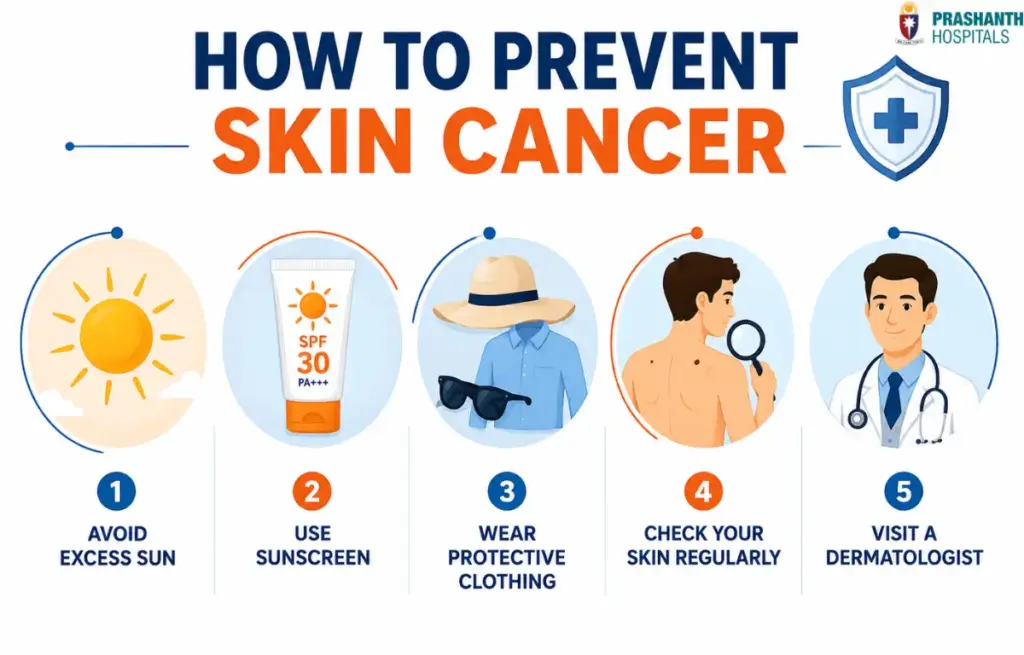
Skin Cancer Prevention Tips that Actually Make a Difference
These are not just general suggestions. These are the exact steps that dermatologists and cancer specialists recommend based on decades of clinical research and patient outcomes.
1. Apply the Right Sunscreen the Right Way
Daily sunscreen use is one of the most well-studied methods of reducing skin cancer risk. Studies consistently show that regular sunscreen use lowers melanoma risk substantially over time, particularly when it becomes part of your everyday routine rather than something you reach for only on hot days.
Here is how to get it right:
- Pick a sunscreen that blocks both UVA and UVB radiation. This is labelled as broad-spectrum on the bottle
- For everyday use, SPF 30 is the minimum. For extended time outdoors such as sports, gardening, or travel, step up to SPF 50 or higher
- Use roughly one full shot glass worth of product to cover your entire body each application
- Put it on at least 30 minutes before you head outside so it has time to absorb
- Put sunscreen back on every two hours throughout the day. If you go for a swim or sweat through your shirt, reapply immediately after
- Cover the areas people usually miss: tops of the ears, back of the neck, knuckles, and the tops of the feet
- Apply a lip balm that carries an SPF rating, because your lips are just as vulnerable to UV damage as the rest of your face
Sunscreen does an important job, but it is not meant to extend the time you spend baking in the sun. Think of it as backup protection layered on top of shade and clothing.
2. Dress to Block the Sun
Physical clothing coverage gives stronger and more reliable protection than sunscreen on its own. The more skin you keep covered, the less UV radiation reaches it.
When choosing what to wear on sunny days:
- Fabrics with a tight, dense weave block UV rays better than thin or loosely woven materials
- Synthetic fabrics and blended materials tend to offer better protection than lightweight cotton alone
- Deeper-coloured clothing absorbs more radiation before it reaches your skin
- Look for garments with a UPF label (Ultraviolet Protection Factor). This rating tells you exactly how much UV the fabric blocks, similar to how SPF works for sunscreen
- A wide-brimmed hat that shades your face, ears, and the back of your neck is one of the best accessories you can own for sun safety
- Choose sunglasses with a UV400 or full UV-protection label to protect both your eyes and the thin, sensitive skin around them
3. Limit Time in Direct Sunlight During High-Risk Hours
The midday stretch from 10 am to 4 pm delivers roughly half of the total daily UV dose in just a few hours. Reducing your exposure during this window, particularly during summer months and in tropical climates like southern India, cuts your skin cancer risk considerably.
When being outdoors during those hours is unavoidable:
- Walk on the shaded side of the street
- Sit under a tree or use an umbrella rather than staying in the open
- Be aware that shade alone does not give full protection when UV rays are reflecting off nearby surfaces like pavement or water
4. Stay Away From Tanning Beds Completely
This point deserves to be stated plainly. Tanning beds are not a safer alternative to sunbathing. They emit concentrated UV radiation, and in many cases the intensity is higher than what you would get from direct midday sunlight.
Research shows that people who begin using tanning beds before the age of 35 significantly increase their risk of developing melanoma. Melanoma is one of the top three cancers found in adults between the ages of 25 and 29, and researchers attribute a meaningful part of this trend to early tanning bed use among younger people. The younger a person starts, the greater the long-term risk.
If a tanned appearance is something you want, self-tanning creams and sprays are available and do not carry any UV risk. Just remember that they provide no protection from actual sun exposure, so sunscreen is still essential.
5. Review Your Medications With Your Doctor
This is a step most people never think about. Several commonly used medications can make your skin react more strongly to UV exposure, leading to faster burning and greater long-term damage.
Some medications, including certain antibiotics, anti-inflammatory medicines, acne treatments, and hormonal contraceptives, can increase sun sensitivity in some people. This does not happen with everyone who takes these medications, but it is worth knowing about.
If you take any ongoing medication, ask your doctor or pharmacist whether it affects how your skin responds to the sun. You may need to be more careful on days when you are taking those medications and spending time outside.
6. Build Sun Protection Into Your Children’s Routine
Young skin burns faster and holds onto that damage for decades. A serious sunburn during childhood has been shown to significantly raise the risk of melanoma in adulthood. Building good habits early is one of the most valuable things a parent can do.
- Babies under 6 months should be kept out of direct sunlight entirely
- Speak with your pediatrician before using any sunscreen on a baby younger than 6 months
- For children older than 6 months, apply sunscreen before outdoor play and reapply throughout the day
- Dress children in lightweight, protective clothing with hats and UV-blocking sunglasses
- Schedule outdoor play time before mid-morning or in the late afternoon when UV levels are lower
7. Support Your Skin Through What You Eat
Your diet does not replace sunscreen, but it does affect how well your skin holds up against everyday UV stress. Certain nutrients help your skin repair minor damage and stay resilient over time.
Foods that support skin health include:
- Citrus fruits, strawberries, and bell peppers, which are high in Vitamin C
- Almonds, sunflower seeds, and leafy greens for Vitamin E
- Carrots, sweet potatoes, and mangoes for beta carotene
- Fatty fish like mackerel and sardines, as well as walnuts and chia seeds, for essential fatty acids that help reduce skin inflammation
- Green tea and colourful vegetables for polyphenols that protect cells from oxidative stress
A balanced diet rich in fruits, vegetables, and healthy fats contributes to skin that is better equipped to handle the demands of daily sun exposure.
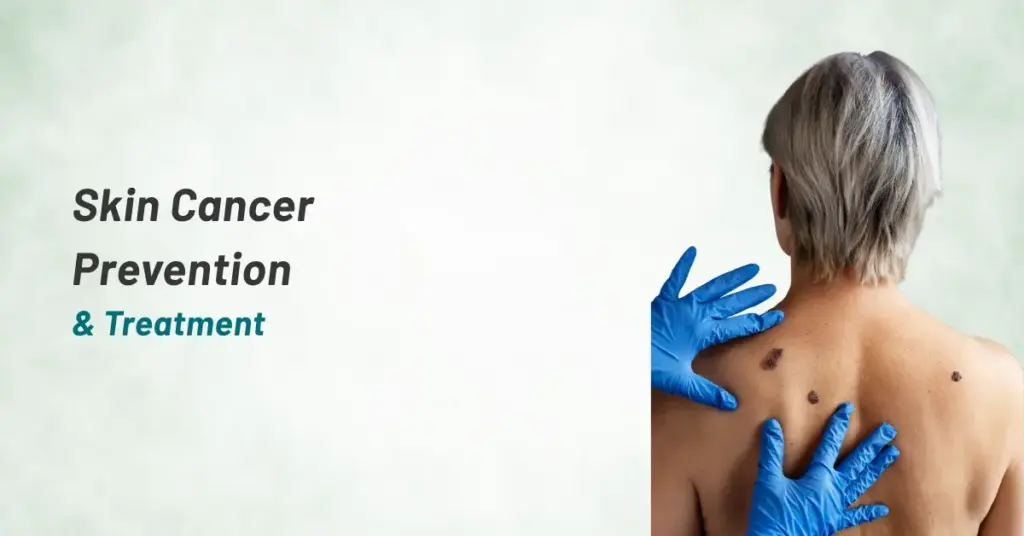
Know the ABCDE Rule for Catching Skin Cancer Early
Prevention is step one. Knowing what to look for is step two. When localized melanoma is detected early before it has had a chance to spread to other parts of the body, the five-year survival rate is approximately 99 percent. When it is caught late, after spreading to distant organs, treatment becomes significantly harder and outcomes are far less predictable.
The ABCDE rule helps you identify moles or spots that need professional attention:
- A for Asymmetry: One half of the mole does not mirror the other
- B for Border: The edges are rough, uneven, or poorly defined rather than smooth and round
- C for Colour: The spot has more than one colour, such as a mix of brown, black, red, white, or blue
- D for Diameter: The spot has grown larger than a pencil eraser, roughly 6 millimetres across
- E for Evolving: The mole or spot is changing. It is getting bigger, shifting colour, or starting to itch or bleed
If even one of these signs applies to something on your skin, that is your signal to get it checked. A dermatologist can usually determine within one appointment whether a spot needs further attention.
How to Check Your Own Skin Once a Month
Monthly self-exams are one of the most effective tools for catching changes before they become serious. This is a habit that costs nothing and takes about ten minutes.
- What you need: A full-length mirror, a smaller hand mirror, and a well-lit room. A partner helps for checking the back and scalp
- What to do: Start at your scalp and work downward across your face, neck, chest, back, arms, hands, legs, and the bottoms of your feet. Look at every area you can reach
- What to look for: Anything that is new, anything that has changed since last month, spots that itch without stopping, or patches of skin that have not healed in several weeks
Write down or photograph anything that looks different from your last check. Bring that information to your dermatologist rather than trying to diagnose it yourself.
Beyond self-exams, schedule a professional full-body skin check with a dermatologist once every year. Many early-stage skin cancers are identified during routine visits, well before the patient had any reason to suspect a problem.
What If You Have already had Years of Sun Exposure?
This is one of the most common questions people ask. If you spent years working outdoors, skipped sunscreen regularly, or had multiple sunburns in your younger days, you may feel like the damage is already done.
Some of it is. But the habits you build from this point forward still matter. UV damage accumulates over time, and each additional year of unprotected exposure adds to the total. Reducing your exposure going forward lowers the risk of pushing already-damaged cells to the point where they turn cancerous.
People with a history of significant sun exposure should be particularly committed to annual dermatologist visits and monthly self-exams. The window for catching problems early remains open at every age. Starting better habits now delivers real benefits, regardless of your history.
A Specific Note for People Living in India
India sits in a high UV zone for most of the year. Unlike countries where sun protection is mainly a summer concern, in India it needs to be a consistent, year-round practice.
One important point that is often overlooked in India: people with darker skin tones do have more natural pigment, which provides some degree of UV protection. But this does not make them immune to skin cancer. Darker-skinned people can and do develop skin cancer, and when they do, it is frequently caught later because early warning signs are less visible and often go unnoticed or are mistaken for something else. This delayed diagnosis can make treatment more difficult.
Outdoor workers, daily commuters on two-wheelers, construction workers, and farmers often receive some of the highest daily UV doses of any population group. And yet, awareness of skin cancer prevention tips remains limited across many communities.
A few adjustments that work well in the Indian context:
- Apply a broad-spectrum SPF 30 sunscreen every morning before leaving home, even for short trips
- Carry a UV-blocking umbrella for daily commuting and walking errands
- Wear a dupatta, stole, or light full-sleeve shirt when riding outdoors
- Schedule physical activity and outdoor chores before 9 am or after 5 pm when UV levels are lower
- Visit a dermatologist for a skin check once a year, even if your skin currently looks and feels completely normal
Consistent daily protection applied on ordinary days does far more than occasional protection applied only on trips to the beach.
When You Should See a Dermatologist
Do not wait for a spot to bleed or grow large before making an appointment. Book a visit with a skin specialist if:
- You notice a new mole or mark that appeared without explanation
- A mole you have had for years looks different from how it looked before
- A patch of skin has been itching, bleeding, or refusing to heal for more than a few weeks
- You have a close family member who was diagnosed with skin cancer
- You are an outdoor worker or have had significant sun exposure over many years and have not had a professional skin check recently
At Prashanth Hospitals in Chennai, our dermatology team offers thorough skin evaluations and helps patients understand their personal risk profile. Catching skin cancer early is the most powerful factor in determining how straightforward treatment will be.
The Bottom Line on Skin Cancer Prevention
Skin cancer develops gradually and quietly, but the steps that help prevent it are neither complicated nor expensive. Wearing sunscreen daily, covering your skin appropriately, avoiding tanning beds, eating a nutrient-rich diet, checking your skin every month, and visiting a dermatologist once a year form a routine that genuinely reduces your risk over a lifetime.
The key is showing up for your skin on ordinary days, not just on holidays or beach trips. Good habits practised consistently protect far better than perfect habits practised once in a while.
Your skin works hard every day. A few mindful choices keep it working well for the long run.