Our forefathers used some empirical language about eating, such as “food is medicine” and “eat when hungry.” Many people nowadays eat for pleasure rather than hunger.
As a result, the blood sugar level rises, and diabetes develops. Following a proper food chart for diabetic patient can help manage these changes and support better health.
Can Food Choices Help with Diabetes?
A proper nutritious diet is necessary to control high blood sugar. Obesity is also a cause of high blood sugar levels and diabetes.
A diabetic specialist at Prashanth Hospitals says, “The primary relief for obese patients affected by diabetes is diet and pills. They should strictly follow the special diet prescribed by the doctors.”
A significant weight loss should be achieved first through diet and exercise. For this, doctors are now recommending a special diet called Intermittent Fasting.
And if some people do not lose weight through primary treatment such as medicine, pills, diet, and exercise, they can lose weight by performing bariatric surgery. With this, their blood sugar levels will also drop.
Following a structured diet food for diabetic patient approach can improve these outcomes.
Symptoms of Diabetes
Diabetes symptoms typically appear gradually over time. They may consist of:
- Blurred vision
- Fatigue
- Feeling very hungry or thirsty
- Increased need to urinate (usually at night)
- Slow healing of cuts or sores
- Tingling or numbness in your hands or feet
- Unexplained weight loss
What Are the Causes of Diabetes?
Type 2 diabetes develops when the pancreas makes less insulin than the body needs, and the body cells stop responding to insulin. They don’t take in sugar as they should. Sugar builds up in your blood. When cells don’t respond to insulin, this is called insulin resistance. It’s usually caused by:
- Lifestyle factors, including obesity and a lack of exercise
- Genetics, or abnormal genes, that prevent cells from working as they should
Lifestyle and Food Habits Impact
Restaurants attract a significant number of customers each day. Because women and housewives are now expected to contribute financially to their households, many of them order food online instead of cooking.
As a direct consequence, nourishing food is not readily available. There is a lack of hygienic food options.
There are also circumstances where you are compelled to consume foods that are harmful. For instance, if you eat a pizza, you will consume the equivalent of two days’ worth of calories in one meal.
On the other hand, we eat without much thought. Children also develop these habits early. Weight gain from lack of activity and unhealthy eating affects insulin function.After a point, the pancreas stops producing enough insulin, leading to diabetes. This is where choosing indian food for diabetes becomes important.
Genetic Influence on Diabetes
The eating patterns of some parents are written into their DNA and passed to their children and grandchildren.
Following the same habits, they may not engage in physical activity and continue eating high-calorie foods. This leads to weight gain and increases diabetes risk.
Because of this, diabetes seen in parents at age 60 may appear in children as early as age 30. A balanced food for diabetes patient in india can help reduce this risk.
How Does Food Impact Diabetes?
Diabetes does not mean you cannot eat your favorite foods. However, you need to monitor your blood glucose levels carefully.
A person with diabetes must understand calorie, fat, and carbohydrate intake. Managing carbohydrate portions can help control blood sugar levels.
You can test your blood glucose after meals to understand how foods affect you. Each person responds differently to food. Because of this, following a personalized food chart for diabetic patient is very important.
Foods to Avoid in Diabetes
- Sodas and Sweet Drinks
- Artificial Trans Fats
- High-carbs
- Sugar-coated Cereals
- Honey and Brown Sugar
- Processed meats
- Packaged snacks and processed baked goods
- Dried fruits
- Foods with trans fats, or high amounts of saturated fats
- Sugary foods
White bread, rice, and pasta all contain “white” carbohydrates that are essentially nutritionally worthless. Along with elevated levels of low-density lipoprotein cholesterol (the “bad” cholesterol), they can also result in blood sugar swings, weight gain, and weight loss. Avoiding these foods is important when following a diet food for diabetic patient plan.
General Dietary Advice
To help manage your diabetes:
- Eat regular meals and spread them evenly throughout the day
- Eat a diet lower in fat, particularly saturated fat
- If you take insulin or diabetes tablets, you may need to have between-meal snacks
- It is important to recognize that everyone’s needs are different. All people with diabetes should see a doctor and dietician for individualized advice.
A proper food for diabetes patient in india includes these balanced choices. Planning meals using indian food for diabetes helps maintain consistency.
Food Chart for Diabetic Patient (Indian Meal Plan)
| Time | Meal | Food Options | Why It Helps |
| Early Morning (6–7 AM) | Empty stomach | Warm water + soaked almonds (4–5) or methi seeds water | Supports digestion and helps control blood sugar |
| Breakfast (8–9 AM) | Balanced start | Vegetable oats / Idli with sambar / Whole wheat toast + egg | Provides steady energy without sugar spikes |
| Mid-Morning (11 AM) | Light snack | One fruit (apple, guava, papaya) + green tea | Keeps sugar stable and prevents overeating |
| Lunch (1–2 PM) | Main meal | Brown rice or 2 chapati + dal + vegetable + salad + curd | Balanced carbs, protein, and fiber |
| Evening Snack (4–5 PM) | Healthy snack | Roasted chana / sprouts salad / buttermilk | Prevents sudden hunger and sugar drops |
| Dinner (7–8 PM) | Light meal | 1–2 chapati + vegetable + paneer/tofu/chicken | Light and easy to digest at night |
| Bedtime (10 PM) | Optional | Warm milk (unsweetened) or small handful of nuts | Helps avoid night-time sugar drop |
Key Guidelines for This Food Chart for Diabetic Patient
- Eat small, frequent meals instead of large portions
- Choose low glycemic index foods (slow sugar release)
- Avoid sugary drinks, processed foods, and refined carbs
- Include fiber-rich foods like vegetables and whole grains
- Stay hydrated throughout the day
- Maintain regular meal timing
Key Nutrition Guidelines
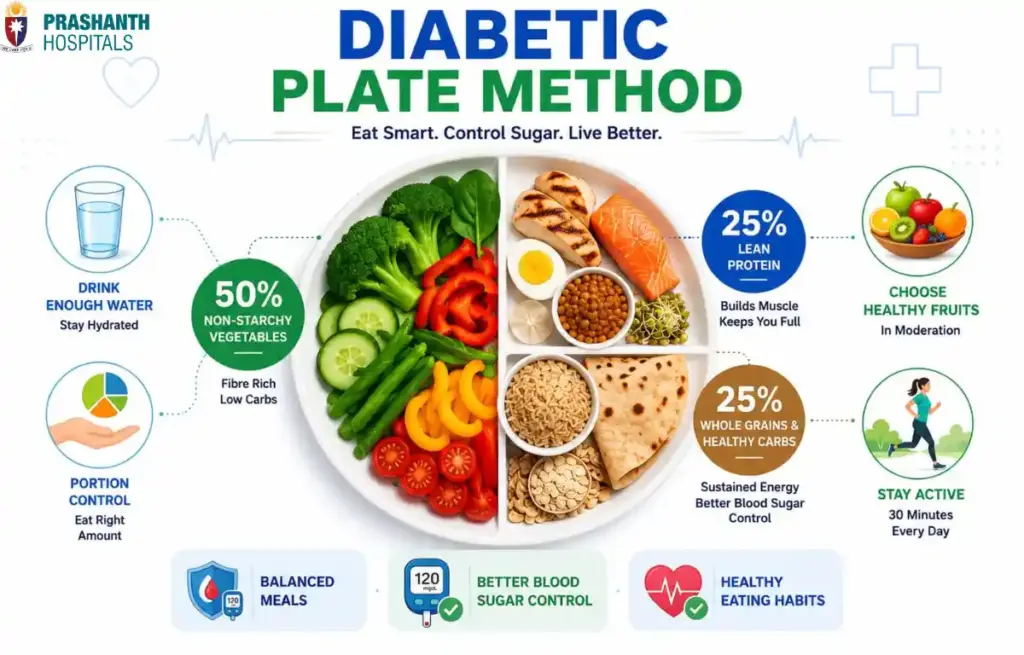
- The carbohydrates consumed should be low glycemic load and come primarily from vegetables
- The fat and proteins consumed should primarily come from plant sources
- Watch the amount of fat you eat and limit the amount of saturated fat by choosing lean meats and healthy fats
- Fiber, fat, and protein help slow digestion and absorption of glucose from carbs, so your blood glucose will rise more slowly after a meal
This forms the base of a balanced food chart for diabetic patient.
Lifestyle Management Tips
Controlling diabetes involves managing multiple aspects of life. Even if you eat healthy foods, poor portion control can lead to weight gain. Proper sleep helps regulate hormones and reduce blood sugar levels.
After meals, light activity such as walking helps burn glucose. Even 5–10 minutes can prevent sugar spikes. Following a consistent food chart for diabetic patient along with these habits improves results.
How Can I Prevent Type 2 Diabetes?
You can prevent or delay Type 2 diabetes by:
- Eating a healthy diet
- Exercising regularly
- Losing weight
- Going for regular health checkups
Advanced Diabetes Care
The latest advances in diabetes diagnosis, treatment, and prevention are available at Prashanth Institute of Diabetology.
Services include:
- Diabetes Education and Counseling
- Diabetes Master Health Check
- Medical Nutritional Therapy
- Neuropathy and Vascular Screening
- Retinopathy Care
- Diabetes Foot Study
Eat Healthy, Prevent Diabetes
Following a diabetes diet, fortunately, does not imply giving up the pleasure of eating or avoiding favorite foods and special family meals. You can still have “pizza night,” celebrate birthdays and anniversaries, and eat holiday and vacation meals. This is more about your daily routine, food choices, and meal preparation. Weight management will be crucial in your fight against diabetes, so make sure to carefully follow your doctor’s instructions. Healthy eating is the same for people with diabetes as it is for everyone else. You don’t need to prepare separate meals or purchase specialty foods, so sit back and enjoy healthy eating with the rest of your family.