Hyperglycemia, also known as high blood sugar, typically develops when the body is unable to make proper use of insulin or has extremely low levels of insulin. Insulin is the hormone that is responsible for transporting glucose into the bloodstream, where it can then be transported to cells and used as a source of energy. Insulin also plays a role in the regulation of blood sugar levels. Diabetes is a condition that is typically associated with high blood sugar, and understanding how to reduce blood sugar level is essential for managing it effectively.
Symptoms of High Blood Sugar
Some of the common symptoms of high blood sugar include the following:
- Frequent urination
- Feeling thirsty all the time
- Increased hunger
- Headaches
- Feeling weak and tired
- Slow-healing wounds
- Weight loss
- Dry mouth
- Tingling and numbness in hands and feet
- Skin changes, such as blisters and dryness
- Swollen and bleeding gums
- Fruity-smelling breath
Most of these symptoms build up gradually and can be managed with the lifestyle steps below. However, sudden weight loss or fruity-smelling breath can sometimes signal a more serious complication and should not be ignored, if you notice either of these, it’s best to consult a doctor promptly rather than waiting to see if it improves on its own.
When a person has diabetes, their health and well-being depend on managing their blood sugar levels properly and learning how to reduce blood sugar level through lifestyle changes. To improve or maintain a good quality of life, you can try the following.
If you’re currently on diabetes medication or insulin, check with your doctor before making major changes to your diet or exercise routine, since combining new lifestyle changes with existing medication can sometimes lower blood sugar too much.
Make Healthy Changes to Your Diet
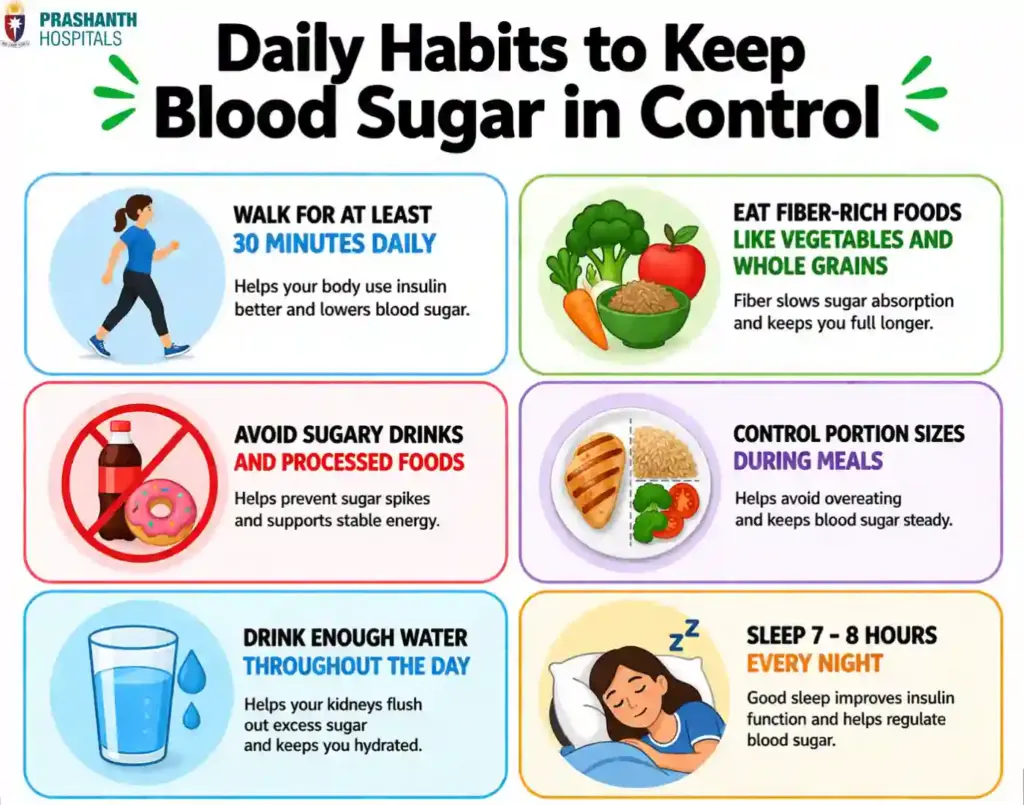
The manner in which your body makes use of insulin is significantly influenced by the foods that you eat, and choosing the right foods that reduce blood sugar can make a big difference. When you eat nutritious foods like vegetables and whole grains and avoid foods that are high in sugar and carbohydrates, you can often help regulate your insulin and reduce the amount of sugar in your blood.
Say yes to fiber-rich foods
Increasing fiber intake has been linked to a reduction in blood glucose levels over time in several studies, making it one of the effective ways in how to reduce blood sugar level. The majority of people, whether they have diabetes or not, do not consume the daily amount of fiber that is recommended, which is between 21 and 38 grams.
When possible, go for fruits, vegetables, whole grains, and sugar-free treats over refined-grain products like bread, rolls, and other baked goods. Because fiber causes a delay in the digestion of carbohydrates, you should make sure that you get plenty of it in your diet. Vegetables, beans, fruits, and whole grains are some examples of foods that are high in fiber.
Reduce carb intake
You should cut back on your consumption of refined carbohydrates because eating a high quantity of carbs can trigger the pancreas to release a higher quantity of insulin, which can lead to insulin receptors becoming less sensitive over time. White bread, pastries (like donuts, cookies, and cakes), soda, and a wide variety of other processed foods are all examples of refined carbohydrates that should be avoided if you want to manage your blood sugar better. You should restrict your consumption of carbohydrates to only complex carbohydrates (such as beans, sweet potatoes, and whole grains), which are higher in fiber and packed with nutrients.
Stay hydrated
Consuming a lot of water can help you avoid becoming dehydrated and can also assist in the removal of excess sugar and toxins that may be causing your kidneys to work harder than they should. Additionally, water assists in maintaining normal levels of sugar in the blood. Make it a goal to drink more water throughout the day, and try to switch out sugary drinks like soda and fruit juice for water whenever possible.
Avoid sugar
Avoid eating foods high in sugar because consuming a lot of sugar can put your kidneys under unnecessary strain and raise your blood sugar levels. Some of the many high-sugar foods that contribute to high blood sugar and diabetes are candies, dried fruits, pastries, condiments, and processed foods. Other high-sugar foods include baked goods. If you do consume sugar, keep the amount minimal, and speak to your doctor or a dietitian about which sweeteners, if any, are safe to include in your specific diet plan, since even natural sweeteners like honey are still a form of sugar and can raise blood glucose.
Exercise regularly
Your hormones are better controlled by exercise, and your body uses insulin more effectively, which is important in understanding how to reduce blood sugar level naturally. Even if you have to start out slowly with quick walks around your neighborhood, begin exercising regularly. Five days a week, you ought to spend at least 30 minutes exercising. Start increasing the intensity of your workouts as your energy and fitness levels rise to maximize the health benefits. For those who want to naturally lower their blood sugar levels and maintain a healthy weight, strength training, brisk walking, running, swimming, dancing, and hiking are all excellent forms of exercise.
Quit smoking
A meaningful number of people with diabetes also smoke, and research shows smoking increases the risk of heart disease, stroke, problems controlling blood sugar, vision loss, nerve damage, kidney issues, and even amputation. Make another attempt to quit if you’ve already tried. It may be beneficial to combine counseling or a support group with nicotine replacement therapies and medications to reduce cravings.
Reduce and manage stress
Stress increases your levels of the stress hormone cortisol, which can lead to imbalances in your blood sugar and in many other hormones. Experiencing some stress from time to time is normal, but chronic stress can have serious consequences on your health and raise your blood sugar levels. Proven ways to decrease stress are regular exercise, stretching, meditation, yoga practice, deep breathing, mindfulness practices, listening to music, family time, making time for self-care, and hobbies. Just 10 to 30 minutes a day of consistent practice of one or more of the above can make a huge difference in well-being.
Practice a better sleep routine
A regular sleep routine, limiting the amount of time spent in front of electronic screens, and rearranging your work schedule so that you have time for self-care are all very important for managing blood sugar effectively. Making time for your family, hobbies, and self-care routines not only brings you joy but also leads to improved health. Including foods that reduce blood sugar along with proper sleep can further support healthy glucose levels.
When Should You See a Doctor for High Blood Sugar
Lifestyle changes can go a long way in managing blood sugar, but they aren’t always enough on their own, and knowing when to get medical help matters just as much as knowing what to eat or how much to exercise.
You should consult a doctor if your blood sugar readings stay high despite following diet and exercise changes consistently for a few weeks, or if you notice symptoms getting worse instead of better. Fruity-smelling breath, sudden or unexplained weight loss, confusion, or difficulty breathing need prompt medical attention, since these can point to a more serious complication rather than everyday high blood sugar.
It’s also worth checking in with your doctor if you’re newly experiencing symptoms and haven’t been diagnosed with diabetes yet, since early diagnosis makes long term management significantly easier. If you’re already on medication or insulin and your readings are fluctuating a lot, whether too high or dropping too low, that’s a sign your treatment plan may need adjusting, and this should always be discussed with your doctor rather than managed on your own.
Regular checkups and routine blood sugar monitoring, even when you’re feeling fine, remain one of the best ways to catch changes early and stay ahead of complications.
Conclusion
Managing high blood sugar is essential for maintaining overall health, especially for individuals with diabetes. Simple lifestyle changes such as following a balanced diet, choosing foods that reduce blood sugar, staying physically active, and maintaining proper hydration can help keep glucose levels under control. Consistency in these habits plays a key role in improving insulin function and preventing sudden spikes in blood sugar.
It is equally important to manage stress, get adequate sleep, and seek timely medical advice when symptoms persist. Early detection and regular monitoring can help prevent complications and support long-term well-being. With the right care and guidance, blood sugar levels can be managed effectively, allowing you to lead a healthier and more active life.
The latest therapeutic advances for diabetes early diagnosis, treatment, and prevention are available at Prashanth Institute of Diabetology.