Eating well with PCOS isn’t about being perfect. It’s about choosing meals that work with your hormones instead of against them.
Quick Answer
A healthy 7 day PCOS diet plan focuses on balancing blood sugar, improving how your body uses insulin, and giving you steady nutrition through the day. Instead of cutting out entire food groups, it leans on lean protein, high-fiber foods, healthy fats, whole grains, fruits, and vegetables. Paired with movement, good sleep, and lower stress, this kind of eating can help with energy, cravings, weight, and hormone balance over time.
Why Most PCOS Diets Don’t Work
If you’ve searched for a PCOS diet before, you’ve likely seen long lists of foods to avoid and strict meal plans promising quick fixes. Many women follow one for a few days, then cravings return, energy drops, and the plan feels impossible to keep up.
This usually isn’t about motivation. Most diets are built for weight loss alone, while PCOS is a hormonal condition that changes how your body responds to food. So instead of asking “how can I eat less,” a more useful question is “how can I eat in a way that helps my hormones work better.”
This guide isn’t about eating less or giving up foods you enjoy. It walks through a practical 7 day meal plan built to support your body, not fight it.
Why Your Plate Matters more than Counting Calories
For women with PCOS, what’s on your plate often matters more than how much is on it, because PCOS is a hormone condition, not just a weight condition.
Many women with PCOS have insulin resistance, where the body’s cells don’t respond well to insulin, so the body makes more of it. Higher insulin levels can push the ovaries to make more male-type hormones, which can lead to irregular periods, acne, extra facial hair, and trouble with ovulation.
Studies suggest that 50 to 70 percent of women with PCOS have some degree of insulin resistance, even those who are not overweight. This is one reason two women with similar body weight can experience PCOS very differently.
The good news is that food choices can help. Meals built around protein, fiber, healthy fats, and slow digesting carbs help avoid sharp blood sugar spikes. Over time, this can improve how your body responds to insulin and support better hormone balance.
The Four Principles Behind this Plan
1. Protein at every meal. Protein slows digestion, helps you feel full longer, and lowers cravings that follow refined meals. Good options include eggs, Greek yogurt, paneer, tofu, fish, chicken, lentils, and chickpeas.
2. Fiber throughout the day. Fiber slows how fast sugar enters your blood, keeps you full, and supports healthy digestion. Good sources include vegetables, fruits, legumes, oats, quinoa, brown rice, and flaxseeds.
3. Healthy fats aren’t the enemy. Fat doesn’t automatically become body fat. Healthy fats support hormone production and help meals feel more satisfying. Good choices include avocado, nuts, seeds, olive oil, fatty fish, and nut butters. The goal isn’t to eat large amounts of fat, just the right kind in reasonable portions.
4. Carbs are chosen carefully, not eliminated. Carbs remain your body’s main fuel source. The key is picking ones that digest slowly and pairing them with protein and fiber.
| Instead of | Try | Why it helps |
| Sugary cereal | Oats with nuts and berries | Slower, steadier energy |
| White bread | Whole grain bread | More fiber, better blood sugar control |
| Sweetened drinks | Water or unsweetened tea | Cuts added sugar |
| Refined snacks | Fruit with nuts or yogurt | Combines carbs with protein and fat |
Foods Worth Keeping on Hand
Greek yogurt, eggs, lentils and beans, oats, leafy greens, berries, nuts and seeds, fatty fish like salmon, whole grains, and colorful vegetables. No single food fixes PCOS, but keeping these on hand makes it easier to build a balanced plate most days. One slice of cake or a family meal out won’t undo your progress either. Hormones respond to what you do consistently, not the occasional treat.
Foods You Don’t Need to Fully Avoid
A common myth is that managing PCOS means giving up rice, bread, dairy, fruit, or dessert entirely. That isn’t true. Instead of asking “can I eat this,” a better question is “how can I fit this into a balanced meal.”
| Food | Avoid it? | Smarter approach |
| Rice | No | Pair with vegetables and a protein like lentils, eggs, or paneer |
| Fruit | No | Whole fruit is better than juice, since it raises blood sugar more slowly |
| Bread | No | Choose whole grain and pair with protein or healthy fat |
| Potatoes | No | Boiled or baked is better than fried, portion matters most |
| Dairy | Depends | Many women tolerate it well, plain and Greek yogurt are good protein sources |
| Chocolate | No | A small, occasional portion is fine |
No single meal decides your hormone health, and no single treat ruins your progress. What matters is your overall pattern over months and years.
Your 7 Day PCOS Diet Plan
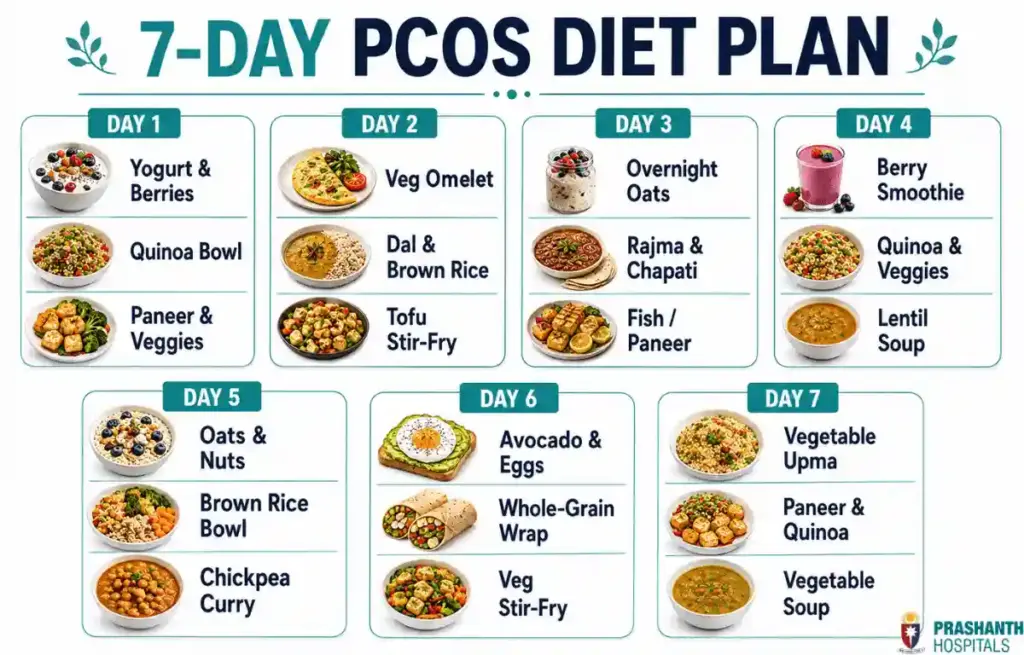
Use this as a framework, not a strict rulebook. Swap in vegetarian options, seasonal produce, or foods from your own kitchen freely. What matters is the pattern behind each meal: protein, fiber, healthy fat, and vegetables together.
| Day | Breakfast | Mid-Morning | Lunch | Evening Snack | Dinner |
| 1 | Greek yogurt with berries, chia, almonds | Apple with peanut butter | Grilled chicken or tofu, quinoa, mixed salad | Roasted chickpeas | Grilled salmon or paneer, broccoli, sweet potato |
| 2 | Vegetable omelet, whole grain toast | Plain yogurt with flaxseed | Brown rice, dal, spinach, cucumber salad | Pear with walnuts | Stir fried vegetables with tofu and brown rice |
| 3 | Overnight oats, chia, walnuts, cinnamon, berries | Boiled eggs or roasted soybeans | Whole wheat chapati with rajma and vegetables | Carrot sticks with hummus | Grilled fish or paneer, roasted vegetables |
| 4 | Spinach, berry, yogurt smoothie with flaxseed | Pistachios | Grilled chicken, quinoa, roasted vegetables | Orange with pumpkin seeds | Lentil soup, mixed vegetable salad |
| 5 | Oats with blueberries, walnuts, cinnamon | Apple or guava | Grilled salmon or tofu, brown rice, steamed vegetables | Mixed seeds | Chickpea and vegetable curry, whole grain roti |
| 6 | Avocado toast with poached eggs | Greek yogurt with sunflower seeds | Whole grain wrap with hummus, grilled vegetables, chicken or tofu | Roasted peanuts | Vegetable stir fry with paneer or shrimp, brown rice |
| 7 | Vegetable upma with plain yogurt | Seasonal fruit with almonds | Grilled paneer, quinoa, roasted vegetables | Homemade trail mix | Vegetable soup with grilled fish or lentil patties |
Think of this as the start of a lasting pattern, not a seven-day challenge. Once you understand the structure, you can rotate ingredients and build your own versions.
What Might Change After One Week
One week isn’t enough to fully change PCOS, but many women notice small, encouraging shifts early on: steadier energy, fewer sudden sugar cravings, and feeling fuller after meals. Some also notice better digestion, especially if their earlier diet was low in fiber.
Over more weeks, these small wins tend to add up. Better appetite control can support gradual weight changes, and improved insulin response can support metabolic health. For some women, longer term changes are linked with better periods, ovulation, and skin. Progress looks different for everyone and shouldn’t be judged by the scale alone.
Even a modest 5 to 10 percent reduction in body weight, when appropriate for the individual, has been linked in research to better insulin response, more regular periods, and improved fertility for many women with PCOS.
Habits That Make This Plan Work Better
- Sleep well. Poor sleep raises hunger hormones and makes healthy choices harder the next day.
- Move regularly. Walking, resistance training, cycling, or yoga all support better insulin response.
- Walk after meals. Even 10 to 15 minutes can help lower blood sugar spikes after eating.
- Manage stress. Chronic stress affects cortisol, which can influence appetite and sleep.
- Stay hydrated. Good hydration supports digestion and helps you tell thirst from hunger.
These don’t need to be perfect either. Small habits, done consistently, tend to matter more than big changes that don’t last.
If you have diabetes, take medication, or have a history of disordered eating, check with your doctor or a dietitian before starting any new meal plan.
Getting Support at Prashanth Hospitals
Diet is one part of managing PCOS. If your symptoms don’t improve or you’re unsure where to start, a consultation can help build a plan suited to your body. At Prashanth Hospitals, PCOS evaluation typically includes a review of your symptoms and history, relevant blood tests, and guidance on diet, activity, and treatment options where needed.
Conclusion
Managing PCOS through food doesn’t require expensive supplements or cutting out everything you enjoy. A pattern built around protein, fiber, healthy fats, whole grains, fruits, and vegetables gives your body what it needs to manage blood sugar and support hormone balance. Paired with movement, sleep, and lower stress, these habits build a strong foundation over time. Progress comes from consistency, not perfection, and every balanced meal is one more step in the right direction.