
Noticing brown discharge before period can be unsettling, especially when it looks different from your usual menstrual flow. Is your period starting early? Is it simply old blood? Could it be related to pregnancy, hormones, or an infection?
Quick answer: In most cases, brown discharge or spotting before a period is caused by a small amount of blood mixing with vaginal fluid, and it settles on its own once your normal flow begins. But colour alone does not reveal the cause. The timing, amount, duration, and any symptoms that come with it matter far more than whether the discharge looks light, dark, or almost black.
When Your Period Doesn’t Quite Look the Way You Expected
Menstrual bleeding does not always begin with a typical red flow. Some women notice a few brown marks before their period, while others see darker blood toward the beginning or end of menstruation.
Brown discharge commonly happens when blood takes longer to leave the body and darkens through a natural process called oxidation, similar to how a cut darkens as it dries. This can be a normal part of menstrual bleeding, but spotting that looks similar can also occur with hormonal changes, contraception, cervical irritation, infections, and pregnancy.
That is why the most useful question is not simply “What colour is it?” but “When is it happening, and what else is happening with it?”
Light, Dark, or Almost Black: Does the Shade Matter?
The shade can change depending on how much blood is present and how long it has taken to leave the body. Light brown may contain only a small amount of blood, while dark brown or almost black discharge often reflects older blood that has taken longer to pass.
| What you notice | What it may indicate |
| Light brown | Often seen as light brown discharge before period, a small amount of blood mixed with vaginal fluid, sometimes as menstruation begins |
| Reddish brown | Blood mixed with discharge, often closer to active bleeding |
| Dark brown | Dark brown discharge before period usually means older blood that has taken longer to leave the body |
| Very dark or almost black | Can still be older blood, particularly with slow or light flow |
| Brown with strong or unusual odour or irritation | May point toward infection or another condition needing assessment |
Importantly, darker does not automatically mean more serious. Period blood can naturally range from pink and red to dark brown depending on how long it takes to leave the body and how much oxidation has occurred.
The colour becomes more clinically meaningful when it comes with symptoms or represents a new, persistent pattern, not when judged on its own.
The Timing May Be More Important Than the Colour
When the spotting appears in relation to your menstrual cycle can provide useful context.
| Timing | What it may mean |
| Shortly before your expected period | Menstruation may simply be beginning gradually |
| Several days before your period | Hormonal spotting or contraception may be involved, particularly if it recurs |
| After a missed period | Pregnancy should be considered if conception is possible |
| Instead of your usual period | Pregnancy, irregular ovulation, or hormonal changes may need consideration |
| Between periods or after sex | Recurrent or unexplained bleeding should be evaluated |
Occasional spotting close to menstruation is often not a cause for concern when it stays light and resolves quickly. However, bleeding between periods or after sex has several possible causes and should be assessed when it is new or recurrent, since it can be an early sign of cervical changes, which is discussed further below.
What Can Cause This Change in Your Cycle?
The most common explanation is often related to the menstrual cycle itself, but there are several possibilities worth understanding.
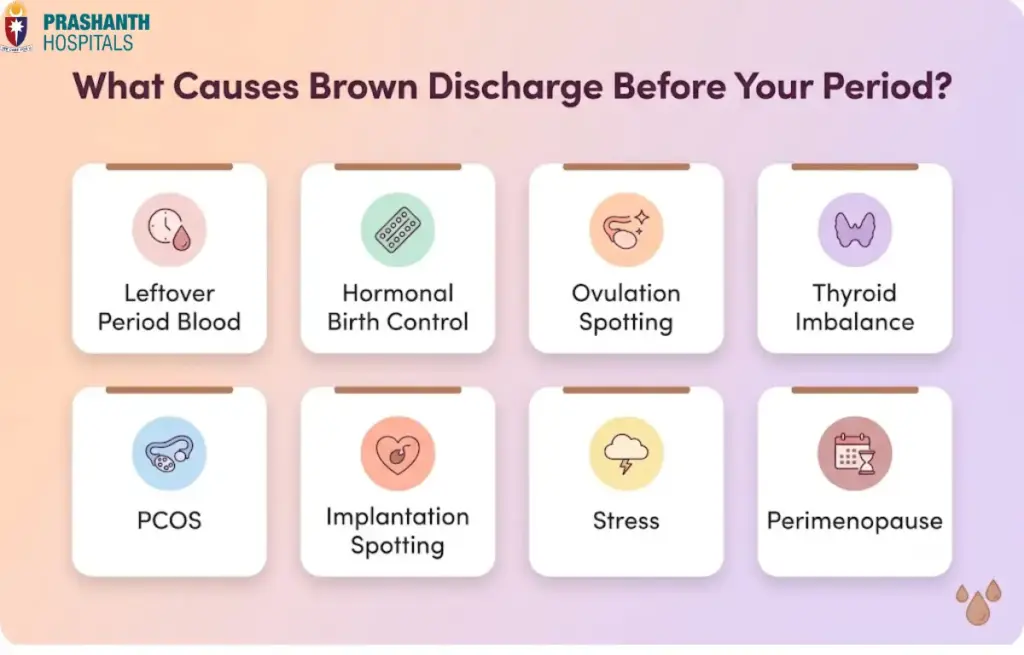
- Your period may be starting. A small amount of menstrual blood may leave the uterus before the usual flow becomes established.
- Hormonal fluctuations. Changes in reproductive hormones can alter ovulation and the pattern of menstrual bleeding.
- Contraception. Pills, hormonal IUDs, implants, and other hormonal methods can cause spotting, particularly after starting, stopping, or changing contraception. Unscheduled spotting is common in the first few months after starting a progestin only pill, a contraceptive implant, or a hormonal IUD such as Mirena or Kyleena, and it often settles as your body adjusts, though how long this takes can vary by method. If spotting continues, becomes heavier, or concerns you, discuss it with your doctor rather than stopping or changing contraception on your own.
- Irregular ovulation. Conditions such as PCOS can make periods less predictable and may lead to intermittent spotting.
- Cervical irritation. Light bleeding can sometimes follow sexual intercourse or irritation of the cervix.
- Infections. Certain vaginal or sexually transmitted infections can cause unusual discharge, odour, irritation, or bleeding, and these need prompt evaluation and treatment rather than being left unaddressed.
- Polyps or fibroids. Changes involving the cervix or uterus can contribute to irregular bleeding.
- Perimenopause. Hormonal fluctuations during the transition toward menopause are one possible cause of changes in bleeding pattern, though brown spotting is not specific to perimenopause and can have other causes at this age too.
The distinction that matters most is whether this is an occasional variation or a recurring change from your normal cycle. Persistent or unusual spotting deserves more attention than a single episode that settles.
Could It Be Connected to Pregnancy?
Light bleeding can occur in early pregnancy, but its cause cannot be determined from the bleeding pattern alone, and it does not confirm pregnancy. Brown spotting around this time can also be unrelated to pregnancy entirely, or in some cases can be an early sign of a miscarriage, particularly if it comes with cramping or increases over time.
If your period is late and pregnancy is possible, a pregnancy test is more useful than trying to interpret the colour.
When this needs urgent care: If you may be pregnant and notice brown discharge along with one sided lower abdominal pain, this combination can be a sign of an ectopic pregnancy, a pregnancy developing outside the uterus, which is a medical emergency. Seek urgent care right away if you also have severe abdominal or pelvic pain, shoulder pain, dizziness, fainting, or heavy bleeding.
When Other Symptoms Change the Picture
A small amount of spotting without other symptoms is very different from discharge accompanied by pain, irritation, or an unusual smell.
| What comes with it | Why it matters |
| No unusual symptoms | May simply accompany menstrual spotting |
| Mild period-like cramps | Your period may be approaching |
| Unusual or strong odour | May point toward an infection that needs assessment |
| Itching or burning | May occur with vaginal infection or irritation |
| Persistent pelvic pain | Needs clinical assessment |
| Pain during sex | Can occur with cervical or pelvic conditions and warrants evaluation if persistent |
| Fever or feeling unwell | Infection or another condition may need assessment |
| Repeated bleeding between periods or after sex | May need evaluation for hormonal, cervical, or uterine causes; your doctor may assess the cervix and recommend cervical screening if you are due for it or if clinically appropriate |
| Heavy bleeding | Needs assessment, and needs urgent care if it comes with dizziness, fainting, weakness, or severe pain |
Changes in discharge accompanied by pain, itching, soreness, unusual smell, or bleeding outside the expected menstrual pattern should not simply be attributed to old blood.
When It May Simply Be Part of Your Period
An occasional episode is often not a cause for concern when it appears close to the expected period, remains light, settles within a short time, and is followed by your usual menstrual flow.
It is also reassuring when there is no foul smell, significant pelvic pain, fever, or persistent irritation, and the same pattern does not repeatedly occur outside your normal cycle.
Menstrual bleeding can naturally vary from one cycle to another. Knowing what is normal for you makes it easier to recognise a meaningful change.
When It Deserves a Closer Look
A gynaecological consultation is appropriate when the pattern becomes persistent, recurrent, or clearly different from your usual cycle.
This includes spotting that repeatedly occurs between periods, bleeding after sex, unusually heavy bleeding, persistent pelvic pain, unusual discharge, or changes accompanied by itching, burning, or fever. Intermenstrual bleeding and bleeding after sex that keeps recurring are also reasons your doctor may assess the cervix and recommend cervical screening if you are due for it or if clinically appropriate, since these can occasionally be linked to changes in the cervix that are easier to manage when caught early.
Bleeding after menopause is a separate category and always needs evaluation, even if it is light, brief, or brown, and even if it does not repeat. It should never be assumed to be leftover menstrual blood. Age alone does not mean every woman needs further testing. Depending on your age, symptoms, and risk factors, your doctor may recommend an ultrasound or, in some cases, an endometrial biopsy, to investigate the cause, particularly if spotting is persistent.
The same urgency applies when pregnancy is possible, particularly if bleeding is accompanied by abdominal or pelvic pain.
Finding the Reason Behind the Pattern
A doctor will usually look at the whole bleeding pattern, rather than diagnosing the cause from colour alone.
Depending on the history and symptoms, assessment may include:
| What may be assessed | Why it helps |
| Menstrual history | Establishes whether the timing is unusual for you |
| Pregnancy test | Helps determine whether pregnancy may explain the bleeding |
| Contraception and medication history | Identifies common causes of spotting |
| Pelvic examination | May identify cervical or vaginal causes |
| Infection testing | Considered when discharge, odour, or irritation is present |
| Cervical screening | Considered for persistent bleeding between periods or after sex, if due or clinically appropriate |
| Ultrasound or other tests | Used when symptoms suggest a uterine, ovarian, or structural cause |
Not every woman needs every investigation. The pattern determines the work-up, which is why a clinical assessment is more useful than trying to diagnose the cause from the shade alone.
Treatment Depends on the Cause, Not the Colour
Brown discharge itself usually does not require treatment. When there is an underlying cause, management is directed toward that condition.
| Situation | Usual approach |
| Menstrual spotting | Observation when the pattern is otherwise normal |
| Contraception related spotting | Review of the contraceptive method with your doctor if persistent or troublesome, rather than stopping it on your own |
| Hormonal or ovulatory problems | Management of the underlying condition |
| Infection | Appropriate treatment after evaluation |
| Polyps, fibroids, or other structural causes | Treatment based on symptoms and findings |
| Pregnancy related bleeding | Assessment according to pregnancy status, stage, and symptoms |
This is why starting medication simply because discharge looks unusual is not advisable. The right treatment depends on the reason behind the bleeding, and any change to prescribed contraception should be discussed with a healthcare professional first.
A Simple Way to Read the Pattern
If you notice this change again, focus on four things: timing, amount, recurrence, and associated symptoms.
A small amount appearing immediately before your expected period and followed by normal menstruation is a very different pattern from repeated spotting several days before every period.
Similarly, brown discharge without other symptoms is different from brown discharge accompanied by foul odour, itching, pelvic pain, fever, or heavy bleeding.
If pregnancy is possible and your period is late, test rather than trying to interpret the colour.
Understanding What Your Body Is Telling You
For women experiencing recurring or unexplained changes in menstrual bleeding, a gynaecological evaluation can replace uncertainty with a clearer understanding of the underlying cause. At Prashanth Hospitals, women can seek care for menstrual, reproductive, and gynaecological concerns, with assessment guided by symptoms, clinical findings, and individual needs.
The aim is not simply to identify the colour of the discharge, but to understand why the bleeding pattern has changed.
A Reassuring Perspective
Brown discharge before a period is often linked to a small amount of blood mixing with vaginal fluid, particularly when it appears around the expected time of menstruation. Light, dark, or very dark colouring alone does not tell you whether something is wrong.
What matters more is the overall pattern: when it occurs, how much there is, whether your normal period follows, whether it keeps returning, and whether symptoms such as pain, unusual odour, itching, fever, or heavy bleeding are present.
An occasional change may simply be part of normal menstrual variation. But when the pattern becomes persistent, unusual, or symptomatic, it is worth getting it evaluated rather than repeatedly guessing at the cause.