Imagine children as the architects of our future—a bright future filled with innovation, compassion, and resilience. To empower them to reach their fullest potential, it’s crucial to understand the principle of growth and development of child. Prioritizing physical, mental, and emotional well-being supports healthy childhood development.
In this blog, we’ll delve into key strategies to support the health and growth of the next generation, highlighting essential tips to create an environment where children can flourish.
1. Early Childhood Nutrition
Proper nutrition in early childhood lays the foundation for lifelong health and plays a vital role in addressing the factors affecting child growth and development. Start with these essential guidelines:
- Breastfeeding: It’s vital to encourage exclusive breastfeeding for the first six months. Breast milk provides essential nutrients and immune support critical for a child’s development.
- Complementary Feeding: Around six months, introduce complementary foods alongside breastfeeding. Consult with a pediatrician to establish a healthy feeding routine that ensures nutritional adequacy.
- Balanced Diet: Ensure a diet rich in proteins, carbohydrates, fats, vitamins, and minerals. A varied diet supports the child’s growth and cognitive development.
- Limit Sugary Foods: Excessive sugar consumption can lead to obesity and dental issues. Limit sugary snacks and drinks to encourage healthier habits.
- Avoid Gadget Addiction: Over-reliance on gadgets can contribute to behavioral issues, reduced physical activity, and eye strain. Encourage children to engage in outdoor play, creative learning, and social interaction to promote healthy growth child development.
2. Immunizations
Vaccinations are critical in protecting children from various preventable diseases and play an important role in supporting the healthy brain growth of a child. Follow the recommended immunization schedule provided by healthcare professionals and discuss any concerns you may have. Being well-informed about vaccinations helps ensure that your child receives the necessary protection against illnesses while promoting overall physical and neurological development.
3. Preventive Healthcare
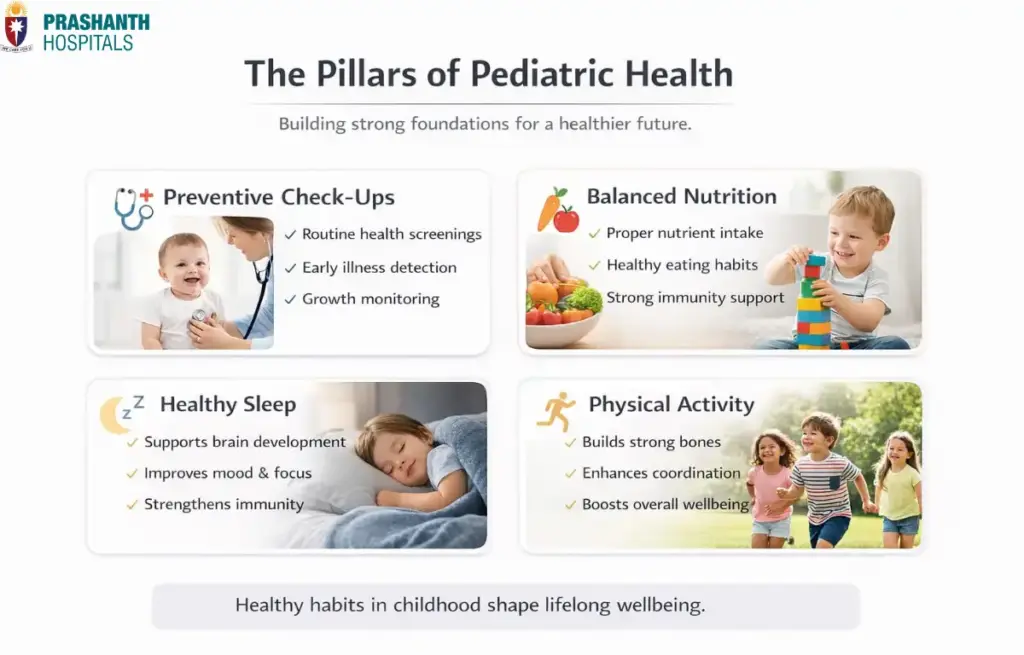
Regular wellness visits with a pediatrician are vital to a child’s development and help identify the key factors affecting child growth and development at an early stage. These check-ups allow healthcare providers to monitor physical growth, assess developmental milestones, address parental concerns, and detect potential issues before they become serious.
- Routine Check-Ups: Schedule regular pediatric visits to track growth and developmental milestones.
- Early Detection: Utilize these appointments to raise any health or behavioral concerns. Timely intervention can make all the difference.
4. Physical Activity
Encouraging physical activity promotes healthy growth and development in children and supports the core principle of growth and development of child, which emphasizes that development progresses best through active movement and interaction. Active play fosters physical fitness and helps build strength, coordination, balance, and social skills.
- Promote Outdoor Play: Allow ample time for outdoor activities, which are crucial for physical and mental well-being.
- Limit Screen Time: Reduce the time spent on gadgets to encourage active play and social interactions.
5. Mental Health Awareness
The mental well-being of children is just as important as their physical health and is one of the key factors affecting child growth and development. It’s crucial to recognize early signs of emotional distress and provide timely support.
- Address Concerns Early: If there are any signs of anxiety, depression, or behavioral changes, seek professional guidance. Early intervention can prevent future complications.
- Foster Open Communication: Encourage children to express their feelings and listen actively to their concerns.
6. Safety Measures
Creating a safe environment is essential in reducing the risk of injuries and supporting healthy growth child development.
- Childproofing: Take preventive measures such as installing safety gates, using car seats, and encouraging the use of helmets during activities.
- Injury Prevention: Discuss safety guidelines with children to instill a sense of responsibility.
7. Healthy Sleep Habits
Quality sleep is essential for a child’s physical and mental growth and supports the principle of growth and development of child, which highlights that proper rest is necessary for optimal brain maturation and body repair.
- Consistent Sleep Routines: Establish consistent sleep schedules to promote adequate and restful sleep.
- Address Sleep Issues: Consult with healthcare providers if your child experiences persistent sleep problems.
8. Dental Care
Good oral hygiene should start early to ensure strong and healthy teeth.
- Brushing and Check-Ups: Begin regular brushing at an early age and schedule dental check-ups to prevent dental issues.
- Oral Health Education: Teach children the importance of good oral hygiene practices.
9. Technology Balance
In today’s digital age, finding a balance between technology and real-world activities is critical.
- Encourage Active Engagement: Promote activities that involve physical interaction and social connections.
- Online Safety: Educate children about responsible internet usage and potential online risks.
Conclusion
As caregivers, parents, educators, and community members, we play a pivotal role in shaping a brighter future by prioritizing the well-being of our children. By understanding and applying the principle of growth and development of child, we can ensure that children receive the right nutrition, preventive care, emotional support, and guidance needed to reach their full potential.
Every positive habit we encourage today directly supports the healthy brain growth of a child, strengthening learning ability, emotional balance, and overall resilience. When we create safe, nurturing, and stimulating environments, we lay the groundwork for a generation of strong, confident, and compassionate adults.
Remember, every action we take today shapes the world our children will inherit. Investing in their physical, emotional, and developmental health now will yield lifelong benefits. If you have any concerns about your child’s health or development, consult a pediatric healthcare provider promptly. Your proactive involvement can make a meaningful difference in your child’s journey toward a healthy and fulfilling life.