You may notice it while getting dressed. A small bulge near your groin or belly that was not there before. It looks bigger when you cough, stand for a long time or lift a heavy bag. It may not hurt much, so many people wait.
But pain is not a good way to judge a hernia. A hernia that does not hurt can still grow. Once your doctor confirms it, you face two questions. Do you need surgery now? And which type of surgery is right for you?
Robotic hernia surgery in Chennai is one choice for some patients. The surgeon controls a robotic system and works through small cuts. It is not the only choice, and it does not suit everyone. This guide explains how it compares with other options, what affects the cost, and what recovery looks like.
When Does a Hernia Need Surgery?
A hernia is a weak spot in the belly wall. Tissue from inside pushes through that spot and forms a bulge. It can build up slowly over the years. It can also show up after a hard cough, heavy lifting or straining on the toilet.
Common signs are:
- A bulge in the groin, the belly or near an old surgery scar
- A pulling or heavy feeling in that area
- Pain or discomfort when you cough, lift or exercise
- A bulge that looks bigger when you stand and smaller when you lie down
Not every hernia needs surgery right away. A small groin hernia that causes little or no pain can sometimes be watched under a doctor’s care. But some hernias are more likely to get stuck. A femoral hernia is one example. It appears low in the groin or the upper thigh, and it is more common in women. Doctors usually advise repair for it, so waiting is not a good idea.
A hernia that hurts every day, keeps growing or gets in the way of your work usually needs a planned repair.
Do not wait if you notice any of these:
- The bulge turns hard, red or dark
- The bulge cannot be pushed back in
- You have sudden strong pain, vomiting or fever
- You cannot pass gas or stool
These can mean the hernia is blocked or damaged. Go to a doctor or an emergency room straight away.
What is Robotic Hernia Surgery?
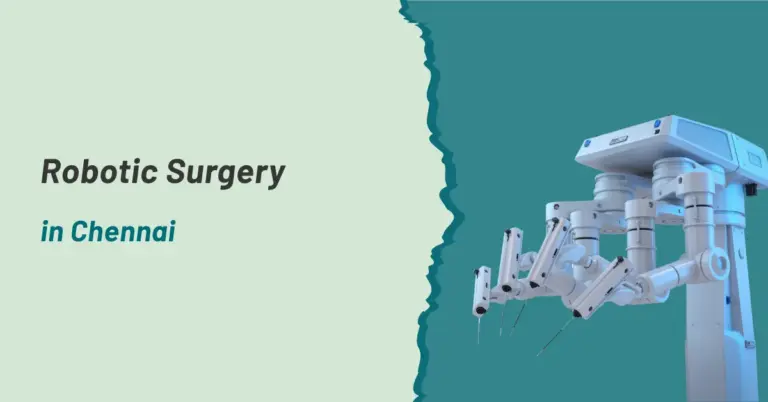
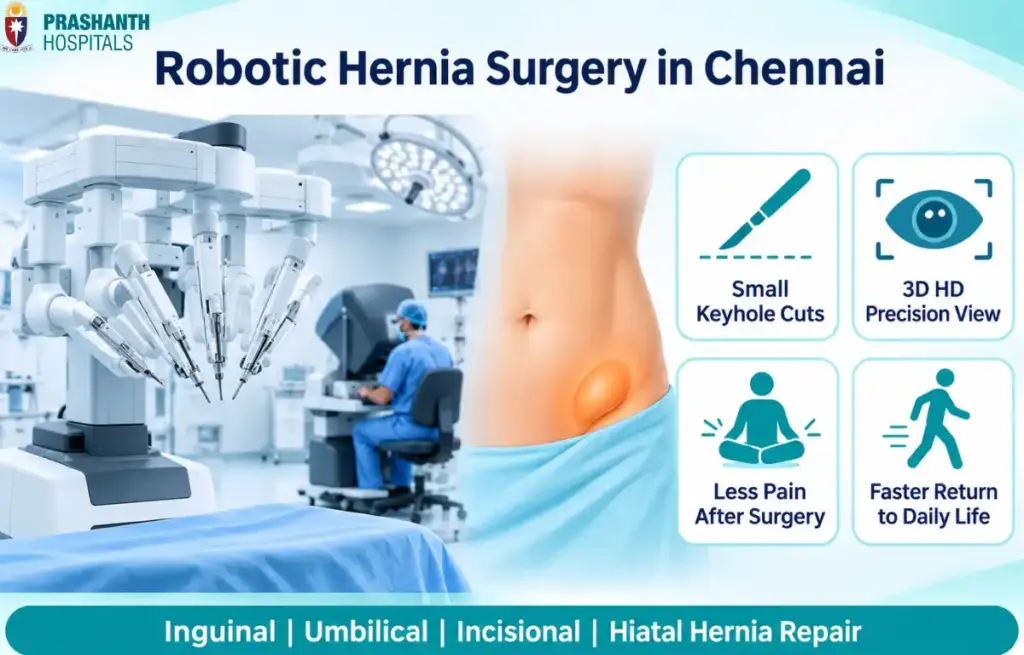
In robotic hernia surgery, the surgeon makes a few small cuts. Thin tools and a tiny camera go through them into the belly. The surgeon sits at a console in the same room and moves the tools with hand controls. The camera gives a sharp 3D picture, and the tool tips can bend and turn more than a human wrist can.
The robot does not think or move on its own. It only copies what the surgeon does. Every decision is made by the surgeon.
Some possible benefits are:
- A clear, magnified view of the area
- Tools that bend, which can help with tight stitching
- Small cuts, which usually leave small scars
- More control during some difficult repairs
These benefits depend on your hernia and on the surgeon’s experience. A robot does not promise less pain or faster recovery for every patient.
Which Hernias Can Be Repaired With a Robot?
It depends on where the hernia is, how big it is, whether you have had surgery before, and your general health.
| Hernia type | Where it is | When a robot may be used |
| Inguinal | Groin | Some repairs, such as hernias on both sides or hernias that came back |
| Umbilical | Around the belly button | When repair is needed and your body shape suits this method |
| Incisional | Near an old surgery scar | Some cases that need a larger repair of the belly wall |
| Other belly wall hernias | Upper or middle belly | Some cases that need careful work or a bigger repair |
Some people also have a gap between the two belly muscles. This is called diastasis recti. It is not a true hernia, but a person can have both. Your surgeon will check which problem you have and treat it in the right way.
A robot is not suitable for every hernia in this table. Your surgeon needs to examine you first.
Robotic, Keyhole and Open Surgery: How they Differ
You may hear about three ways to repair a hernia. Keyhole surgery is also called laparoscopic surgery. Each method has a place. The choice should depend on your hernia and your health, and not on which machine is newer.
| Robotic surgery | Keyhole surgery | Open surgery | |
| Cuts | A few small cuts | A few small cuts | One cut over the hernia |
| View | Magnified 3D view | Camera view, usually 2D | Surgeon looks at the area directly |
| Tools | Controlled from a console | Held by the surgeon | Held by the surgeon |
| Anaesthesia | General (fully asleep) | General (fully asleep) | General, regional or local, depending on the case |
| Points to think about | Higher cost, longer time in the operating room, needs a trained team | Well proven, needs a skilled surgeon | Direct access, may suit people who cannot have general anaesthesia |
What does research say? For a simple groin hernia, studies have not shown a clear benefit of the robot over keyhole surgery. In a trial called RIVAL, patients had similar pain, healing and hernia return rates after robotic and keyhole repair. The robotic repair took longer and cost more.
For harder repairs, such as large or repeat hernias, a robot may give the surgeon useful help. In other cases, keyhole or open surgery may work just as well, or even better.
A good repair is one that suits your body and is done safely by an experienced surgeon.
How Much Does Robotic Hernia Surgery Cost in Chennai?
There is no fixed price. A small belly button hernia and a large repair of an old scar hernia need very different time, tools and care. Robotic repair usually costs more than keyhole or open repair because of the extra equipment and operating room time.
Many things change the final bill:
- The type, size and number of hernias
- Whether this is a first repair or a repeat repair
- The method used: robotic, keyhole or open
- The type and size of mesh, if it is needed
- The type of anaesthesia
- The number of days in the hospital
- Medicines, tests and follow up visits
Before you decide, ask for a written estimate that lists each part: surgeon fee, robot charges, mesh, anaesthesia, room and stay, medicines and follow up. Also ask what keyhole or open repair would cost, so you can compare. Check with your insurance company whether robotic surgery is covered and what the limit is.
Recovery After Robotic Hernia Surgery
Recovery is different for each person. It depends on the type of hernia, the size of the repair and your health. A small groin hernia repair is usually easier to recover from than a large repair of the belly wall.
Here is what many people can expect after a simple repair. Your surgeon will give you your own plan, and it may be different.
- Many people go home the same day or after a short stay
- Light walking is encouraged from the first day
- Many people return to desk work in about 1 to 2 weeks
- Heavy lifting and hard exercise are often paused for about 4 to 6 weeks
- Large repairs of the belly wall can need a longer rest
Some soreness, bruising or swelling near the cuts is normal for a few days. Eat fibre rich food and drink enough water so you do not strain on the toilet. Straining puts stress on the repair. Do not drive until your surgeon says it is safe and you can move without pain.
Call your surgeon if you have fever, pain that is getting worse instead of better, pus or bleeding from a cut, a bulge that comes back, or vomiting that does not stop.
Small cuts can mean less wound pain for some people, but they do not mean you can skip rest. Do not compare your recovery with a friend’s. Every repair is different.
Choosing a Hospital for Robotic Hernia Surgery in Chennai
A robot in the building is only one part of the picture. Also think about the surgeon’s experience with your type of hernia, the anaesthesia and nursing support, and the care you get after surgery.
Questions you can ask your surgeon:
- Why do you suggest a robot for my hernia?
- What are the good and bad points compared with keyhole and open repair?
- Will I need mesh, and why?
- What are the risks, and what is the chance that the hernia will come back?
- How long will recovery take, and what will the total cost be?
- How many repairs like mine have you done?
Good answers are clear and simple. If they are not, ask again or take a second opinion.
Making the Right Decision
A hernia diagnosis does not mean you must have robotic surgery. First, find out what kind of hernia you have and whether it needs repair. Then compare your options. For some people, a robot gives the surgeon useful help. For many others, keyhole or open surgery works just as well.
Whatever method you choose, a good repair depends on a careful check up, an experienced surgeon and proper care afterwards. Keep asking questions until your plan feels clear to you.