Gallstones and certain gallbladder conditions can sometimes need surgery to treat the problem and lower the risk of repeat attacks. Robotic gallbladder surgery in Chennai is a minimally invasive option that may help in selected cases, offered at Prashanth Hospitals’ Institute of Robotic Surgery alongside laparoscopic and other approaches. This guide covers how the procedure works, what current evidence says about its benefits, and what recovery looks like.
What is Robotic Gallbladder Surgery
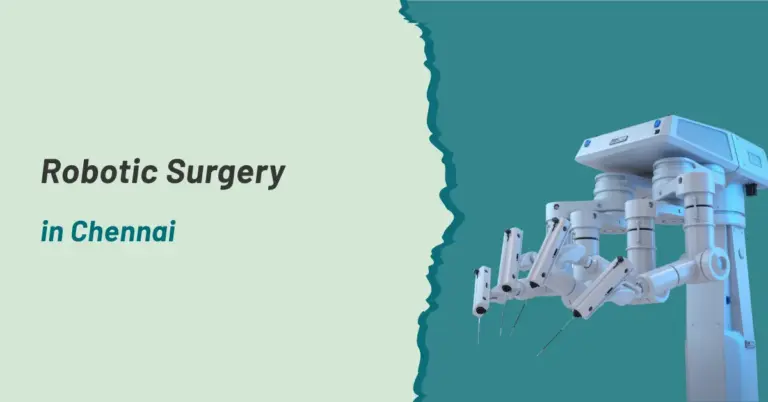
Robotic gallbladder surgery, also called robotic assisted cholecystectomy, is a minimally invasive procedure to remove the gallbladder using a robotic surgical system. The surgeon controls robotic arms fitted with small instruments and a high definition camera, working through a few small incisions in the abdomen.
Unlike a fully automated process, the robotic system does not operate on its own. Every movement is directed by the surgeon in real time, with the robotic arms translating the surgeon’s hand movements into precise, steady actions inside the body.
How it is Different from Laparoscopic Surgery
Laparoscopic surgery remains standard for most patients. Robotic surgery offers enhanced 3D vision and instrument dexterity, potentially benefiting complex cases. Your surgeon will recommend the suitable approach.
| Factor | Laparoscopic Surgery | Robotic Surgery |
| Invasiveness | Minimally invasive, small incisions | Minimally invasive, small incisions |
| Visualization | 2D high definition view | 3D high definition view |
| Instrument movement | Straight, limited articulation | Wristed, more flexible movement |
| Outcomes (pain, stay, complications) | Well established, generally comparable | Generally comparable, sometimes longer operative time |
Benefits of Robotic Gallbladder Surgery
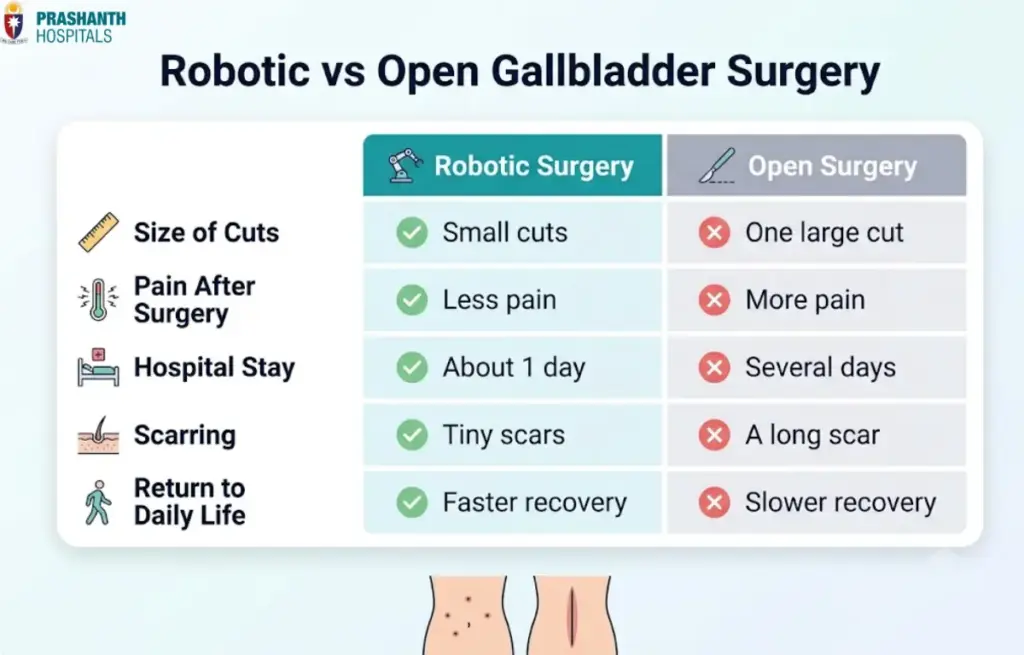
- Small abdominal incisions compared with open surgery
- 3D high definition visualization for the surgeon during the procedure
- Wristed instruments that may improve dexterity during technically demanding steps
- A minimally invasive approach that may support recovery compared with open surgery
Robotic and laparoscopic surgery outcomes vary. The choice depends on your condition, anatomy, surgeon expertise, available resources, and overall health, with recovery varying individually.
The Procedure Step by Step
Robotic gallbladder surgery is performed under general anesthesia, so you will be asleep throughout the procedure.
- Anesthesia: The anesthesia team puts you to sleep and monitors you closely throughout the surgery.
- Port placement: The surgeon makes a few small incisions in the abdomen to insert ports, which act as access points for the robotic instruments and camera.
- Robotic docking: The robotic arms are attached to the ports, and the surgeon moves to a nearby console to control the instruments.
- Gallbladder removal: Using the robotic arms, the surgeon carefully separates the gallbladder from the liver bed and surrounding structures, then removes it through one of the small incisions.
- Closure: The incisions are closed with sutures or surgical glue, usually leaving minimal visible scarring.
The operation time varies depending on the patient’s anatomy, the severity of inflammation, and the complexity of the procedure.
Who Needs this Procedure
Robotic gallbladder surgery may be recommended for patients with:
- Symptomatic gallstones causing pain or discomfort
- Chronic or recurring inflammation of the gallbladder, known as cholecystitis
- Technically challenging cases, where the surgeon expects the robotic platform’s visualization and instrument dexterity to be useful
Not everyone with gallstones needs surgery. Many people have silent gallstones with no symptoms and need no treatment, while a gallbladder attack usually causes sudden pain in the upper right abdomen, nausea, and vomiting, often after a heavy meal. Your surgeon will review your history, symptoms, and imaging (including an ultrasound and sometimes blood tests) to suggest whether robotic or laparoscopic surgery fits your case best, though the final decision always rests with you.
Recovery and Aftercare
Many patients go home the same day or within a day, depending on their recovery and the surgeon’s assessment. Mild incision discomfort is common and managed with medication, with heavy lifting avoided for a short period and light activity resuming within a week. Ask your surgeon for diet and schedule a follow-up visit.
Seek medical advice promptly if you develop worsening or severe abdominal pain, persistent vomiting, fever or chills, or yellowing of the skin or eyes. Increasing redness, swelling, or discharge from an incision also needs timely evaluation. These can be signs of complications such as infection or bile leakage.
Robotic Gallbladder Surgery in Chennai at Prashanth Hospitals
Prashanth Hospitals’ dedicated Institute of Robotic Surgery offers advanced procedures for gallbladder conditions. Our team combines robotic technology, detailed planning and imaging for personalised care. From consultation and diagnosis to surgery, continuous monitoring and structured follow-up, we provide attentive care throughout your surgical journey.
Why Choose Prashanth Hospitals
Choosing the right hospital for gallbladder surgery matters, especially when robotic technology is involved. At Prashanth Hospitals, patients have access to:
- Support through every step, from diagnosis and pre-surgical planning to recovery guidance after you go home
- A dedicated Institute of Robotic Surgery with experience across multiple surgical specialties
- A multidisciplinary team involving surgeons, anesthesiologists, and nursing staff working together
- Modern infrastructure designed to support advanced, minimally invasive procedures
- A patient centered approach, with clear communication at every stage of care
Book Your Consultation Today
If gallstones or gallbladder inflammation are affecting your daily life, it may be time to explore your surgical options. At Prashanth Hospitals, our Institute of Robotic Surgery combines advanced technology with experienced surgical care to help you get back to feeling your best. Book a consultation with our surgical team today to discuss whether robotic gallbladder surgery is right for you.