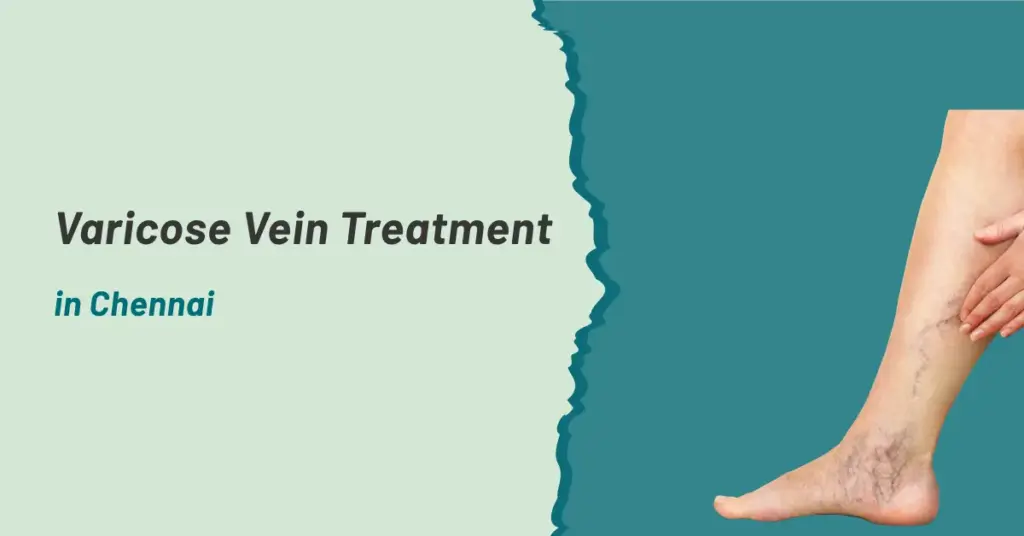
A few blue lines on the leg may not seem like a medical problem at first. For some people, varicose veins remain mainly a cosmetic concern. For others, the visible veins are accompanied by aching, heaviness, swelling or discomfort that becomes more noticeable after a long day.
The difference matters.
Varicose veins are not simply veins that have become more visible. They can be a sign that blood is not flowing efficiently back towards the heart. Understanding why this happens helps determine whether the veins need observation, symptom management or active treatment.
For people looking for varicose vein treatment in Chennai, the first step is therefore not deciding between laser, surgery or another procedure. It is understanding what is happening inside the veins and whether treatment is actually needed.
When the Veins Stop Moving Blood Efficiently
The veins in the legs have an important job: they carry blood back towards the heart. Because blood has to travel upward against gravity, the veins contain small valves that help keep it moving in the right direction.
When these valves become weak or stop closing properly, some blood can flow backwards and collect in the veins. This increases pressure within the vein.
Over time, the vein may become enlarged, twisted and more visible beneath the skin.
This is known as a varicose vein.
| Healthy vein | Varicose vein |
| Valves help blood move upward | Valves may allow blood to flow backwards |
| Blood returns efficiently | Blood can pool within the vein |
| Veins remain relatively less prominent | Veins may become enlarged and twisted |
This also explains why simply removing a visible vein does not always address the underlying problem. The source of abnormal blood flow needs to be understood first.
The Changes Your Legs may be Trying to Tell You
Varicose veins can look very different from one person to another. Some people notice only enlarged veins, while others develop symptoms that gradually interfere with daily activities.
Common changes include:
- Blue or purple veins: These may be the first visible sign and can initially cause little or no discomfort.
- Bulging or twisted veins: Larger varicose veins may become raised beneath the skin and become more prominent after prolonged standing.
- Aching or heaviness: The legs may feel tired, heavy or uncomfortable, particularly towards the end of the day.
- Swelling: Fluid can accumulate around the ankles and lower legs, especially after standing for long periods.
- Itching or skin irritation: Changes around affected veins may cause itching or discomfort.
- Night-time cramps: Some people experience cramping or an uncomfortable sensation in the legs, particularly after a physically demanding day.
The appearance of a vein, however, does not always tell the full story.
A relatively small-looking vein can sometimes be associated with underlying venous reflux, while a prominent vein may cause little trouble.
That is why symptoms and vascular assessment are more useful than appearance alone when deciding about treatment.
Why Varicose Veins Develop
There is rarely one single reason why a person develops varicose veins. The condition usually results from a combination of changes in the veins and factors that increase pressure on the venous system.
- Family tendency: Some people are more likely to develop vein and valve problems because of their genetics.
- Age-related changes: Vein walls and valves can become less effective with age.
- Prolonged standing or sitting: Remaining in one position for long periods can make it harder for blood to return efficiently from the legs.
- Pregnancy: Increased blood volume, hormonal changes and pressure on pelvic veins can contribute to varicose veins.
- Excess body weight: Additional pressure can place greater demands on the venous circulation.
- Previous vein problems: A history of venous disease or certain clot-related conditions can increase the risk.
This is why varicose veins should not simply be blamed on “standing too long.”
The underlying issue is usually related to how effectively the veins are returning blood towards the heart.
When Varicose Veins Become more than a Cosmetic Concern
A person may initially seek treatment because they dislike the appearance of prominent veins. That is a valid reason to discuss treatment, but the medical significance of varicose veins goes beyond appearance.
As venous pressure persists, some people can develop:
- Increasing leg heaviness and discomfort
- Persistent swelling around the ankles
- Skin darkening or other changes around the lower leg
- Inflammation around affected veins
- Skin breakdown or ulcers in more advanced chronic venous disease
- Bleeding from a superficial varicose vein
These complications do not occur in everyone with varicose veins.
The important point is that persistent symptoms or skin changes should not be dismissed as an inevitable part of having visible veins.
Managing Symptoms Before a Procedure is Needed
Not every person with varicose veins requires an intervention.
When symptoms are mild, management may initially focus on improving circulation and reducing the pressure that contributes to discomfort.
This can include:
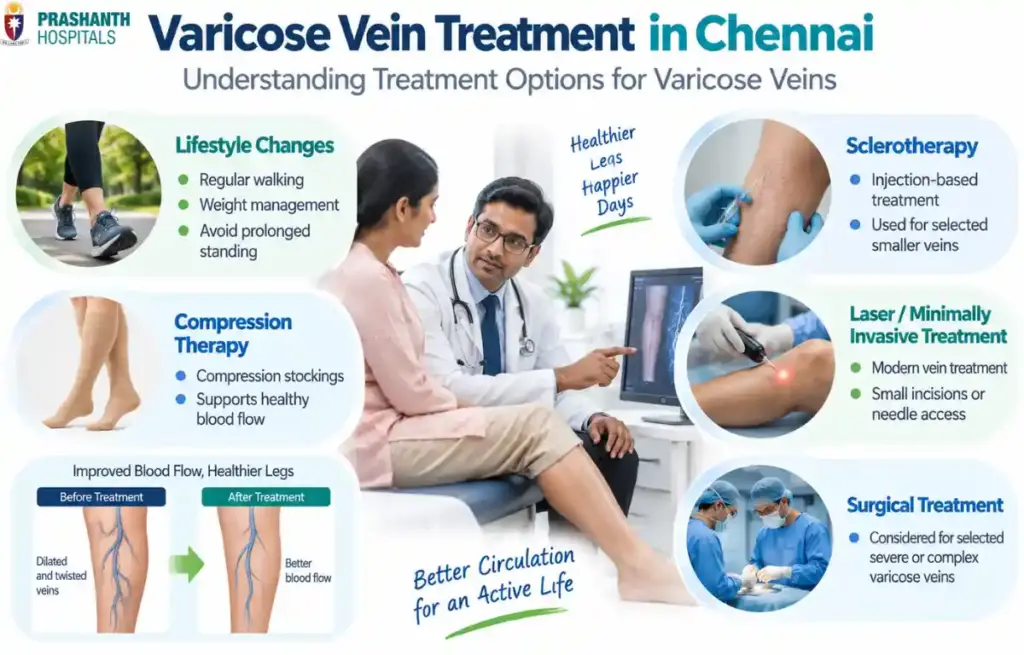
- Regular walking and physical activity: Movement activates the calf muscles, which help push blood back towards the heart.
- Avoiding prolonged sitting or standing: Changing position and moving regularly can support venous circulation.
- Elevating the legs while resting: Raising the legs can help reduce swelling for some people.
- Maintaining a healthy body weight: This can reduce pressure on the lower-limb venous system.
- Compression stockings when appropriate: They may help control swelling and discomfort in selected patients, but the correct type and suitability should be discussed with a doctor.
These measures can be useful for symptom control and slowing the impact of venous disease, but they do not necessarily make an established varicose vein disappear.
That distinction is important.
How Varicose Veins are Treated
When symptoms persist, the veins are significantly abnormal or there is evidence of venous reflux, a vascular specialist may recommend active treatment.
The treatment depends on which veins are affected, how blood is flowing through them and the patient’s symptoms and overall health.
Sclerotherapy
Sclerotherapy involves injecting a medicine into selected abnormal veins. The treatment causes the targeted vein to close, after which the body gradually absorbs it.
It is commonly considered for certain smaller varicose or spider veins, depending on their size and location.
Endovenous ablation
For larger veins with significant reflux, minimally invasive treatments may be considered.
Techniques such as radiofrequency ablation use controlled heat to close the affected vein from within. Blood is then redirected through healthier veins.
The procedure is performed through a small access point rather than removing the entire vein surgically.
Laser-based treatment (Endovenous Laser Ablation)
Laser-based treatment, also called endovenous laser ablation or EVLA, works on a similar principle to radiofrequency ablation but uses laser energy instead of heat generated by radio waves.
A thin fibre is guided into the affected vein under ultrasound guidance, usually through a small needle puncture rather than a surgical cut. Local anaesthesia numbs the area around the vein first. The laser fibre then delivers energy along the length of the vein, causing it to seal shut. Blood naturally reroutes through nearby healthy veins.
Most patients walk out the same day. Many people return to normal daily activities within a day or two, though this varies based on the extent of the vein disease and the specific case. Some mild bruising, tightness or discomfort along the treated vein is common in the days that follow and usually settles on its own.
Laser treatment tends to suit veins with a fairly straight course, close to the skin surface. It is not automatically the “best” option for every varicose vein pattern. Veins that are very twisted, unusually large or positioned differently may respond better to radiofrequency ablation, sclerotherapy or, in some cases, surgery. The right technique depends on the vein anatomy and the underlying pattern of venous reflux, which is why a duplex ultrasound is done before deciding on laser treatment.
Surgical treatment
Traditional surgery may still have a role in selected patients, particularly when the veins are extensive or when a minimally invasive approach is not appropriate.
The treatment decision should therefore be based on the individual condition rather than on the popularity of a particular procedure.
Comparing the main treatment options
| Treatment | Best suited for | Typical downtime |
| Sclerotherapy | Smaller varicose or spider veins | Minimal, same day |
| Radiofrequency ablation | Larger veins with significant reflux | 1 to 2 days |
| Laser treatment (EVLA) | Straighter veins close to the skin surface | 1 to 2 days |
| Surgery | Extensive or complex vein disease | Longer, varies by extent |
This is a general guide, not a substitute for assessment. The right choice for any individual still depends on the ultrasound findings and the vascular surgeon’s evaluation.
Doctor’s Insight “The goal is not simply to remove a visible vein. The first priority is to understand where the abnormal blood flow is coming from and then choose a treatment that addresses the underlying problem.” — Dr. Saravanan Balachandran, MBBS, MS, MCh (Vascular Surgery), Vascular Surgeon, Prashanth Hospitals
Why a Vascular Assessment Comes Before Treatment
A visible varicose vein tells only part of the story.
A duplex ultrasound can help assess how blood is moving through the veins and identify abnormal backward flow, known as venous reflux.
It can help the vascular specialist understand:
- Which veins are affected
- Whether significant reflux is present
- How blood is flowing through the deeper and superficial veins
- Which treatment, if any, may be appropriate
This assessment is particularly important when symptoms are persistent, veins are extensive or treatment is being considered.
A procedure should be chosen after understanding the venous problem, not simply because a particular technology is available.
Does Every Varicose Vein Need Treatment?
No.
Some people have small or uncomplicated varicose veins that cause little or no discomfort. In such cases, observation and symptom management may be reasonable.
Treatment becomes more relevant when:
- Symptoms are affecting daily activities or quality of life.
- Swelling or discomfort keeps returning.
- There are significant changes in the skin.
- Varicose veins are associated with complications.
- The underlying venous reflux is significant.
- The patient has a cosmetic concern and wishes to discuss appropriate treatment options.
The decision should ultimately balance symptoms, clinical findings, ultrasound results and the patient’s expectations.
When Your Legs Need a Medical Assessment
Varicose veins are usually not an emergency, but certain changes should not be ignored.
Seek medical evaluation if you notice:
- Persistent or increasing swelling: Particularly when one leg is consistently more swollen than the other.
- Skin changes: Darkening, thickening or persistent irritation around the ankle can indicate more advanced venous disease.
- A painful, red or hardened vein: This may indicate inflammation or thrombosis in a superficial vein.
- Bleeding from a varicose vein: Even a small bleed should be assessed because varicose veins can sometimes bleed significantly.
- A wound that does not heal: An ulcer around the lower leg or ankle requires medical attention.
One symptom deserves particular attention
Sudden swelling, pain, warmth or redness in one leg should be assessed promptly.
These symptoms can occur with deep vein thrombosis (DVT), which is different from ordinary varicose veins and requires medical evaluation.
Finding the Right Varicose Vein Care in Chennai
Searching for varicose vein treatment in Chennai can quickly produce a long list of procedures and technologies.
But the more useful question is whether the centre can provide a complete treatment pathway.
Look for care that includes:
- Vascular assessment: A specialist should evaluate the veins rather than treating their appearance alone.
- Appropriate imaging: Duplex ultrasound can help identify reflux and map the affected veins.
- Multiple treatment options: Having access to conservative, minimally invasive and surgical approaches allows treatment to be tailored to the patient.
- Individualised decision-making: The most advanced procedure is not necessarily the right procedure for every patient.
- Follow-up: Venous disease can require continued monitoring even after treatment.
The objective should always be effective treatment with the least intervention appropriate for the condition.
Varicose Vein Treatment at Prashanth Hospitals in Chennai
For patients seeking varicose vein treatment in Chennai, Prashanth Hospitals provides vascular surgery services for varicose veins.
Its Vascular Surgery service lists treatment options including sclerotherapy, ablation and laser-based treatments, and also describes radiofrequency ablation for selected patients. Vascular ultrasound is included among the diagnostic services used for vascular assessment.
The appropriate treatment depends on the patient’s symptoms, venous anatomy and assessment findings. A consultation can help determine whether conservative management, a minimally invasive procedure or another form of treatment is appropriate.
Prashanth Hospitals has locations across Chennai, including Velachery, Kolathur, Chetpet, Tambaram and Ambattur, allowing patients to choose a convenient location while confirming the availability of the relevant vascular service and specialist before visiting.
Your Legs Deserve more than a Cosmetic Fix
For many people, the visible veins are what first bring attention to the problem. But the more important question is how the legs feel and whether there is an underlying circulation problem.
Varicose veins are manageable, and treatment does not automatically mean major surgery.
Some people may need only symptom management and monitoring. Others may benefit from minimally invasive procedures such as ablation or sclerotherapy, while more extensive disease may require surgical treatment.
What matters is understanding the cause, severity and pattern of venous disease before choosing the treatment.
If aching, swelling, skin changes or prominent veins are becoming part of everyday life, there is no need to simply accept them as something that must be lived with.
A proper vascular assessment can turn uncertainty into a clear treatment plan, and the right treatment can help you move forward with greater comfort and confidence.