
Breastfeeding is a learning journey. Many mothers worry about milk supply at some point. This concern is common and understandable.
Every mother’s body works differently. Milk supply can change due to many reasons. With calm guidance and steady habits, most mothers can see improvement. This article shares gentle, practical ways to increase breast milk that fit into daily life and support both mother and baby.
How to Increase Breast Milk Supply
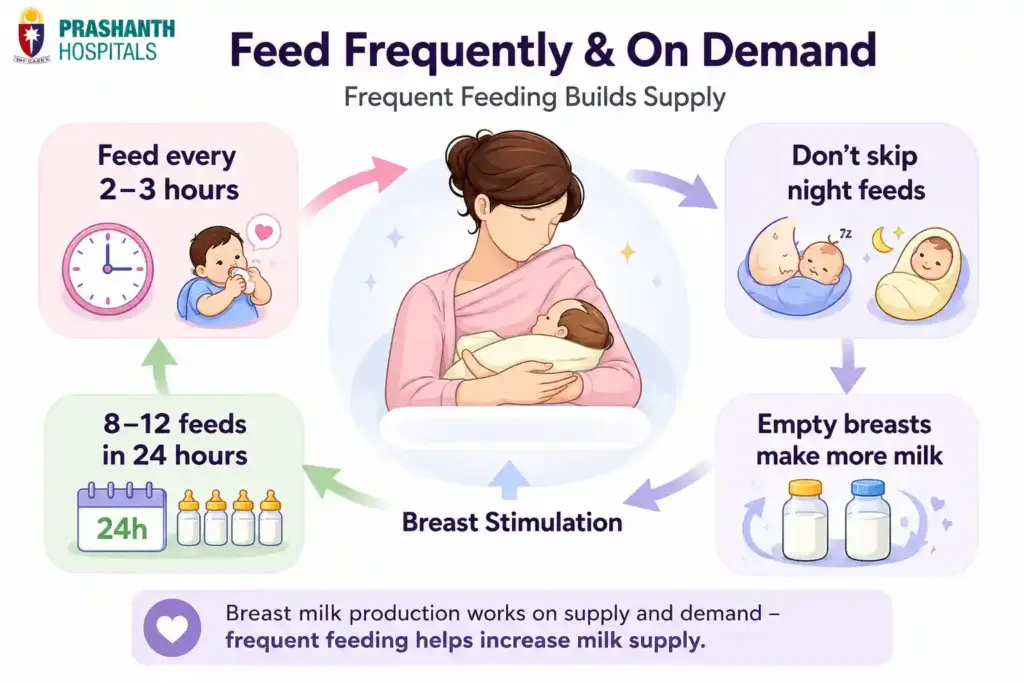
Milk production works on demand. The more milk is removed, the more the body is encouraged to produce. There is no single rule that fits everyone, but small changes can make a big difference. Finding the best way to increase breast milk often means combining a few simple practices and giving the body time to respond.
Empty Breasts Frequently
Milk supply depends on regular emptying of the breasts. When milk stays in the breast for long periods, the body slows production.
Helpful habits include:
- Feeding the baby whenever hunger signs appear
- Avoiding long gaps between feeds
- Allowing the baby to finish feeding naturally
These are easy ways to increase breast milk production because they work with the body’s natural process. Consistency matters more than speed.
Pump Between Feedings
Pumping can support milk supply, especially when the baby sleeps longer or misses a feed. Even short pumping sessions can help signal the body to make more milk.
You may pump:
- After a feeding
- Between two feeds
- When direct feeding is difficult
Many mothers find this one of the practical ways to increase breast milk without adding stress. Regular pumping works better than pumping only once in a while.
Breastfeed From Both Sides
Offering both breasts during each feeding helps balance milk production. It also allows better milk removal.
Benefits include:
- Better stimulation of milk flow
- Reduced fullness on one side
- More comfortable feeding sessions
This approach is one of the natural ways to increase breast milk and supports steady supply over time.
Practice Self-Care
A mother’s health plays a major role in milk supply. Lack of rest, dehydration, and stress can affect milk production.
Simple self-care steps:
- Drink water throughout the day
- Eat regular, nourishing meals
- Rest whenever possible
Taking care of yourself is often the best way to increase breast milk because the body needs energy and balance to produce milk well.
Gently Massage the Breast Before and During Feedings
Gentle breast massage can help milk flow more easily. It also supports better emptying of the breast.
How to do it:
- Use light circular movements
- Massage before feeding or pumping
- Continue gently during feeding if comfortable
This is one of the easy ways to increase breast milk production that also improves comfort for many mothers.
Foods To Increase Breast Milk
Food supports overall health and milk production. A balanced diet helps the body meet the demands of breastfeeding. Traditional Indian foods offer gentle nutritional support when included regularly.
Helpful food choices include:
- Whole grains like rice, oats, and millets for steady energy
- Lentils and dals for protein and iron
- Green leafy vegetables such as spinach and drumstick leaves
- Fenugreek seeds used in small amounts in cooking
- Garlic added to daily meals
- Nuts and seeds like almonds, sesame, and flaxseeds
- Warm fluids such as water, milk, and light soups
These foods support digestion, strength, and hydration. Including them daily can be part of simple ways to increase breast milk without relying on supplements.
Causes for Low Milk Supply
Many mothers worry that their milk is not enough for their baby. Sometimes the supply is truly lower than expected. Other times the body is responding to how often milk is removed. Understanding the reasons can help you take calm and helpful steps.
Here are common causes for low milk supply:
1. Infrequent or Ineffective Milk Removal
Milk works on supply and demand. If breasts are not emptied often, the body slows milk production. This can happen when:
- Feeds are scheduled instead of on baby’s hunger cues
- The baby doesn’t latch well
- Pumping or feeding is less frequent than needed
- Baby naps for long periods without feeding
This is one of the most common reasons for low milk supply.
2. Poor Latch or Feeding Position
If your baby cannot latch deeply, milk may not be removed well. Poor latch can lead to:
- Painful feeds
- Baby getting tired quickly
- Breast not draining fully
Positioning and latch support from a trained helper can make a big difference.
3. Delay in Starting Breastfeeding
When breastfeeding is delayed after birth, it can slow the natural “coming in” of milk. Early and frequent skin-to-skin contact helps with milk flow.
4. Hormonal and Medical Factors
Certain health conditions can affect milk supply:
- Thyroid imbalance
- Polycystic ovary syndrome (PCOS)
- Diabetes or gestational diabetes
- Retained placenta after birth
These conditions can interfere with the hormones that support milk production.
5. Previous Breast Issues or Surgery
Breast surgery, injury, or limited glandular tissue (the milk-making part of the breast) can reduce how much milk the body makes.
6. Use of Formula Early On
Starting formula feeds too soon can reduce how often your baby needs to breastfeed. This can send a signal to your body that less milk is needed.
7. Stress, Fatigue, and Poor Rest
Being tired or stressed can make breastfeeding more difficult. When you feel stressed or exhausted, it may be harder to feed or pump often. This can affect milk supply.
8. Smoking and Certain Medications
Smoking can interfere with milk hormones and reduce supply. Some medications, such as certain cold medicines or hormonal contraceptives, may also affect milk production.
9. Baby-Related Factors
A baby who is sleepy, unwell, or has a tongue-tie may not remove milk well. This can reduce the signal the body gets to make more milk.
Conclusion
Breastfeeding is not about perfection. It is about patience, support, and small daily efforts. Milk supply often improves gradually with consistent care and reassurance.
Every mother deserves encouragement and clear guidance. With the right habits and timely help, many mothers find steady progress. If you have ongoing concerns, speak with a healthcare professional for personal advice and support. These ways to increase breast milk are meant to guide you, not pressure you.