Not every heart attack comes with sudden, crushing chest pain. Some heart attacks are quiet, and recognizing silent heart attack symptoms early can make a real difference. The signs can feel like tiredness, indigestion, or stress, and it is easy to brush them off. But the heart can still be damaged even when the symptoms are mild.
Quick Answer
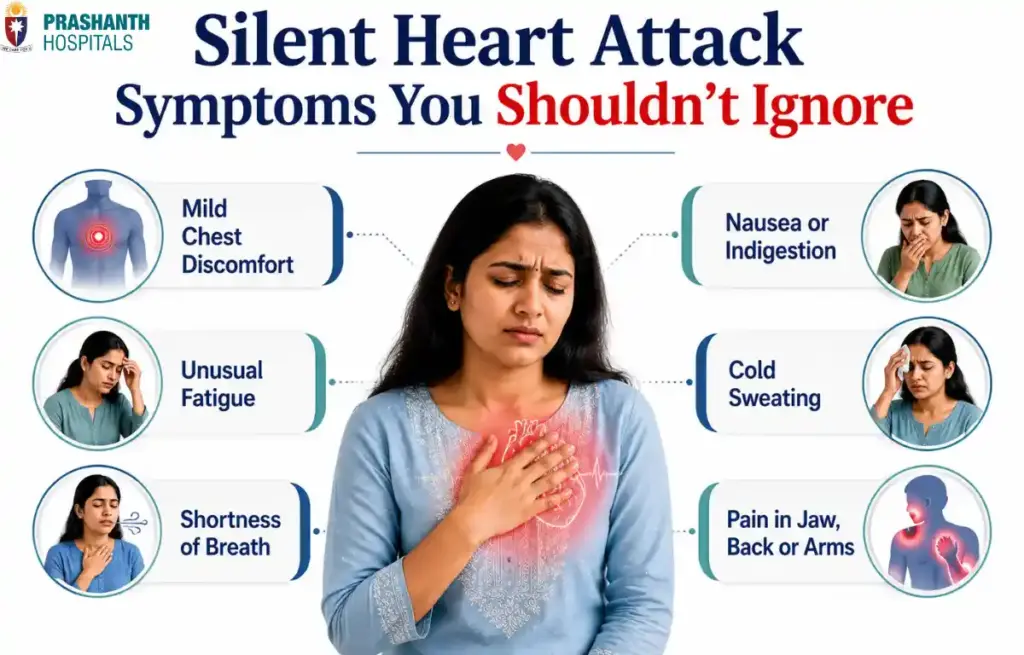
A silent heart attack happens when blood flow to part of the heart is blocked, but the symptoms are mild or easy to mistake for something else. Common signs include unusual fatigue, shortness of breath, mild chest pressure, nausea, cold sweats, dizziness, and pain that spreads to the jaw, neck, shoulder, or arm. The symptoms may be quiet, but the damage to the heart is not. Getting checked early can prevent bigger problems later.
Why Some Heart Attacks Don’t Cause Severe Pain
A heart attack happens when blood flow through a coronary artery drops or stops. How much pain a person feels depends on a few things:
- How much of the heart muscle is affected. A smaller blockage can cause milder symptoms, even though damage still occurs.
- How a person’s body responds to pain. Some people naturally feel pain signals less strongly.
- Diabetes. Long term high blood sugar can damage the nerves that carry pain signals, so a person may feel only mild discomfort or none at all.
- Age. Older adults often notice weakness, confusion, or dizziness instead of sharp chest pain.
The amount of pain someone feels does not tell you how serious the heart attack is. That is why unusual symptoms, especially in people with heart disease risk factors, should not be ignored just because they don’t match what movies show.
Symptoms that are Easy to Mistake for Something Else
Many silent heart attack symptoms feel like everyday complaints, which is exactly why they get missed.
- Unusual fatigue that feels different from normal tiredness, especially after simple tasks like climbing one flight of stairs
- Shortness of breath during activities that used to feel easy, such as a short walk
- Mild chest pressure, tightness, or fullness that comes and goes, often mistaken for indigestion
- Pain that spreads to the arm, shoulder, neck, jaw, or upper back, often mistaken for muscle strain
- Nausea, dizziness, or a cold sweat with no clear cause
No single symptom on its own confirms a heart attack. Doctors look at the full picture, including how the symptoms started, how long they lasted, and whether the person has risk factors for heart disease. But if these signs are new, don’t go away, or show up together, they deserve medical attention rather than being explained away.
Women Often Notice Different Symptoms
Women are more likely than men to have atypical symptoms during a heart attack. Instead of chest pain, women may notice:
- Unusual fatigue that builds up over days
- Nausea or a feeling similar to indigestion
- Pain in the jaw, neck, or upper back
- Shortness of breath with little or no chest pain at all
Because these symptoms don’t match the typical picture, they are often mistaken for stress, acid reflux, or simple tiredness. Women with these symptoms, especially alongside risk factors like diabetes or high blood pressure, should not wait to get checked.
Research suggests that a large share of heart attacks, close to half in some studies, may go unnoticed at the time they happen. The number is even higher among people with diabetes and older adults, which is part of why doctors pay close attention to subtle symptoms in these groups.
Feeling Fine Again Doesn’t Mean the Heart Is Fine
A silent heart attack can cause symptoms that fade within minutes or hours. Because the discomfort goes away, many people assume it was nothing serious and move on. But the heart tells a different story. Even brief reduced blood flow can injure heart muscle permanently, and the body can adjust well enough that a person feels mostly normal afterward while the damage remains.
Left unnoticed, this damage can lead to:
- Reduced pumping ability, which makes physical activity feel harder over time
- Heart failure, where the heart struggles to keep up with the body’s needs
- Irregular heartbeats, caused by scar tissue interfering with the heart’s electrical signals
- A second heart attack, since a silent one often points to existing coronary artery disease
- Lower quality of life from ongoing fatigue and reduced stamina
These outcomes don’t happen to everyone, but they are the reason mild symptoms deserve a proper check rather than being dismissed once they pass.
Who is More Likely to Have a Silent Heart Attack
- People with diabetes, because nerve damage from high blood sugar can dull typical pain signals
- People with high blood pressure or high cholesterol, both of which damage blood vessels over time
- Smokers, since smoking speeds up artery damage and clot formation
- Older adults, who more often feel weakness or breathlessness instead of sharp chest pain
- People who are inactive or living with obesity
- Anyone with a family history of heart disease or a previous heart attack
Having one or more of these risk factors does not mean every symptom is heart related. But it does mean new or unusual symptoms deserve a closer look rather than being brushed aside.
How Doctors Confirm a Silent Heart Attack
Symptoms alone can’t confirm a silent heart attack, since fatigue or breathlessness can come from many causes. Doctors use a mix of history and testing, which may include:
- ECG (electrocardiogram): Records the heart’s electrical activity and can show patterns left behind by a past heart attack.
- Cardiac troponin blood test: Measures a protein released when heart muscle is injured. This test is most useful within the first one to two weeks after an event, since troponin levels return to normal after that. For a heart attack that happened months earlier, imaging is needed instead.
- Echocardiogram: Uses ultrasound to check how well the heart is pumping and whether any area of muscle is moving weakly, which can point to old damage.
- Stress testing: Checks how the heart performs under physical or medication induced stress.
- CT coronary angiography or coronary angiography: Gives a detailed look at the coronary arteries to find narrowing or blockages when needed.
Not every patient needs every test. The right combination depends on symptoms, history, and risk factors.
Lowering Your Risk
Many of the same steps that protect against a typical heart attack also protect against a silent one:
- Keep blood pressure and cholesterol under control
- Manage blood sugar closely if you have diabetes
- Avoid smoking and secondhand smoke
- Stay physically active most days of the week
- Eat a diet built around vegetables, whole grains, and healthy fats, with less salt and processed food
- Go for regular checkups, especially if you have any of the risk factors above
None of these steps guarantee a heart attack won’t happen, but together they lower the odds significantly and make it easier for a doctor to catch problems early.
When Mild Symptoms Need Emergency Care
Call emergency services right away if you experience:
- Chest pain, pressure, or tightness that lasts several minutes
- Chest discomfort spreading to the jaw, shoulder, neck, back, or arm
- Sudden shortness of breath with chest discomfort or cold sweats
- Loss of consciousness or severe dizziness
- Nausea, vomiting, or extreme weakness along with any of the above
Do not drive yourself to the hospital if you think you may be having a heart attack. Call for emergency help so treatment can start as soon as possible. If you are not allergic to aspirin and have not been told otherwise by your doctor, chewing a regular aspirin tablet while waiting for the ambulance can help, but this should never delay calling for help.
Even if it turns out not to be a heart attack, getting checked quickly is always the safer choice.
Getting Checked at Prashanth Hospitals
If any of these symptoms sound familiar, a proper heart checkup can bring clarity instead of guesswork. At Prashanth Hospitals, evaluation for suspected silent heart attacks typically includes a detailed history and risk factor review, an ECG, cardiac blood tests when a recent event is suspected, an echocardiogram to check pumping function, and further imaging when needed. This step by step approach helps separate heart related symptoms from other causes and builds a plan to lower the risk of future cardiac events.
Conclusion
A silent heart attack may not come with dramatic pain, but the damage it causes is real. Unexplained fatigue, breathlessness, mild chest pressure, or pain spreading to the jaw or arm can be the body’s way of signaling reduced blood flow to the heart. If something feels off and doesn’t go away, especially with risk factors like diabetes, high blood pressure, or a family history of heart disease, it’s worth getting checked rather than waiting it out.