Cervical cancer is one of the leading causes of cancer-related deaths in India. Every year, India reports over 1,20,000 new cases and nearly 80,000 deaths from this disease. That makes India home to nearly one in four cervical cancer deaths worldwide.
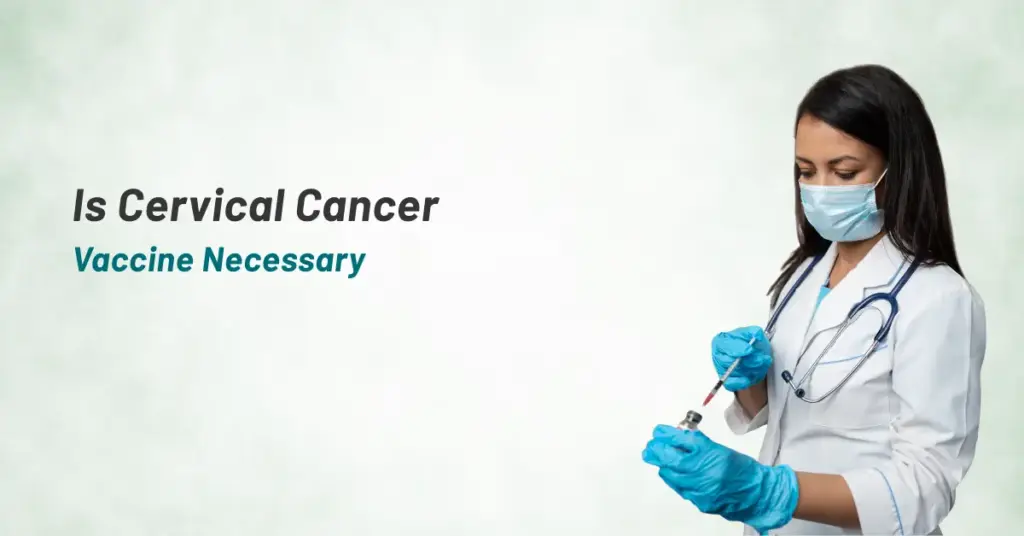
The good news? Cervical cancer stands apart from most cancers because science has given us a real way to stop it before it starts. With the right vaccine at the right age, your risk of getting cervical cancer drops significantly. So, is cervical cancer vaccine necessary? The short answer is yes, and this guide explains exactly why.
What Causes Cervical Cancer?
Almost all cases of cervical cancer are caused by a virus called the Human Papillomavirus (HPV). HPV is a virus that passes from person to person through skin-to-skin contact during sexual activity, making it one of the most widely circulated infections among adults. Most people who are sexually active will come into contact with it at some point in their lives.
In many people, the body clears the infection on its own. But in some cases, the infection stays and slowly causes changes in the cervical cells. Over many years, these changes can turn into cancer. HPV types 16 and 18 alone are responsible for over 80% of cervical cancer cases in India.
Is Cervical Cancer Vaccine Necessary?
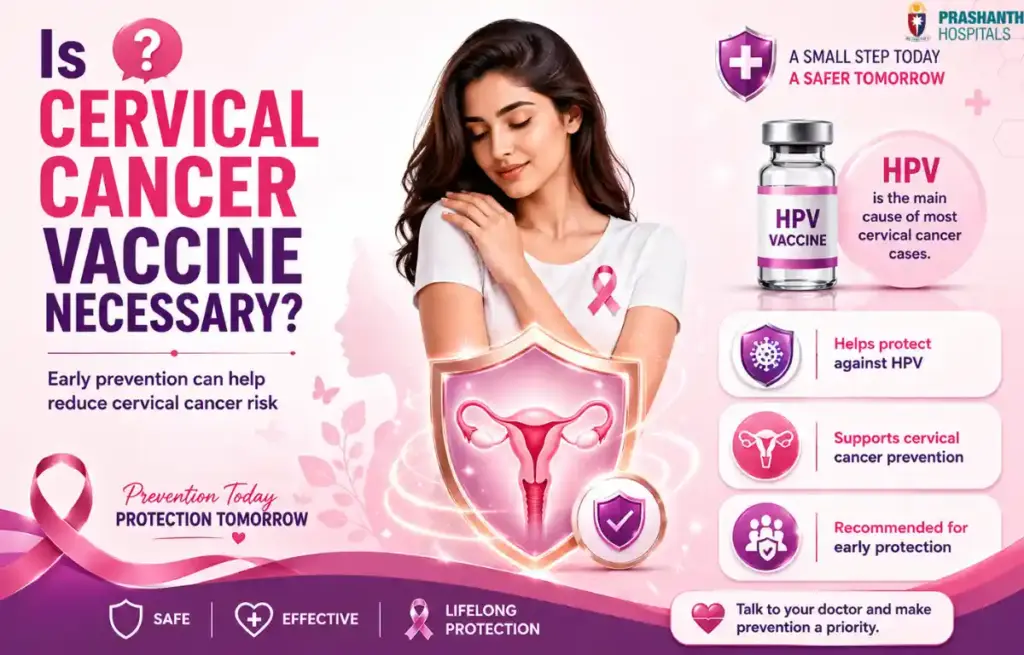
Yes, the cervical cancer vaccine is necessary, especially for young girls before they are exposed to HPV. Think of it like a shield, not a treatment. The vaccine trains your immune system to recognize and fight off HPV so that if the virus ever enters your body, it cannot take hold.
Here is why getting vaccinated matters:
- The HPV vaccine covers the specific virus strains behind the vast majority of cervical cancer diagnoses in women across India and globally.
- One in every 50 girls born in India may develop cervical cancer in her lifetime
- The vaccine can prevent most cases of cervical cancer if given at the right age
- Studies show the vaccine provides nearly 100% protection even after 10 years
- Vaccinating boys also helps reduce the spread of HPV to women
The World Health Organization (WHO) has set a global goal: vaccinate 90% of girls by age 15. Screening 70% of women and treating 90% with pre-cancer will put each country on track to eliminate cervical cancer within this century.
Types of Cervical Cancer Vaccines Available in India
Currently, three main HPV vaccines are available in India. Each works differently in terms of how many HPV strains they protect against:
1. Gardasil (Quadrivalent)
Protects against HPV types 6, 11, 16, and 18. It prevents cervical cancer as well as genital warts. This is the vaccine being used in India’s national immunisation programme launched in February 2026.
2. Cervarix (Bivalent)
Cervarix targets the two high-risk HPV strains that together account for the largest share of cervical cancer cases seen in Indian women.
3. CERVAVAC (Made in India)
India’s own HPV vaccine, developed by the Serum Institute of India. It is a quadrivalent vaccine, similar to Gardasil, but priced much more affordably at around Rs. 2,000 to Rs. 4,000 per dose. This has made vaccination more accessible across the country.
4. Gardasil 9 (9-valent)
The most advanced option. It protects against nine HPV strains and offers the broadest protection. It costs around Rs. 9,000 to Rs. 10,850 per dose in private clinics.
India launched a free nationwide HPV vaccination programme on February 28, 2026. Girls aged 14 can get Gardasil free of cost at government health facilities through the U-WIN digital platform.
Who Should Get the Cervical Cancer Vaccine?
The vaccine works best when given before a person is exposed to HPV. Here is a breakdown by age group:
Girls aged 9 to 13 years (Primary Target Group)
This is the most recommended age according to WHO. The immune response is strongest at this age. Only two doses are needed, given 6 to 12 months apart.
Girls and women aged 14 to 26 years (Catch-Up Vaccination)
Girls and women in this age range need a full course of three shots to build the same level of protection that younger girls get from two. The schedule is: first dose, second dose 1 to 2 months later, and third dose at 6 months.
Women aged 27 to 45 years
Vaccination is still possible up to age 45 based on individual risk. A doctor can advise whether it makes sense for your situation.
Boys and men
Vaccinating males helps stop the spread of HPV. The 9-valent vaccine is also recommended for boys to prevent HPV-related cancers including penile and anal cancers.
People with weakened immune systems
Those living with HIV or other immune conditions require 3 doses regardless of age at vaccination.
Who Should NOT Get the Vaccine?
- The vaccine is not right for everyone. You should avoid or delay it if:
- You are currently pregnant. Wait until after delivery to complete the remaining doses.
- Anyone with a known serious allergic reaction to any ingredient in the HPV vaccine should speak to their doctor before proceeding.
- You are seriously ill at the time of the scheduled dose.
If the vaccine was given unknowingly during early pregnancy, there is no cause for major concern. But always inform your doctor.
What Are the Side Effects?
The cervical cancer vaccine is very safe. Side effects, when they do occur, are almost always mild and short-lived.
Common side effects include:
- Soreness or redness at the injection site on the arm
- Mild headache or low-grade fever
- Dizziness or lightheadedness (sitting for 20 minutes after injection helps)
- Mild nausea, stomach upset, or diarrhea in rare cases
Serious reactions are extremely rare. If anything unusual occurs after vaccination, contact your doctor right away.
Is the Cervical Cancer Vaccine Free in India?
Yes, for eligible girls. India’s government launched a nationwide free HPV vaccination programme in February 2026. Girls aged 14 can register through the U-WIN digital platform or walk in at a government health facility near them.
For those getting vaccinated privately, here is a rough cost guide:
- CERVAVAC (Indian brand): Rs. 2,000 to Rs. 4,000 per dose
- Gardasil (Quadrivalent): Rs. 3,500 to Rs. 6,000 per dose
- Gardasil 9 (9-valent): Rs. 9,000 to Rs. 10,850 per dose
Ask your doctor which vaccine suits your age, health status, and budget.
Where to Get the Cervical Cancer Vaccine
If you are wondering where to get cervical cancer vaccine in India, you have several options:
- Government hospitals and PHCs: Free for girls aged 14 under the national programme
- Private hospitals and clinics: Women and girls of any eligible age can get vaccinated here after a brief consultation with a doctor to confirm the right vaccine and dosage for them.
- Gynaecology and oncology departments: Best place for professional guidance on dosage and schedule
- Paediatric clinics: For children and adolescents, this is a common vaccination point
If you are searching for a cervical cancer vaccine near me in Chennai, Prashanth Hospitals offers HPV vaccination as part of its women’s health and oncology services. Our team can guide you on the right vaccine type and schedule for your age and health condition.
Vaccination and Screening: Both Are Important
Many women wonder: if I get vaccinated, do I still need Pap smears? The answer is yes.
The vaccine does not protect against all HPV strains. Pap smear screening checks for early cell changes that could become cancer, including from strains not covered by the vaccine. Together, vaccination and regular screening offer the strongest protection.
WHO recommends all women get screened with a high-performance test by age 35, and again by age 45. Early detection saves lives.
Is Cervical Cancer Vaccine Necessary Even If You Are Already Sexually Active?
This is one of the most common questions women ask. If you have not been vaccinated yet and are already sexually active, you may still benefit from the vaccine. It protects against strains you may not have been exposed to yet. Talk to your gynaecologist to understand your options.
Remember, is cervical cancer vaccine necessary is not just a question for young girls. Women up to age 45 can still get meaningful protection from HPV vaccination.
Where to Get Cervical Cancer Vaccine in Chennai
If you are looking for a trusted place for cervical cancer vaccine near me in Chennai, the Prashanth Institute for Oncology is here to help. Our oncologists and gynaecologists can assess your health, recommend the right vaccine, and set up a proper vaccination schedule for you or your daughter.
We also offer regular cervical cancer screening including Pap smears and HPV testing, so you stay protected at every stage of life.
Final Thoughts
Cervical cancer is largely preventable. The HPV vaccine, when given at the right age and combined with regular screening, gives women one of the best tools to protect their health long-term.
So, is cervical cancer vaccine necessary? Yes, it is. Whether you are a parent thinking about your daughter or a woman looking after your own health, this simple vaccine can make a real difference.
Talk to our doctors at Prashanth Hospitals today. Book an appointment with our oncology team and take the first step towards protecting yourself and the women in your life.