Watching your baby take their first bite of solid food is a major milestone. It is a time filled with excitement, messy faces, and many questions. As your little one grows, their nutritional needs change. This guide will help you navigate the journey from the first spoonful to joining the family at the dinner table.
Our goal is to provide a clear 6 to 12 months baby food chart that focuses on safety, nutrition, and building healthy habits for life.
When to Start Complementary Feeding
Most health experts, including the World Health Organization (WHO), suggest starting solid foods right around 6 months. By this time, breast milk or formula alone is no longer enough to meet all of your baby’s growing needs, especially for iron.
How do you know if your baby is ready? Look for these simple signs:
- Good head control: They can hold their head steady while sitting in a high chair.
- Sitting up: They can sit with very little or no help.
- Curiosity: They watch you eat and might even reach for your plate.
- The tongue reflex: They no longer automatically push food out of their mouth with their tongue.
Starting a 6 months baby food chart at this stage helps your baby learn how to chew and swallow different textures.
6–12 Month Baby Food Chart (Indian Meal Plan)
| Age (Months) | Early Morning | Breakfast (10 AM) | Lunch (1 PM) | Evening Snack (4 PM) | Dinner (7 PM) |
| 6 Months | Breast Milk / Formula | Rice Cereal / Ragi Porridge (2–3 tsp) | Breast Milk / Formula | Apple Puree (1–2 tsp) | Breast Milk / Formula |
| 7 Months | Breast Milk / Formula | Soft Suji Porridge | Thin Dal Khichdi | Mashed Banana | Breast Milk / Formula |
| 8 Months | Breast Milk / Formula | Idli mashed with warm water | Vegetable Dal Khichdi (soft) | Pear or Papaya Mash | Breast Milk / Formula |
| 9 Months | Breast Milk / Formula | Broken Wheat Porridge (Dalia) | Rice + Dal + Veg Mash | Boiled Sweet Potato Mash | Soft Curd Rice |
| 10 Months | Breast Milk / Formula | Ragi + Apple Porridge | Mild Vegetable Pulao (mashed) | Ripe Mango Mash | Chapati soaked in Dal |
| 11 Months | Breast Milk / Formula | Mini Idli / Soft Dosa pieces | Paneer Khichdi / Veg Rice | Chikoo or Banana Mash | Soft Upma |
| 12 Months | Breast Milk / Formula | Vegetable Poha (soft) | Regular Family Meal (Dal + Rice + Veg) | Mixed Fruit Pieces | Soft Stuffed Chapati |
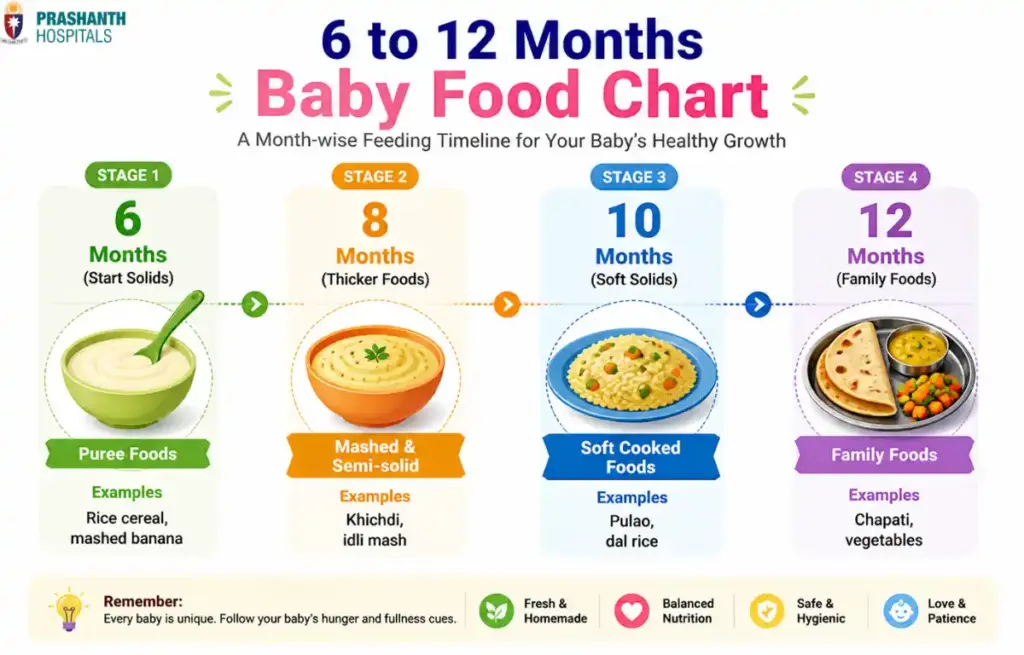
6 to 8 Months Baby Food Chart
This is the “tasting” phase. Your focus should be on single-ingredient foods to see how your baby reacts.
What to offer:
- Fruits: Mashed banana, steamed apple, or soft avocado.
- Vegetables: Steamed and mashed carrots, pumpkin, or sweet potato.
- Grains: Iron-fortified rice or oatmeal cereal mixed with breast milk.
When looking for baby food recipes 6-8 months, keep it simple. You can try a simple “Sweet Potato Mash” by steaming the vegetable until soft and blending it with a little warm water. Another great option for food for 6 months baby is a simple pear puree.
Remember to introduce one new food at a time. Wait two or three days before trying another one. This makes it much easier to spot if a certain food causes a rash or tummy upset. Using a 6 months baby food chart helps you keep track of these milestones.
9 to 11 Months Baby Food Chart
At this stage, your baby is becoming a more confident eater. They can now handle more variety and thicker textures. This is also when they start trying to pick up food with their fingers.
What to add:
- Proteins: Well-cooked lentils (dal), mashed beans, or finely shredded chicken.
- Dairy: Plain, full-fat yogurt or cottage cheese.
- Grains: Small pieces of soft bread, cooked pasta, or idli.
A common favorite in baby food recipes 6-8 months that transitions well into this phase is mashed khichdi (rice and lentils). It is soft, easy to digest, and very nutritious. As part of your 6 to 12 months baby food chart, you can now start mixing flavors, like apple and spinach or potato and peas.
12 Months: Transition to Family Foods
By one year, your baby is likely ready to eat much of what you eat. Their digestive system is stronger, and they usually have a few teeth to help with chewing.
The goal now is to include them in family mealtime. You can offer chopped versions of your healthy meals. Just be sure to set aside their portion before you add salt or strong spices to the rest of the family’s food. This transition is the final step in the 6 to 12 months baby food chart.
Daily Nutrition Goals for Indian Babies (6 to 12 Months)
As your baby grows, their body needs specific “building blocks” to develop properly. In India, we look at the Recommended Dietary Allowance (RDA) to ensure babies are on the right track. You don’t need to be a mathematician to get this right—offering a variety of foods from a 6 to 12 months baby food chart usually covers these bases naturally.
According to health guidelines for Indian infants, here is what to aim for daily:
- Energy (80 Kcal/kg): Provides the fuel for all that new crawling and moving.
- Protein (1.23g/kg): Essential for muscle growth and a strong immune system.
- Iron (5 mg): Crucial for brain development; often found in food for 6 months baby like iron-fortified cereals.
- Calcium (500 mg): The key to strong bones and those first little teeth.
Food Texture Progression: Puree to Finger Foods
Learning to eat is a physical skill, just like crawling. It takes practice.
- Thin Purees: Best for the very start (6 months).
- Thick Mashes: Around 7 to 8 months, leave some small lumps.
- Soft Finger Foods: Around 9 months, offer pieces the size of your pinky nail that can be smashed between your fingers.
- Chopped Solids: By 12 months, they can handle most soft textures.
Providing the right food for 6 months baby starts with smooth textures, but don’t stay there too long. Moving to lumpy foods by 9 months helps prevent picky eating later.
Diet Diversity and Nutritional Needs
A colorful plate is usually a healthy plate. Babies need a mix of vitamins and minerals to grow. According to WHO data, diet diversity is key to preventing malnutrition. Aim to include at least four different food groups each day, such as:
- Grains and tubers
- Legumes and nuts
- Dairy products
- Flesh foods (meat, fish, poultry)
- Eggs
- Vitamin A-rich fruits and vegetables
Iron-Rich Foods for Baby Growth
Iron is perhaps the most important nutrient during this window. Around 6 months, the iron stores a baby is born with start to run low. Iron is essential for brain development and healthy blood.
Include these in your 6 to 12 months baby food chart:
- Iron-fortified cereals.
- Lentils and beans.
- Dark leafy greens (steamed and pureed).
- Small amounts of egg yolk or soft meats.
To help their body absorb iron better, pair these foods with something high in Vitamin C, like a squeeze of lemon or a side of mashed berries.
Foods to Avoid Before One Year
While exploring is good, some foods are not safe for babies under twelve months:
- Honey: This can cause a rare but serious illness called botulism.
- Cow’s Milk: It is hard for their young kidneys to process and doesn’t have enough iron. (Small amounts in cooking are usually okay).
- Salt: Their kidneys are still developing. Avoid adding salt to their food.
- Sugar: It leads to tooth decay and makes them want only sweet things.
- Choking Hazards: Whole grapes, popcorn, whole nuts, or hard raw carrots should be avoided.
Safe Feeding Practices and Hygiene
Safety is just as important as the food itself. Always wash your hands and the baby’s hands before eating. Ensure all utensils and bowls are clean.
- Always Supervise: Never leave a baby alone while they are eating.
- Safe Seating: Use a sturdy high chair with a strap.
- Temperature Check: Always test the food on the inside of your wrist to make sure it isn’t too hot.
- Clean Water: If you offer water, ensure it is boiled and cooled or filtered.
Interesting Facts and WHO Recommendations
The World Health Organization provides global standards to ensure babies thrive. Here are a few key points from their research:
- Energy Needs: At 6 months, a baby needs about 200 extra calories from food. By 12 months, that grows to about 550 calories.
- The “Window of Opportunity”: The period between 6 and 24 months is when a child’s growth is most rapid. Correct feeding during this time can prevent stunted growth.
- Hydration: Before 6 months, babies don’t need extra water. After 6 months, a few sips of water from a cup during meals can help them learn to drink and stay hydrated.
When to Consult a Pediatrician
Feeding changes are normal in the first year. Some days your baby eats well. Some days they may refuse food. This is part of growth. But certain signs should not be ignored. Early advice from a pediatrician can help prevent feeding and growth concerns.
You should consult a pediatrician if you notice:
- Poor weight gain: Your baby is not gaining weight as expected or looks weaker over time.
- Refusing food often: Your baby avoids feeding for several days or shows no interest in eating.
- Frequent vomiting or diarrhea: Repeated vomiting or loose stools after feeding.
- Signs of food allergy: Rash, swelling, vomiting, or breathing issues after eating.
- Difficulty swallowing or choking: Coughing or choking during meals.
- Low energy or delayed activity: Baby seems less active or not meeting milestones.
Conclusion
Starting a 6 to 12 months baby food chart is a journey of discovery for both you and your little one. It is about more than just nutrients; it is about exploring textures, smells, and colors. Don’t worry if they spit out a new food the first time. Sometimes it takes ten or more tries for a baby to accept a new flavor.
Keep mealtimes calm and happy. By offering a variety of healthy, iron-rich foods and following your baby’s cues, you are setting them up for a lifetime of healthy eating.