Most of us do not think about our lungs until something goes wrong. Yet these two organs work around the clock. On an average day, you breathe somewhere between 17,000 and 30,000 times without ever noticing. That quiet, constant effort deserves a bit more attention than we usually give it.
What you eat plays a real part in how well your lungs work. The right foods can support clearer airways, calmer inflammation, and better overall breathing. This guide looks at foods with genuine backing for lung health, plus simple daily habits that make a difference over time.
Why Choosing the Best Food for Lungs Matters Every Day
What you eat affects how well your lungs perform, in the same way it affects your heart or your gut. A diet built around whole, anti-inflammatory foods can help keep your airways clearer and support your respiratory muscles. None of this replaces medical care, but a lung-friendly plate is one of the simplest habits you can build for long-term respiratory health.
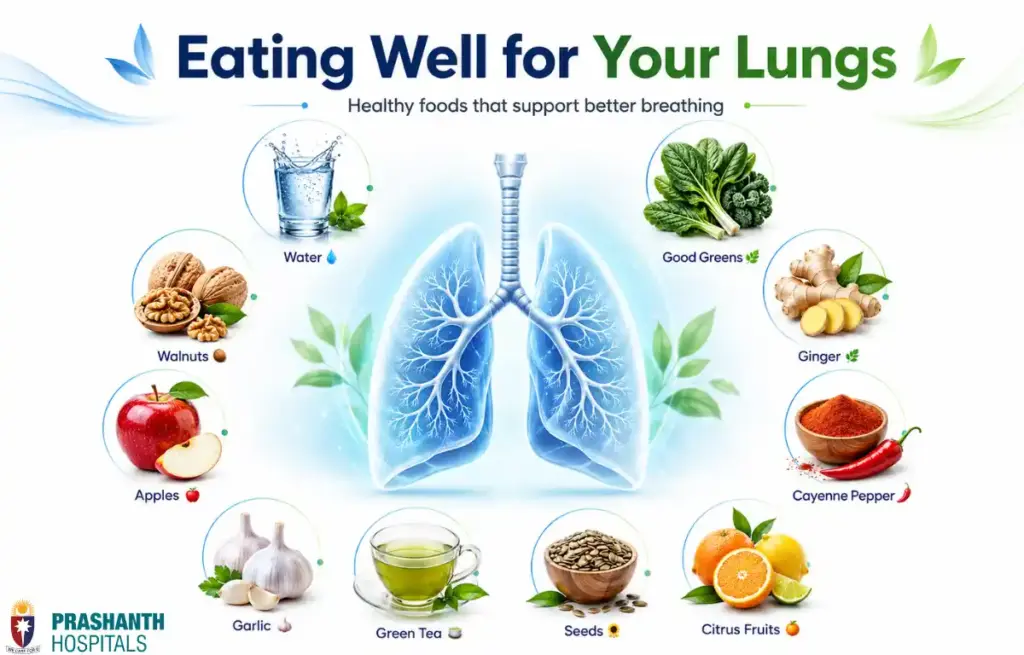
Water
Your lungs rely on water to keep the mucus lining your airways thin and moving. When you are dehydrated, that mucus thickens and becomes harder to clear, which can make breathing feel more effortful. Drinking water through the day is one of the easiest things you can do for your lungs, and for the rest of your body.
Good Greens
Leafy greens and cruciferous vegetables such as broccoli, Brussels sprouts, cauliflower, cabbage, and kale are rich in antioxidants and plant compounds that support healthy tissue throughout the body, including the lungs.
Walnuts
Walnuts are a good plant source of omega-3 fatty acids, a type of healthy fat linked to lower inflammation. Since inflammation plays a role in many lung conditions, including omega-3 rich foods in your diet is a reasonable everyday choice.
Ginger
Ginger has long been used as a home remedy for chesty coughs and congestion. It contains anti-inflammatory compounds and is commonly added to warm drinks when the airways feel congested. It works well steeped in hot water, added to meals, or taken as a small fresh piece.
Apples
Apples are rich in vitamin C, vitamin E, and flavonoids, including quercetin, an antioxidant that has been studied for its potential to protect lung tissue from the effects of smoke and pollution. Regularly eating apples is associated with better lung function in several population studies.
Cayenne Pepper
Capsaicin, the compound that gives chili peppers their heat, can help loosen and move mucus, and some research suggests it may support the immune system’s response to respiratory infections. A small amount goes a long way, so start light if you are not used to spicy food.
Garlic
Garlic contains allicin, a compound with anti-inflammatory and antimicrobial properties, which is part of why it has been used across many cultures as a natural remedy for infections. Regularly including garlic in your cooking is a simple way to add this benefit to your meals, alongside its wider benefits for heart and blood pressure health.
Green Tea
Green tea is rich in antioxidants called catechins, which have been studied for their role in reducing inflammation linked to smoke and pollution exposure. Staying well hydrated, including through drinks like green tea, supports the mucus clearance your lungs rely on every day.
Taste tip: a squeeze of lemon in your green tea adds vitamin C and a natural, gentle expectorant effect.
Seeds
Pumpkin seeds, chia seeds, sunflower seeds, and flaxseeds are good sources of magnesium, a mineral that plays a role in airway muscle function and is often highlighted for people managing asthma. Add a handful to a smoothie, salad, or bowl of yogurt for an easy daily boost.
Best Foods for Lung Cleansing: Detox Your Airways Naturally
Your lungs and liver already handle detoxification on their own, and no single food can replace that natural process. What you can do is support it. Staying hydrated keeps mucus thin and easier to clear. Leafy greens and cruciferous vegetables provide antioxidants that support healthy tissue. Ginger and cayenne pepper can help loosen built-up mucus, especially if you are exposed to smoke, dust, or pollution. Building a handful of these foods into your regular meals, rather than treating them as a one-time fix, is what actually makes a difference over weeks and months.
Best Foods for Lung Infection: Eat Your Way to Recovery
Good nutrition will not replace medical treatment for a lung infection, but it can support your body while it recovers. Garlic and ginger both bring anti-inflammatory and antimicrobial properties to your plate. Warm fluids, including water, herbal teas, and broths, help keep mucus loose and easier to clear. Foods rich in vitamin C, such as citrus fruits and apples, support your immune system during recovery. If you have a fever, persistent cough, or breathing difficulty, these foods are a helpful addition alongside medical care, not a substitute for it.
Other Tips for Better Lung Function
Diet is only part of the picture. A few other habits matter just as much for long-term lung health:
- Get regular exercise. Physical activity improves circulation and strengthens the muscles that support breathing.
- If you smoke, quitting is the single most impactful thing you can do for your lungs.
- Limit refined grains, processed and fatty meats, fried food, and sugary drinks, since these can increase inflammation throughout the body.
- Choose dark chocolate over milk chocolate when a sugar craving hits.
- Keep your home and workspace free of dust, smoke, and strong fumes.
- Spend time outdoors in fresh air when air quality allows, and go for regular walks.
Together with a colorful, whole-food diet, these habits do more for your lungs over time than any single food on its own.
When Should You See the Doctor
Any new or ongoing breathing trouble is worth getting checked. See a doctor if you notice shortness of breath, a lingering cough, wheezing, chest tightness, or pain while breathing. These symptoms can have many causes, and a proper evaluation is the safest way to find out what is going on and get the right treatment.
If you are looking for a pulmonologist in Chennai, the Department of Pulmonology at Prashanth Hospitals can help. You can book an appointment to have your symptoms assessed by a specialist.
Read also Can The Lungs be Affected of by The Excreta of Pigeons.