Breathing is something most of us never think about, until it becomes difficult.
A persistent cough, a wheezing sound, chest tightness or sudden breathlessness can make an ordinary moment frightening. For a child struggling to breathe, it can be distressing. For a parent watching it happen, it can be even harder.
For someone living with asthma, there can also be a quieter concern: “Will it happen again?”
That is why World Asthma Day, observed on the first Tuesday of May every year, matters. In 2026, it falls on May 5.
The message is not to fear asthma. It is to understand it well enough to recognise symptoms, manage triggers, use treatment correctly and know when medical help is needed.
Why Asthma Awareness Matters
Asthma is a long-term condition. The airways become inflamed and narrow, which makes breathing difficult. Symptoms can come and go, which sometimes makes people believe the condition has disappeared when they feel well.
Doctors emphasise that good asthma care is about more than treating the next attack. The aim is to achieve better long-term control so that asthma interferes as little as possible with sleep, school, work, exercise and everyday life.
What Asthma Actually Feels Like
Asthma does not always begin dramatically. Sometimes the first sign is simply a cough that keeps returning.
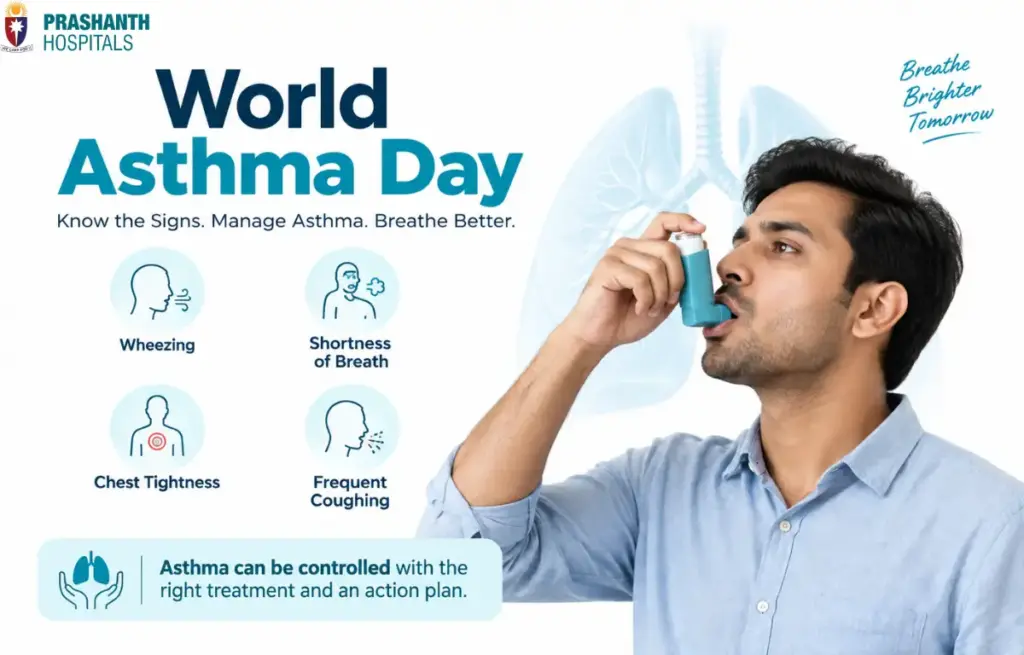
Common symptoms include:
- Wheezing: A whistling or musical sound while breathing, often more noticeable when breathing out.
- Shortness of breath: A feeling of being unable to get enough air or becoming unusually breathless during routine activities.
- Chest tightness: A sensation of pressure, heaviness or constriction that can make breathing uncomfortable.
- Recurring cough: Asthma-related cough may become more noticeable at night, early in the morning, during exercise or after exposure to certain triggers.
- Reduced exercise tolerance: Activities that were previously comfortable may begin to cause coughing, wheezing or breathlessness.
These symptoms can also occur with other respiratory conditions. Recurring or unexplained symptoms should therefore be medically assessed rather than self-diagnosed.
Doctor’s Insight
Doctors emphasise that repeated cough, wheezing, chest tightness or breathlessness should not simply be accepted as part of everyday life. When symptoms disturb sleep, restrict physical activity or interfere with school or work, it is worth discussing them with a healthcare professional.
Common Asthma Triggers
Asthma triggers are different for different people. Recognising personal patterns can be more useful than trying to avoid everything.
| Possible trigger | How it may affect some people |
| Dust and allergens | Exposure to dust, house dust mites or pollen may trigger airway symptoms in susceptible individuals. |
| Smoke and pollution | Tobacco smoke, air pollution and other airborne irritants can worsen asthma symptoms. |
| Respiratory infections | Colds and other respiratory infections may trigger coughing, wheezing or breathing difficulty. |
| Cold air | Breathing cold air can provoke symptoms in some people. |
| Exercise | Physical activity may trigger symptoms in some individuals, particularly when asthma is not well controlled. |
| Strong fumes or smells | Perfumes, chemicals and other irritants may worsen symptoms in susceptible people. |
Knowing your own triggers can help you prepare better and reduce avoidable exposure.
Feeling Better Does Not Always Mean Asthma Is Gone
A person may feel completely normal between asthma episodes.
That is encouraging, but it does not necessarily mean the underlying condition has disappeared.
A common mistake is to stop prescribed treatment as soon as symptoms improve or to assume that occasional symptoms are simply something to live with.
Doctors can assess whether asthma is adequately controlled by looking at the frequency of symptoms, nighttime disturbance, activity limitations, medication use and other factors.
The goal is not merely to feel better today. It is to keep asthma under control over time.
What Good Asthma Control Looks Like
Good control means asthma has less power over everyday life.
A person with well-managed asthma should ideally be able to:
- Sleep comfortably: Frequent nighttime coughing or breathlessness should not become a normal part of life.
- Stay active: Appropriate physical activity should not automatically be avoided because of fear of breathlessness.
- Attend school or work normally: Repeated symptoms should not continually interrupt concentration, attendance or productivity.
- Recognise worsening symptoms: Understanding personal warning signs can help a person respond appropriately before symptoms become severe.
- Use medication correctly: Prescribed inhalers and other medicines should be used according to medical advice.
If asthma repeatedly limits these areas, medical reassessment may be needed.
Inhalers: The Treatment Is Only Part of the Story
Inhalers are an important part of asthma treatment for many people, but misconceptions can sometimes get in the way.
Some people stop prescribed medication when they feel better. Others rely heavily on quick-relief medication without realising that frequent symptoms may indicate inadequate asthma control. Incorrect inhaler technique can also reduce how effectively the medicine reaches the airways.
Doctors recommend:
- Understanding the purpose of each prescribed inhaler: Different inhalers may have different roles, including long-term control or relief of symptoms.
- Using medication as prescribed: Treatment should not be started, stopped or changed without appropriate medical guidance.
- Checking inhaler technique: A healthcare professional can demonstrate the correct technique and identify mistakes that may reduce medication delivery.
An inhaler is not something to be embarrassed about. Used correctly, it is a valuable tool for controlling asthma.
Asthma in Children Can Be Easy to Miss
Children may not always be able to describe chest tightness or breathing difficulty. Instead, parents may notice changes in behaviour or activity.
Pay attention when a child:
- Coughs repeatedly at night: Persistent nighttime coughing can sometimes be associated with asthma.
- Wheezes after running or playing: Repeated breathing symptoms during activity deserve attention.
- Avoids active play: A child who regularly stops playing because of breathlessness may need assessment.
- Has recurring symptoms during infections: Repeated coughing or wheezing with respiratory infections can be an important pattern.
- Wakes because of breathing symptoms: Disturbed sleep should not simply be accepted as normal.
Children should not have to give up running, playing or being active because breathing repeatedly becomes difficult.
When Asthma Becomes an Emergency
Most asthma symptoms can be managed with an appropriate treatment plan. However, severe attacks can become life-threatening.
Urgent medical attention is needed when a person has:
- Severe or rapidly worsening breathlessness: Difficulty breathing that is becoming worse should not be ignored.
- Difficulty speaking normally: Being unable to speak comfortably because of breathlessness can indicate severe breathing difficulty.
- Confusion or extreme exhaustion: These can be serious warning signs during a severe episode.
- Bluish or greyish lips or skin: This can indicate inadequate oxygen and requires emergency care.
- A chest that has gone quiet: If breathing sounds fainter despite obvious distress, this can mean very little air is moving and is a serious warning sign, not a sign of improvement.
- Poor response to prescribed reliever treatment: If symptoms remain severe despite using prescribed medication as directed, urgent medical assessment is needed.
Severe breathing difficulty should never be managed by simply waiting for it to pass.
When Should You Talk to a Doctor?
Asthma does not need to become severe before it deserves attention.
Consider medical evaluation when coughing, wheezing, chest tightness or breathlessness:
- Keep returning without a clear explanation.
- Regularly disturb sleep.
- Occur during routine activities or exercise.
- Cause you to avoid activities you would otherwise enjoy.
- Require frequent use of prescribed quick-relief medication.
- Are becoming more frequent or severe.
- Feel significantly different from previous episodes.
A doctor can determine whether the symptoms are due to asthma or another respiratory condition and assess whether the current management approach is appropriate.
Doctor’s Insight
Doctors emphasise that asthma should not be managed only when symptoms become uncomfortable. Understanding triggers, using prescribed treatment correctly and reviewing asthma control when symptoms change can help reduce avoidable flare-ups and improve quality of life.
This World Asthma Day, Look Beyond the Next Attack
Asthma awareness is not simply about knowing what wheezing sounds like.
It is about recognising when recurring symptoms deserve attention, understanding what triggers them and knowing whether the condition is genuinely under control.
If a child repeatedly coughs during the night, if exercise consistently leaves someone breathless, or if an adult is increasingly relying on quick-relief medication, these should not simply become part of everyday life.
Doctors want people with asthma to do more than manage attacks. The aim is to help them live confidently between them.
This World Asthma Day, May 5, 2026, take a moment to understand your symptoms, review your triggers and consider whether your asthma is truly under control.
At Prashanth Hospitals, individuals and families can seek medical evaluation for recurring cough, wheezing, breathlessness and other respiratory symptoms that may require further assessment.
Asthma should not decide how much of life you get to enjoy. Better control can mean easier breathing, greater confidence and more freedom to live normally.