Diabetes is one of the biggest lifestyle diseases in today’s world. In just 25 years, the global incidence of diabetes has doubled, according to the World Health Organization. Diabetes is often referred to as a “silent disease” mainly for two reasons.
1. Many people with Type 2 diabetes live with symptoms for years but remain undiagnosed until complications arise. Understanding the early symptoms of diabetes in women can help in identifying the condition at an earlier stage and prevent long-term health issues.
2. There are often no obvious physical signs in the early stages, which makes recognizing diabetes symptoms in women more challenging. Unless a person chooses to disclose, even close family members may be unaware of the diagnosis.
Types of Diabetes
There are two types of diabetes: type 1 and type 2. A person with type 1 diabetes needs to take insulin to survive because the body produces little or no insulin. In type 2 diabetes, insulin is produced, but the body does not use it effectively, leading to increased blood sugar levels.
Risk Factors for Diabetes in Women
- Age greater than 45 years old
- Diabetes during a previous pregnancy
- Obesity
- Family history of diabetes
- Sedentary lifestyle
- Given birth to an overweight baby
- High blood pressure
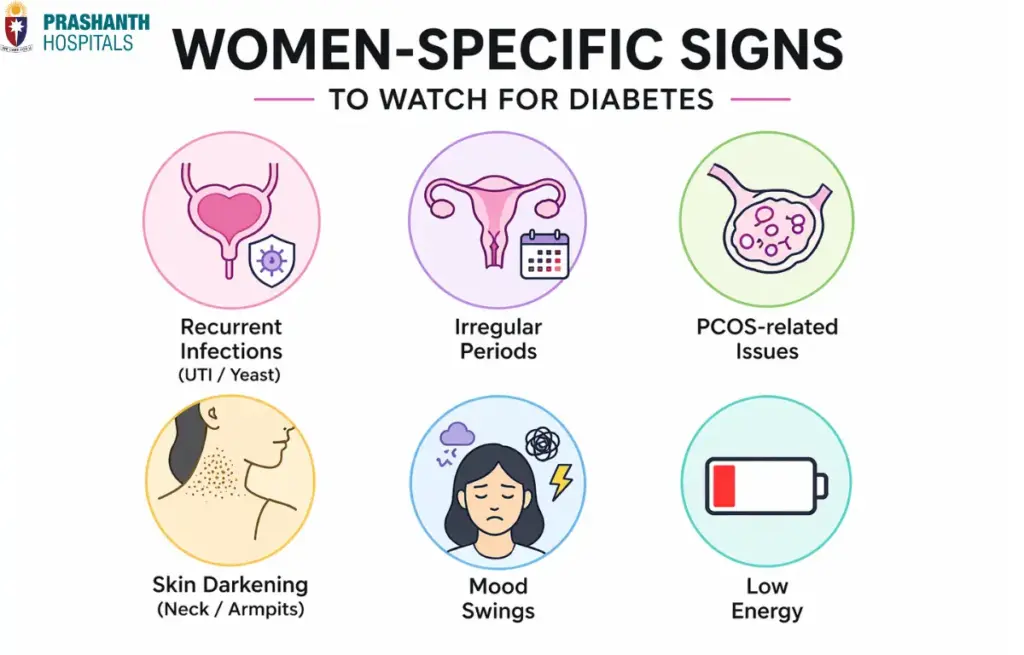
- PCOS
- History of heart disease or stroke
- Impaired glucose tolerance
While many signs are common in both men and women, certain diabetes symptoms in young women and adults may be influenced by hormonal and lifestyle factors.
Symptoms of Diabetes in Women
Acanthosis Nigricans (Skin Darkening)
Acanthosis nigricans is a condition where the skin becomes dark, thick, and velvety, usually around the neck, armpits, or groin. It is an early warning sign of insulin resistance, which can develop before diabetes is diagnosed. Many people ignore this change, but it can be one of the first visible indicators of rising blood sugar levels.
Unexplained Weight Changes
Unexplained weight changes can be an early symptom of diabetes in women. Some may experience sudden weight loss due to the body’s inability to use glucose for energy, especially in Type 1 diabetes. Others may notice weight gain, particularly around the abdomen, which is commonly linked to insulin resistance and Type 2 diabetes.
Gestational Diabetes
Gestational diabetes occurs during pregnancy and often does not cause noticeable symptoms. It is usually detected through routine blood sugar screening tests. Women with gestational diabetes have a higher risk of developing Type 2 diabetes later in life, making regular follow-up and lifestyle management important.
Menopause and Diabetes Risk
After menopause, hormonal changes in a woman’s body can increase insulin resistance and make blood sugar control more difficult. This can also lead to weight gain, especially around the abdomen. As a result, the risk of developing Type 2 diabetes increases in postmenopausal women.
Insulin Resistance / Prediabetes
Insulin resistance is a condition where the body does not respond effectively to insulin, leading to slightly elevated blood sugar levels. This stage, often called prediabetes, may not show obvious symptoms but can progress to diabetes if not managed. Early lifestyle changes like healthy eating and regular exercise can help prevent this progression.
Early Symptoms of Diabetes in Women
Early symptoms of diabetes in women often develop gradually and may go unnoticed. Common signs include frequent urination, increased thirst, fatigue, blurred vision, recurrent infections, and slow-healing wounds. Identifying these symptoms early can help in timely diagnosis and better management of the condition.
Fatigue
Fatigue in diabetes is not just normal tiredness but a constant lack of energy. It occurs because the body is unable to use glucose effectively for energy production. As a result, women may feel exhausted even after adequate rest or sleep.
Blurred Vision
Blurred vision can occur when high blood sugar levels cause fluid changes in the lens of the eye. This affects the eye’s ability to focus properly, leading to temporary vision problems. If left unmanaged, it may increase the risk of serious eye complications.
Frequent Urination
Frequent urination happens when excess sugar in the blood forces the kidneys to work harder to filter and remove it. This leads to increased urine production and can cause dehydration. It is often one of the earliest signs of diabetes.
Infections (UTI / Yeast)
High blood sugar levels create a favorable environment for bacteria and fungi to grow. This makes women more prone to recurrent urinary tract infections and yeast infections. Frequent or recurring infections should not be ignored as they may indicate underlying diabetes.
Slow-Healing Wounds
Slow healing of cuts and wounds occurs due to poor blood circulation and nerve damage caused by high blood sugar levels. Even minor injuries may take longer to heal. This can increase the risk of infections if not properly managed.
Sexual dysfunction
Since diabetes can cause damage to the nerves, different parts of the body can get affected. Women may lose sensation in their legs, hands, and the vaginal area thus leading to sexual dysfunction.
Increased thirst and hunger
High blood sugar robs the cells of fluid thereby increasing thirst. The hunger rises in diabetic women due to the body’s inability to convert blood sugar to energy. One of the typical type 2 diabetes symptoms in women is excessive eating (polyphagia). Too much insulin in the body may make the person feel hungry and also make her eat more.
PCOS
Whilst a diagnosis of PCOS does not mean you have diabetes, it is linked with a higher risk of diabetes. There is a higher chance of having PCOS if a person has diabetes. In PCOS, a hormonal imbalance means the ovaries are unable to release eggs properly which affects fertility.
Early Symptoms of Diabetes in Women
The early symptoms of diabetes in women often develop gradually and may be overlooked. Common early signs include increased thirst, frequent urination, fatigue, blurred vision, and recurrent infections. Identifying these symptoms early can help in timely diagnosis and better management.
Acanthosis nigricans is another early indicator where the skin becomes dark, thick, and velvety, especially around the neck or armpits. This condition is linked to insulin resistance and is often seen before diabetes is diagnosed.
Unexplained weight changes may also occur. Some women experience sudden weight loss due to the body’s inability to use glucose effectively, while others may notice weight gain, particularly around the abdomen, which is associated with insulin resistance.
Other Symptoms
Other diabetes symptoms in women include frequent urination, persistent fatigue, nausea, dry mouth, blurred vision, neuropathy, and itching. Fatigue occurs because the body cannot use glucose effectively for energy, leading to constant tiredness.
Blurred vision happens when high blood sugar causes fluid changes in the eye lens, affecting focus. Frequent urination occurs as the kidneys work harder to remove excess sugar from the blood, leading to dehydration and increased thirst.
Additional Considerations in Women
Gestational diabetes can develop during pregnancy and often has no noticeable symptoms. It is usually detected through routine screening and increases the risk of developing diabetes later in life.
After menopause, hormonal changes can increase insulin resistance and lead to weight gain, further raising the risk of diabetes.
Benefits of Well-Controlled Blood Sugar Levels
- Helps regulate menstrual cycles
- Improves libido
- Reduces the risk of miscarriage
- Lowers the chances of delivering an overweight baby
- Supports overall health
If not managed properly, diabetes can lead to serious complications such as neuropathy, retinopathy, cardiovascular disease, kidney disease, and even amputation.
Complete diabetic care at Prashanth Hospitals
If you notice any of the early symptoms of diabetes in women, it is important to seek medical advice at the earliest. Early diagnosis through tests like fasting blood sugar and HbA1c can help in better management.
Prashanth Hospitals offers comprehensive diabetic care with a patient-focused approach. Our specialists in Chennai provide complete care, including management of diabetic foot ulcers, nephropathy, retinopathy, and neuropathy. Book an appointment with the best diabetologist in Chennai for expert guidance and treatment.