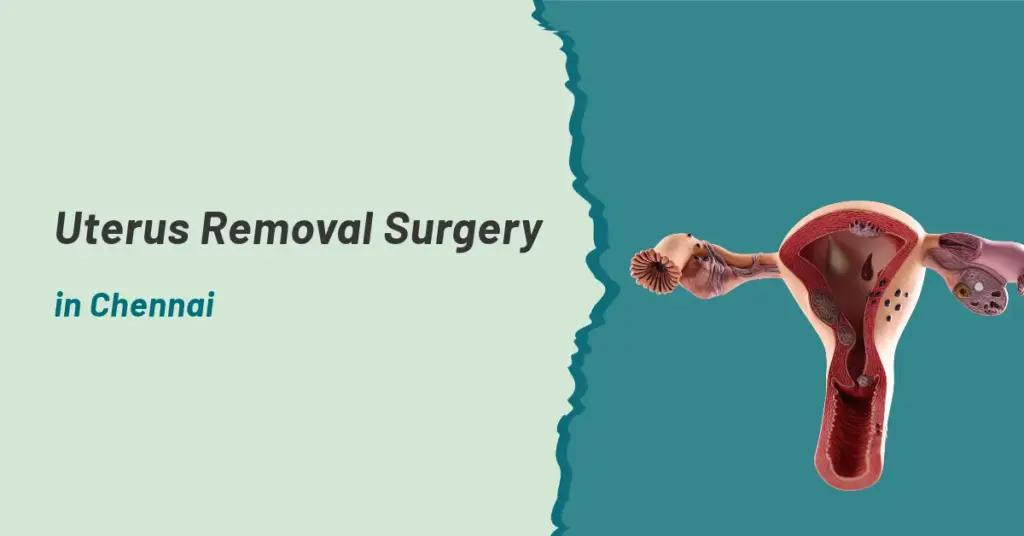
Uterus removal surgery in Chennai is a treatment option for women with heavy bleeding, pelvic pain or other uterine problems that have not improved with other care. The medical name is hysterectomy. It removes the uterus, so periods stop and pregnancy is no longer possible. It can bring lasting relief for the right condition, but it is a major decision. This guide explains when surgery is advised, the alternatives, the types of hysterectomy, recovery, risks and cost factors.
A hysterectomy is surgery to remove the uterus. Doctors advise it when a condition such as fibroids, adenomyosis, prolapse, severe bleeding or cancer cannot be managed well in other ways. It permanently ends periods and the ability to carry a pregnancy. Removing the ovaries and cervix is a separate decision.
When is Uterus Removal Surgery Recommended?
Surgery may be considered when a uterine condition causes serious symptoms, other treatments have not worked, or surgery offers an important medical benefit. The advice depends on the diagnosis, not on age or period symptoms alone.
Common reasons include:
- Uterine fibroids: Noncancerous growths that can cause heavy bleeding, pelvic pressure, pain or anaemia.
- Adenomyosis: A condition where tissue like the uterine lining grows into the muscle wall. It can cause painful periods and heavy bleeding. Hysterectomy is a definitive treatment for adenomyosis when it is appropriate, while uterus preserving options may have limits.
- Endometriosis: This is different from the conditions above because endometriosis can grow outside the uterus. Hysterectomy does not cure endometriosis in other areas, so it is considered only in selected cases, and other treatment may still be needed.
- Persistent abnormal uterine bleeding: Mainly when the cause has been checked and medical or less invasive treatments have not helped.
- Uterine prolapse: When the uterus slips down into the vagina and causes pressure or trouble with daily tasks. Hysterectomy is not the only surgical option for prolapse.
- Cancer or precancerous changes: Surgery may be part of treatment, depending on the diagnosis and stage.
Surgery for a noncancerous condition is usually planned after other options are discussed. When cancer is confirmed or strongly suspected, the operation is part of cancer care. The type and extent of surgery then depend on the diagnosis and stage, and a gynaecological cancer specialist is often involved.
A diagnosis does not always mean the uterus must be removed. The real question is whether hysterectomy is the best option for your condition and your goals.
Are there Alternatives to Uterus Removal Surgery?
In suitable cases, other treatments can control symptoms or treat the problem without removing the uterus. Which option fits depends on your age, symptoms, how severe the condition is and whether you want future pregnancy.
| Condition | Options that may be considered |
| Fibroids | Medicines, myomectomy (removing the fibroids only) or uterine artery embolisation |
| Heavy menstrual bleeding | Tranexamic acid, hormonal treatment, a hormonal intrauterine system or endometrial ablation, depending on the cause |
| Adenomyosis | Pain relief, hormonal treatment or selected uterus preserving procedures |
| Endometriosis | Medicines or surgery aimed at the endometriosis, depending on how far it has spread |
| Uterine prolapse | Pelvic floor exercises, a vaginal pessary or uterus preserving surgery in suitable cases |
Some treatments only manage symptoms and do not remove the cause. Some are not safe when cancer is suspected or confirmed.
Uterine artery embolisation blocks the blood supply to fibroids. It may affect a future pregnancy, so it is chosen only after a specialist assessment and a talk about your reproductive plans. Endometrial ablation is also not meant for women who want to become pregnant.
If you may want children, say so before any decision is made. Once the uterus is removed, you cannot carry a pregnancy.
What Happens During Uterus Removal Surgery?
The surgical route depends on the size of the uterus, the condition being treated, past operations, your general health and the surgeon’s assessment.
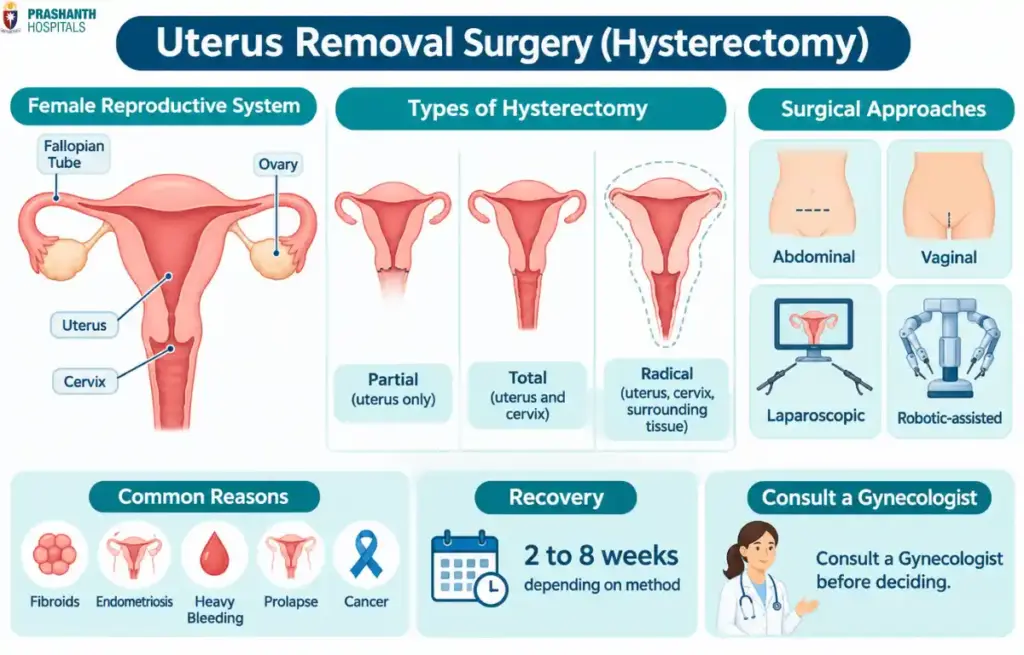
- Abdominal hysterectomy: The uterus is removed through a cut in the lower abdomen. This may be needed for a large uterus, complex cases or certain cancers.
- Vaginal hysterectomy: The uterus is removed through the vagina with no cut in the abdomen. It may suit selected cases, including some prolapse.
- Laparoscopic hysterectomy: Small cuts allow a camera and thin instruments to be used. For suitable patients, this may mean a shorter hospital stay and quicker recovery than open surgery.
- Robotic assisted hysterectomy: The surgeon controls the instruments from a console. It is not automatically better than standard laparoscopy. Studies have not shown that robotic surgery is better for every patient, so the choice depends on the case and the surgeon’s experience.
No single method is best for every woman. Ask your surgeon why a certain approach is being advised for you.
Will the Ovaries and Cervix Also Be Removed?
A hysterectomy does not always remove every reproductive organ. Ask exactly what is planned.
- Total hysterectomy: Removes the uterus and the cervix.
- Subtotal (supracervical) hysterectomy: Removes the upper part of the uterus and leaves the cervix. Women who keep the cervix may still need cervical screening as advised by their doctor. After a total hysterectomy, the need for screening depends on why surgery was done and your past results.
- Fallopian tubes: These may be removed along with the uterus, depending on the situation.
- Ovaries: These are removed only for specific reasons. The decision depends on your age, ovarian health, cancer risk and personal factors.
Even when the ovaries stay, the uterus is gone, so you cannot carry a pregnancy. Keeping the ovaries also does not guarantee that menopause will come at the same age as before. In some women it may come earlier.
The ovaries make hormones, including oestrogen. If both are removed before natural menopause, surgical menopause begins. This can cause hot flashes, poor sleep and vaginal dryness. Hormone therapy may be considered to ease these symptoms, but it depends on your medical history and any reasons you should not take it. It is not automatic for every woman, so discuss it before surgery.
How to Prepare for Surgery
Knowing the plan ahead of time can make the process feel less stressful. Your team will review your symptoms, past illnesses, current medicines and earlier test reports. Depending on your case, you may need blood tests, scans or other checks. Where needed, this includes an anaesthesia assessment, a check for anaemia and a review of your regular medicines.
Questions worth asking:
- Why is surgery advised now? Ask for a clear explanation of the diagnosis.
- Are there other options? Ask what they could offer and what their limits are.
- What will be removed? Ask about the ovaries, tubes and cervix.
- What should I do about medicines and fasting? Follow the instructions you are given.
- How will I manage at home? Plan help with housework, childcare, travel and follow up visits.
A second opinion is reasonable, and it may be especially useful when the diagnosis is unclear, alternatives were not discussed, future pregnancy matters to you, or you simply feel unsure.
What are the Risks of Hysterectomy?
Like any major surgery, hysterectomy has risks. These include bleeding, infection, blood clots, injury to nearby organs such as the bladder, bowel or ureters, and reactions to anaesthesia. Some women have temporary changes in bladder or bowel habits. Your surgeon should explain which risks apply to you and how they will be reduced.
Recovery After Uterus Removal Surgery
Recovery depends on the surgical method, your health and the reason for surgery. As a rough guide:
- Abdominal hysterectomy: A hospital stay of about 2 to 4 days is common, and full recovery often takes about 6 to 8 weeks.
- Vaginal or laparoscopic hysterectomy: A hospital stay of about 1 to 2 days is common, and many women recover in about 2 to 4 weeks.
These are general ranges only. Individual recovery varies, and a smaller cut does not mean every woman will recover faster. Your team will advise you on when to return to work, drive, lift weights, exercise and resume sexual activity.
You may feel tired and sore, and your bladder or bowel habits may change for a short time. Follow your discharge instructions and attend all follow up visits.
Get urgent medical help if you have heavy vaginal bleeding, chest pain, trouble breathing, or any severe or sudden symptom. Also contact your doctor promptly for fever, worsening belly pain, foul smelling discharge, or a painful swollen leg.
Emotional recovery matters too. Some women feel relief. Others feel sadness or a sense of loss, especially if fertility was important to them. Both can happen together. Talk to your healthcare team if these feelings last or affect daily life.
Cost of Uterus Removal Surgery in Chennai
The cost of uterus removal surgery in Chennai varies because no two hysterectomies are the same. A fair estimate can only be given after the doctor examines you and reviews your reports.
Factors that affect the total include:
- The surgical approach and how complex the case is.
- Surgeon and anaesthesia fees.
- Tests, scans and pre surgery checks.
- The length of the hospital stay and the room type.
- Medicines, supplies and any extra treatment.
- Follow up care and the management of any complications.
When you compare estimates, ask for an itemised breakdown. Check whether it includes tests, hospital stay, medicines and follow up, or whether some costs are billed separately. The lowest quote does not always show the full picture.
Getting Care at Prashanth Hospitals
Choosing where to have a hysterectomy is about more than the surgical method. You want a team that explains your diagnosis clearly, discusses other treatments and answers your questions about recovery, fertility and hormones.
At Prashanth Hospitals, you can meet the gynaecology team to talk about your symptoms, your test reports and your treatment options. The team can explain whether surgery is needed, whether another treatment could work first, and which approach may suit you. Bring your reports, a list of your medicines and your questions to the visit.
If you are living with symptoms and want clear answers, book a consultation with the Gynaecology team at Prashanth Hospitals.