A protein molecule called hemoglobin is responsible for carrying oxygen from the lungs to the body’s tissues and organs. Hemoglobin is an essential part of red blood cells, and low hemoglobin levels can lead to anemia. Numerous conditions, such as chronic illnesses, nutritional deficiencies, or blood loss, can result in anemia. A human being cannot survive without hemoglobin, and the body cannot effectively transfer oxygen from the lungs to tissues and cells if hemoglobin levels are insufficient.
Normal Hemoglobin Ranges
Hemoglobin levels in human blood can vary slightly depending on age, gender, and other factors. The normal range for haemoglobin levels in adults is 13.5 to 17.5 grams per deciliter (g/dL) of blood for men and 12.0 to 15.5 g/dL of blood for women. The normal range in children varies depending on age. In children, a hemoglobin level between 11 to 16 g/dL is generally considered normal.
High Hemoglobin Levels
Dehydration, smoking, living at high altitudes, or having a medical condition that affects the production of red blood cells are all potential causes of high haemoglobin levels, also known as polycythemia. Fatigue, headaches, dizziness, and shortness of breath are some of the possible symptoms associated with having high haemoglobin levels.
Low Hemoglobin Levels
A slightly low hemoglobin level isn’t necessarily a concern, some people have naturally low hemoglobin counts without any underlying cause. However, significantly low hemoglobin levels can lead to serious health issues, including heart problems and death.
Symptoms of Low Hemoglobin
Here are the symptoms of low hemoglobin levels explained in one simple line each:
- Fatigue and weakness: Your body doesn’t get enough oxygen, causing extreme tiredness.
- Shortness of breath: Low oxygen levels make breathing feel harder than usual.
- Dizziness or lightheadedness: Reduced oxygen flow to the brain causes imbalance.
- Pale skin: The skin loses color because of lower red blood cell count.
- Headaches: The brain overworks to get oxygen, leading to frequent headaches.
- Cold hands and feet: Poor blood circulation makes extremities feel cold.
- Irregular heartbeat: The heart beats faster to compensate for low oxygen.
- Chest pain: Extra strain on the heart can lead to chest discomfort.
- Cognitive problems: Difficulty concentrating or thinking clearly due to low oxygen.
This list clearly highlights the symptoms of low hemoglobin levels in easy, one-line explanations.
Causes of Low Hemoglobin
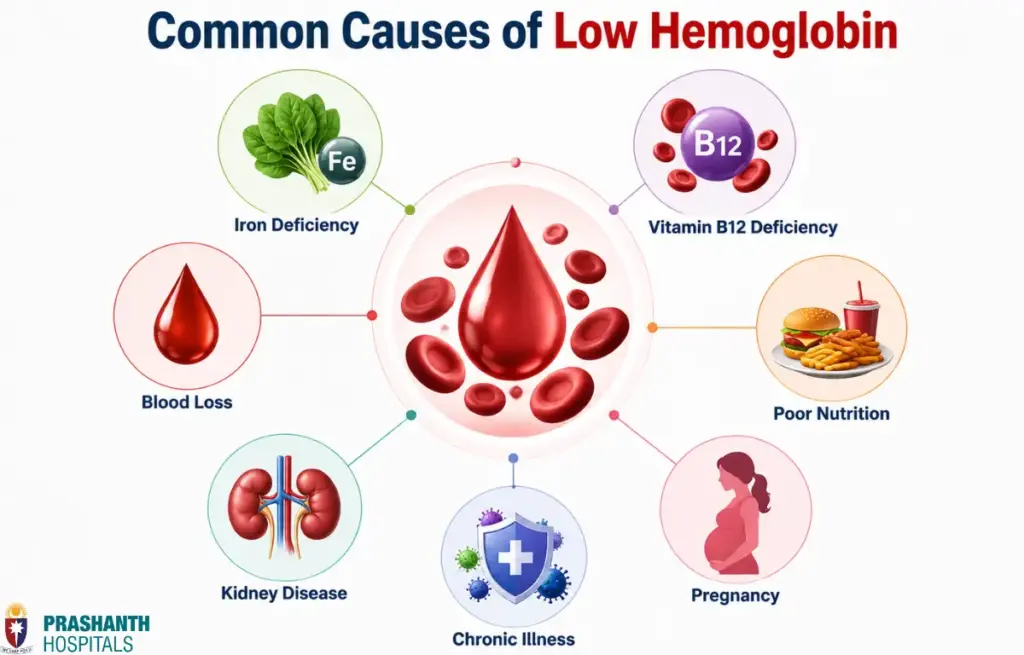
If your hemoglobin level is below the normal range, you are said to have a low hemoglobin level. A hemoglobin level that is only marginally below normal is probably nothing to worry about. An extremely low hemoglobin count, which almost always results in a condition known as anemia, can, on the other hand, have a negative impact on a person’s overall health. There could be a number of factors contributing to your low hemoglobin levels. The following are some of the more prevalent causes of low hemoglobin:
- Poor diet – Your diet does not provide you with sufficient amounts of necessary nutrients like iron, folate, and a number of different B vitamins. Iron deficiency anemia can develop if your diet does not contain sufficient amounts of iron.
- Blood loss – Low hemoglobin can result from significant blood loss from trauma or illness. Women who experience heavy menstrual bleeding may also have low hemoglobin levels.
- Major physiological changes – Your body has recently gone through significant changes, such as pregnancy or a growth spurt, which is common in children and teenagers.
- Intestinal bleeding – Your GI tract may bleed if you use nonsteroidal anti-inflammatory drugs (NSAIDs) excessively, such as ibuprofen.
- Abnormal hemoglobin structure – People who have hemoglobin disorders such as sickle cell disease or thalassemia have abnormally shaped red blood cells and a lower red blood cell count than healthy people. This leads to low levels of hemoglobin, which is caused by the destruction of a large number of defective red blood cells that are not adequately replaced.
- Iron Deficiency – This might be brought on by a diet lacking in iron or a problem with iron absorption.
- Chronic Illness – The risk of having low hemoglobin levels increases with the presence of certain chronic illnesses, such as cancer or kidney disease.
- Medications – Certain medications, such as anticoagulants or certain chemotherapy drugs, have the potential to reduce the amount of hemoglobin in the blood.
What Affects Red Blood Cell Production?
- Iron Levels: Low iron reduces the body’s ability to make healthy red blood cells.
- Vitamin B12 & Folate: Deficiency in these nutrients slows RBC formation.
- Chronic Diseases: Conditions like kidney disease or autoimmune disorders can decrease RBC production.
- Bone Marrow Health: Diseases such as leukemia or aplastic anemia directly affect how many RBCs the bone marrow can produce.
- Hormones: Low levels of erythropoietin (a hormone made by the kidneys) reduce RBC production.
- Medications: Certain drugs, including chemotherapy, can suppress bone marrow activity.
- Blood Loss: Heavy menstrual bleeding, injuries, or internal bleeding can lower RBC count and trigger increased production.
- Genetic Conditions: Disorders like thalassemia or sickle cell disease impact the quality and production of red blood cells.
Low Hemoglobin and Pregnancy
When hemoglobin level low in pregnancy occurs, it means the body isn’t producing enough healthy red blood cells to carry oxygen to both mother and baby, which can lead to tiredness and other health concerns. This condition is common during pregnancy because the body needs more iron and nutrients to support increased blood volume. Symptoms may include fatigue, dizziness, shortness of breath, and pale skin. If hemoglobin level low in pregnancy is not managed properly, it may increase the risk of preterm delivery, low birth weight, or postpartum complications. A balanced diet rich in iron, folic acid, and vitamin B12, along with supplements prescribed by a healthcare provider, can help maintain healthy hemoglobin levels for a safe and healthy pregnancy.
When to see a doctor for Low Hemoglobin
Any of the above symptoms of low hemoglobin should prompt a trip to the doctor. It is important to get a professional diagnosis of anemia because it may be a symptom of something more serious.A blood test to determine your hemoglobin levels is probably going to be ordered by your physician. In the event that your hemoglobin levels are low, they may order additional tests to determine the root of the problem. Your physician will develop a treatment strategy for your anemia once the underlying cause has been identified.
The good news is that there are efficient treatments for low hemoglobin levels. What’s triggering the low levels will determine the most effective treatment. By identifying and treating the causes, a doctor can bring hemoglobin levels back to normal. Depending on the cause, there are a variety of ways to increase hemoglobin levels, including changing one’s diet, undergoing surgery, or receiving a blood transfusion. Consult with a doctor before taking any action based on the information shared above.