Pneumonia and bronchitis are both respiratory infections that affect the lungs, but they differ in several ways, including their causes, symptoms, and treatment. Understanding Pneumonia vs Bronchitis is important to identify the right condition and seek timely care. Here’s a breakdown of the key distinctions between pneumonia and bronchitis:
Understanding Pneumonia and Bronchitis
Pneumonia: Pneumonia is an infection that primarily affects the air sacs in one or both lungs, causing inflammation and the accumulation of fluid or pus in the affected areas. This is a key point when comparing Pneumonia vs Bronchitis, as pneumonia affects deeper lung structures.
Bronchitis: The less severe of the two, bronchitis is an inflammation of the bronchial tubes (air passages) that carry air to and from the lungs. It can be acute (short-term) or chronic (long-term). Understanding the difference between bronchitis and pneumonia helps patients recognize symptom severity early.
Causes
Pneumonia is often caused by bacterial, viral, or fungal infections. Streptococcus pneumoniae, Haemophilus influenzae, and various respiratory viruses are common culprits. Acute bronchitis is typically caused by viral infections, such as the common cold or influenza viruses. Chronic bronchitis is usually associated with long-term exposure to irritants like smoking or air pollution. This difference is often highlighted when discussing bronchitis vs pneumonia.
Symptoms
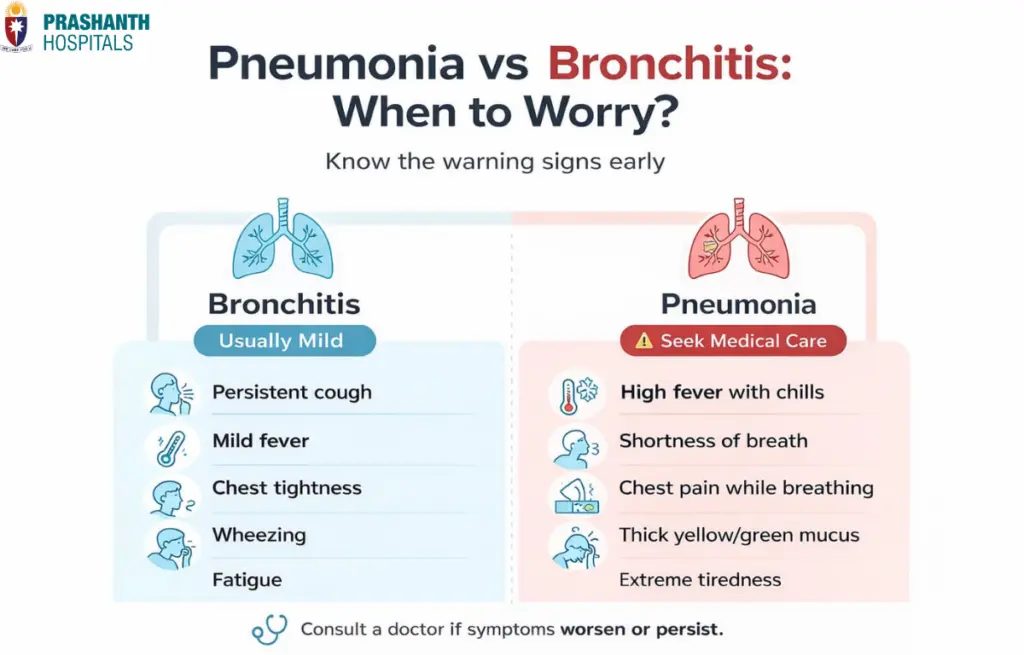
Pneumonia symptoms typically include
➤ High fever with chills and sweating
➤ Cough with thick, yellow or green mucus
➤ Shortness of breath and rapid breathing
➤ Chest pain that worsens with coughing or deep breathing
➤ Fatigue and weakness
➤ Bluish lips or nails (in severe cases)
Bronchitis symptoms typically include
➤ Persistent cough, often with clear or white mucus
➤ Mild to moderate fever
➤ Chest discomfort or tightness
➤ Wheezing and shortness of breath
➤ Fatigue and mild body aches
Recognizing these symptoms is essential when comparing Pneumonia vs Bronchitis, as pneumonia symptoms are usually more severe.
Duration
Pneumonia can vary in duration but is generally more severe and longer-lasting than acute bronchitis. Recovery may take weeks, and in some cases, hospitalization may be necessary.
Acute bronchitis usually lasts for a few weeks and often resolves on its own, while chronic bronchitis is a long-term condition that persists for at least three months over two consecutive years.
Diagnosis
Diagnosis is typically made through a combination of physical examination, chest X-rays, and sometimes blood tests to identify the underlying cause (bacterial or viral).
Diagnosis is usually based on symptoms and medical history. Tests may not be necessary for uncomplicated cases of acute bronchitis. This clinical approach further explains the practical differences in Pneumonia vs Bronchitis.
Treatment
Pneumonia treatment may involve antibiotics for bacterial pneumonia, antiviral medication for viral pneumonia, rest, hydration, and sometimes hospitalization for severe cases. Pneumonia can quickly become life-threatening, so anyone with a compromised immune system, any underlying health condition, the elderly, or young children should see a doctor if they develop symptoms.
Acute bronchitis is often managed with rest, hydration, over-the-counter cough suppressants, and time. If it’s caused by a bacterial infection, antibiotics may be prescribed. For chronic bronchitis, managing underlying causes (e.g., smoking cessation) and medications to relieve symptoms are common approaches.
Prevention
The Centers for Disease Control and Prevention (CDC) recommends people with or at risk for COPD get a yearly flu (influenza) vaccine. People with chronic lung disease, should also get pneumococcal vaccines; once as an adult before 65 years old and twice at 65 years or older.
Pneumonia vs Bronchitis – Quick Comparison
Understanding the difference between pneumonia and bronchitis can help you recognize symptoms early and seek the right care at the right time.
| Feature | Bronchitis | Pneumonia |
| Affected Area | Airways (bronchi) | Air sacs in the lungs (alveoli) |
| Severity | Usually mild to moderate | Can be serious and require urgent care |
| Common Cause | Mostly viral infection | Bacterial, viral, or fungal infection |
| Symptoms | Persistent cough, mucus, mild fever, chest discomfort | High fever, chest pain, breathlessness, fatigue |
| Breathing Issues | Mild irritation or tightness | Difficulty in breathing, faster breathing |
| Treatment | Rest, fluids, and symptom relief | May need antibiotics, oxygen, or hospitalization |
| Recovery Time | 1–3 weeks | Several weeks, depending on severity |
Both conditions affect the respiratory system, but pneumonia is generally more severe and may require immediate medical attention if symptoms worsen.
Can Bronchitis Turn Into Pneumonia?
When comparing Pneumonia vs Bronchitis, many people wonder if one can lead to the other. In some cases, yes, bronchitis can develop into pneumonia, especially if the infection is not treated properly or if the immune system is weak.
Bronchitis usually affects the airways and is often mild, but if the infection spreads deeper into the lungs, it can lead to pneumonia, which is more serious. This risk is higher in older adults, children, smokers, and people with existing health conditions.
Signs that bronchitis may be worsening include high fever, increasing chest pain, difficulty breathing, and extreme tiredness. If you notice these symptoms, it is important to seek medical care early. Understanding the difference between Pneumonia vs Bronchitis helps you recognize when a simple condition may be turning into something more serious.
When to See a Doctor?
While both pneumonia and bronchitis involve respiratory symptoms, they differ in terms of their causes, severity, and specific symptoms. Understanding Pneumonia vs Bronchitis helps you recognize when to seek care. It’s important to seek medical attention if you suspect you have either condition, especially if your symptoms are severe or if you have underlying health conditions that may increase the risk of complications. Proper diagnosis and treatment are essential for a full recovery. Remember, if you get treatment right away, it will cut down significantly the amount of time you need to recover.