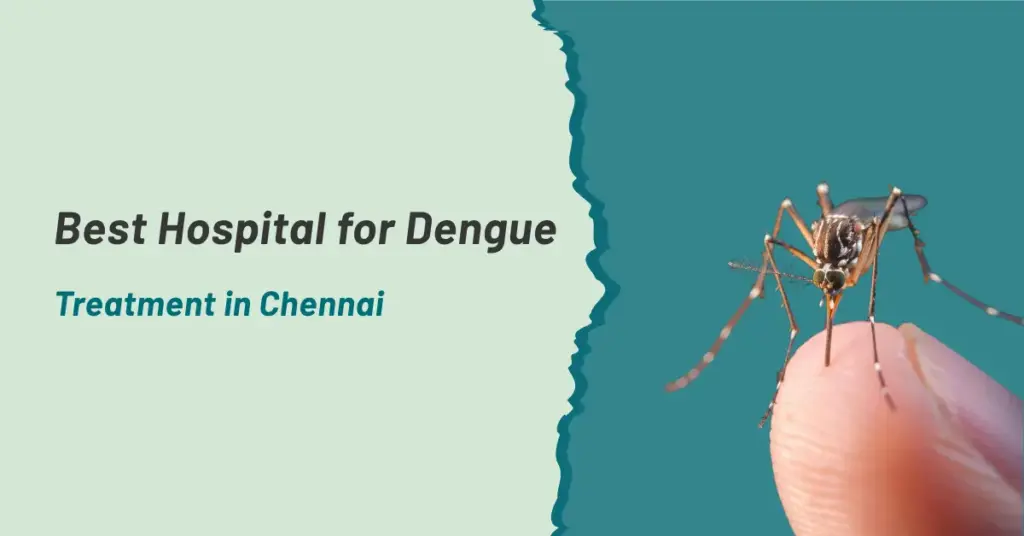
Dengue fever is one of the most common mosquito borne illnesses in Chennai, especially during and after the monsoon. Early diagnosis and timely medical care play a key role in recovery. Most people with dengue get better with rest, fluids and careful monitoring, but some develop serious problems that need hospital care. Knowing when to see a doctor, and choosing a hospital for dengue treatment in Chennai with the right tests and monitoring, can make a real difference.
Causes of Dengue Fever
Dengue is caused by the dengue virus, which spreads through the bite of an infected Aedes mosquito. These mosquitoes breed in clean, stagnant water and usually bite during the day. Understanding what causes dengue can help you take steps to protect your family.
Main Causes of Dengue Fever
- Mosquito Bite Transmission: Infection spreads when a female Aedes mosquito bites a person after feeding on an infected person.
- Breeding Places: Stagnant water in flower pots, buckets, coolers, tyres or open containers gives mosquitoes a place to breed.
- Urban Crowding: Rapid building work and poor waste management create more breeding spaces.
- Climate: Warm, humid weather in Chennai helps mosquitoes multiply.
- Missed Prevention: Not using mosquito nets or repellents, or leaving standing water around the home, can raise the risk of infection.
Symptoms of Dengue
Recognising the early signs of dengue helps you get timely care and lowers the risk of complications. The illness can range from mild, flu like symptoms to severe illness. If a high fever lasts more than two days, or if you notice any warning signs listed below, see a doctor promptly.
Common Symptoms
- High Fever: Sudden fever, often up to 104°F, lasting several days.
- Severe Headache and Eye Pain: Pain behind the eyes is a typical dengue symptom.
- Joint and Muscle Pain: Often called “breakbone fever” because the pain can be intense.
- Skin Rash: May appear a few days after the fever begins.
- Nausea and Vomiting: Can lead to dehydration if not managed early.
- Low Platelet Count: Can cause easy bruising or bleeding gums.
- Tiredness and Weakness: May last for some time even after the fever settles.
Warning Signs that Need Urgent Care
The most risky phase of dengue often starts around the time the fever comes down, usually between day 3 and day 7. Go to the hospital straight away if you notice:
- Severe stomach pain or repeated vomiting
- Bleeding from the gums or nose, blood in vomit or stools, or black stools
- Feeling very restless, drowsy or confused
- Cold, clammy skin or fast breathing
- Passing very little urine
These can be signs of severe dengue, which needs close monitoring and treatment in hospital.
Dengue Treatment at Prashanth Hospitals, Chennai
Prashanth Hospitals offers diagnosis and treatment for dengue, with 24 hour emergency care. Patients are seen by general physicians and internal medicine doctors, who check the severity of the illness and decide whether care at home, admission to the ward or intensive care is needed.
The hospital has laboratory testing for dengue and blood counts, along with ward and ICU care for patients who need close monitoring. Treatment is planned for each patient based on their symptoms, test results and other health conditions, and the doctor explains each step to the patient and family.
How is Dengue Fever Diagnosed?
In the first few days, dengue can look like flu or other viral fevers, so blood tests are important. At a hospital for dengue treatment in Chennai, doctors use these tests to confirm the infection and check how severe it is.
Common Diagnostic Tests for Dengue
- NS1 Antigen Test: Detects the dengue virus in the early days of the illness.
- IgM and IgG Antibody Tests: Help show whether the infection is recent or past.
- Complete Blood Count (CBC): Checks platelet and white blood cell levels.
- Liver Function Tests: Check whether the liver is affected.
- Haematocrit Test: Helps detect fluid leakage from blood vessels, an early sign of severe dengue.
Dengue Management: Do’s and Don’ts
There is no specific antiviral medicine for dengue. Treatment focuses on fluids, rest, fever control and close monitoring. Following the right steps can support recovery and help you spot problems early. Your doctor will give advice based on your condition.
| Do’s | Don’ts |
|---|---|
| Drink plenty of fluids, such as water, ORS, coconut water and soups, to prevent dehydration. | Avoid painkillers like aspirin or ibuprofen, which can increase bleeding risk. |
| Get enough rest to help your body recover. | Do not ignore warning signs like repeated vomiting, stomach pain or bleeding. |
| Eat soft, nutritious food to keep up your energy. | Avoid oily and spicy foods that may upset the stomach. |
| Use paracetamol for fever only as advised by your doctor, and get blood counts checked as advised. | Do not self medicate or take any medicine without a doctor’s advice. |
| Use mosquito nets and repellents so the infection does not spread to others at home. | Do not let water collect in containers around your home. |
Conclusion
Dengue fever can become life threatening if warning signs are missed, which is why early diagnosis and proper medical care are important. Most people recover well with supportive care and monitoring, while some need treatment in hospital. When looking for a hospital for dengue treatment in Chennai, choose one with laboratory testing, emergency care and facilities for close monitoring. At Prashanth Hospitals, doctors can assess the illness, plan treatment and guide families through each stage of recovery. Preventing mosquito breeding at home remains the best way to protect your family.