A protein molecule called hemoglobin is responsible for carrying oxygen from the lungs to the body’s tissues and organs. Hemoglobin is an essential part of red blood cells, and low hemoglobin levels can lead to anemia. Numerous conditions, such as chronic illnesses, nutritional deficiencies, or blood loss, can result in anemia. A human being cannot survive without hemoglobin, and the body cannot effectively transfer oxygen from the lungs to tissues and cells if hemoglobin levels are insufficient.
Normal Hemoglobin Ranges
Hemoglobin levels in human blood can vary slightly depending on age, gender, and other factors. The normal range for hemoglobin levels in adults is 13.5 to 17.5 grams per deciliter (g/dL) of blood for men and 12.0 to 15.5 g/dL of blood for women. The normal range in children varies depending on age. In children, a hemoglobin level between 11 to 16 g/dL is generally considered normal.
The table below provides a complete reference for normal hemoglobin levels by age and gender:
| Group | Normal Range (g/dL) | Mild Low (<) | Severe Low (<) |
| Adult men | 13.5 – 17.5 | 13.5 | 8.0 |
| Adult women | 12.0 – 15.5 | 12.0 | 8.0 |
| Pregnant women | 11.0 – 14.0 | 11.0 | 7.0 |
| Children (6–12 yrs) | 11.0 – 16.0 | 11.5 | 7.0 |
| Children (1–5 yrs) | 11.0 – 14.0 | 11.0 | 7.0 |
| Newborns | 14.0 – 24.0 | 14.0 | 10.0 |
| Elderly (>65 yrs) | 12.0 – 17.0 | 12.0 | 8.0 |
📌 Note: These ranges may vary slightly between laboratories. Always interpret your results in consultation with your doctor.
What is a Dangerously Low Hemoglobin Level?
Not all low hemoglobin readings carry the same risk. Understanding severity levels helps you know when to act immediately:
The ranges below classify how serious a low reading is, separate from the “mild low” marker in the ranges table above. A single reading is only a starting point. Your doctor decides what it means for you.
| Severity | Hemoglobin Level | What It Means |
| Mild anemia | 10 to 12 g/dL (women), 10 to 13 g/dL (men) | Fatigue, some breathlessness. Often managed with diet and oral supplements. |
| Moderate anemia | 8 to 10 g/dL | Noticeable symptoms affecting daily life. Needs medical evaluation and treatment. |
| Severe anemia | Below 8 g/dL | The heart works harder to compensate. Needs prompt medical attention. |
| Critical | Below 7 g/dL | Needs urgent evaluation. Whether a transfusion is needed depends on your symptoms and overall health, not the number alone. |
If your hemoglobin drops below 7 g/dL, seek medical care right away. At Prashanth Hospitals, our hematology team can assess your symptoms and begin the right treatment the same day.
High Hemoglobin Levels
Dehydration, smoking, living at high altitudes, or having a medical condition that affects the production of red blood cells are all potential causes of high hemoglobin levels, also known as polycythemia. Fatigue, headaches, dizziness, and shortness of breath are some of the possible symptoms associated with having high hemoglobin levels.
Low Hemoglobin Levels
A slightly low hemoglobin level isn’t necessarily a concern, some people have naturally low hemoglobin counts without any underlying cause. However, significantly low hemoglobin levels can lead to serious health issues, including heart problems and death.
Symptoms of Low Hemoglobin
Symptoms of low hemoglobin levels can appear gradually, which makes them easy to overlook. Here are the nine most common signs to watch for:
- Fatigue and weakness: Extreme tiredness even after rest. Your body’s tissues are not receiving enough oxygen, causing persistent fatigue that doesn’t improve with sleep.
- Shortness of breath: Even mild activity, such as climbing stairs or walking short distances, can feel exhausting. Low oxygen forces the respiratory system to compensate.
- Dizziness or lightheadedness: When the brain receives less oxygen than it needs, you may feel unsteady, faint, or lightheaded, especially when standing up suddenly.
- Pale skin: With fewer red blood cells, less oxygenated blood reaches the skin’s surface, giving it a pale, washed-out appearance. Check inside the eyelids and gums for pallor.
- Headaches: The brain increases blood flow to compensate for oxygen shortfall, causing frequent, dull headaches particularly behind the eyes.
- Cold hands and feet: Reduced circulation means extremities receive less blood flow, causing hands and feet to feel persistently cold.
- Irregular heartbeat: The heart beats faster to compensate for reduced oxygen-carrying capacity. This can feel like palpitations or a racing heart.
- Chest pain: The increased workload on the heart can cause tightness or discomfort in the chest, particularly during physical activity.
- Cognitive problems: Low oxygen supply to the brain leads to poor concentration, forgetfulness, and mental fog — often mistaken for stress or lack of sleep.
Note: In women, heavy menstrual periods combined with fatigue and pale skin are a strong indicator of iron-deficiency anemia. A CBC test confirms low hemoglobin, and iron studies confirm whether iron deficiency is the cause.
Causes of Low Hemoglobin
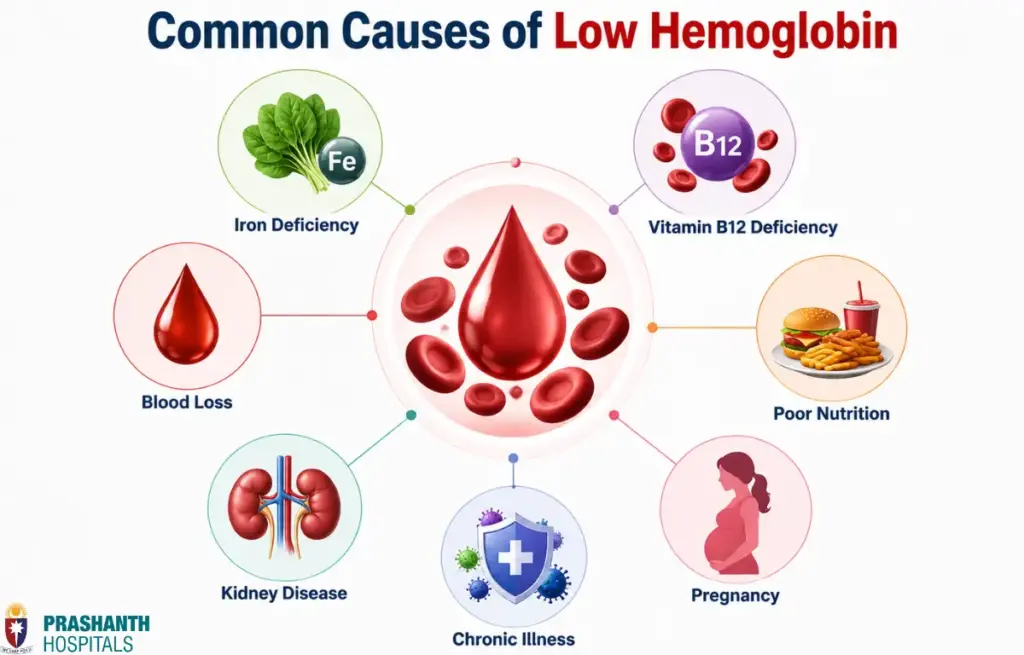
If your hemoglobin level is below the normal range, you are said to have a low hemoglobin level. A hemoglobin level that is only marginally below normal is probably nothing to worry about. An extremely low hemoglobin count, which almost always results in a condition known as anemia, can, on the other hand, have a negative impact on a person’s overall health. There could be a number of factors contributing to your low hemoglobin levels. The following are some of the more prevalent causes of low hemoglobin:
- Poor diet – Your diet does not provide you with sufficient amounts of necessary nutrients like iron, folate, and a number of different B vitamins. Iron deficiency anemia can develop if your diet does not contain sufficient amounts of iron.
- Blood loss – Low hemoglobin can result from significant blood loss from trauma or illness. Women who experience heavy menstrual bleeding may also have low hemoglobin levels.
- Major physiological changes – Your body has recently gone through significant changes, such as pregnancy or a growth spurt, which is common in children and teenagers.
- Intestinal bleeding – Your GI tract may bleed if you use nonsteroidal anti-inflammatory drugs (NSAIDs) excessively, such as ibuprofen.
- Abnormal hemoglobin structure – People who have hemoglobin disorders such as sickle cell disease or thalassemia have abnormally shaped red blood cells and a lower red blood cell count than healthy people. This leads to low levels of hemoglobin, which is caused by the destruction of a large number of defective red blood cells that are not adequately replaced.
- Iron Deficiency – This might be brought on by a diet lacking in iron or a problem with iron absorption.
- Chronic Illness – The risk of having low hemoglobin levels increases with the presence of certain chronic illnesses, such as cancer or kidney disease.
- Medications – Certain medications, such as anticoagulants or certain chemotherapy drugs, have the potential to reduce the amount of hemoglobin in the blood.
What Affects Red Blood Cell Production?
- Iron Levels: Low iron reduces the body’s ability to make healthy red blood cells.
- Vitamin B12 & Folate: Deficiency in these nutrients slows RBC formation.
- Chronic Diseases: Conditions like kidney disease or autoimmune disorders can decrease RBC production.
- Bone Marrow Health: Diseases such as leukemia or aplastic anemia directly affect how many RBCs the bone marrow can produce.
- Hormones: Low levels of erythropoietin (a hormone made by the kidneys) reduce RBC production.
- Medications: Certain drugs, including chemotherapy, can suppress bone marrow activity.
- Blood Loss: Heavy menstrual bleeding, injuries, or internal bleeding can lower RBC count and trigger increased production.
- Genetic Conditions: Disorders like thalassemia or sickle cell disease impact the quality and production of red blood cells.
Low Hemoglobin and Pregnancy
When hemoglobin level low in pregnancy occurs, it means the body isn’t producing enough healthy red blood cells to carry oxygen to both mother and baby, which can lead to tiredness and other health concerns. This condition is common during pregnancy because the body needs more iron and nutrients to support increased blood volume.
Symptoms may include fatigue, dizziness, shortness of breath, and pale skin. If hemoglobin level low in pregnancy is not managed properly, it may increase the risk of preterm delivery, low birth weight, or postpartum complications. A balanced diet rich in iron, folic acid, and vitamin B12, along with supplements prescribed by a healthcare provider, can help maintain healthy hemoglobin levels for a safe and healthy pregnancy.
Safe Hemoglobin Levels During Each Trimester
| Trimester | Minimum Safe Level | Action if Below |
| First trimester (0–13 weeks) | 11.0 g/dL | Start iron + folic acid supplements immediately |
| Second trimester (14–27 weeks) | 10.5 g/dL | Dietary changes + supplements; monitor monthly |
| Third trimester (28–40 weeks) | 11.0 g/dL | IV iron may be required if oral supplements are insufficient |
A balanced diet rich in iron, folic acid, and vitamin B12 — along with supplements prescribed by your healthcare provider — can help maintain healthy hemoglobin levels. Foods particularly beneficial during pregnancy include spinach, lentils, fortified cereals, lean red meat, and citrus fruits (which help iron absorption).
Treatment for Low Hemoglobin
The most effective treatment depends entirely on the cause of your low hemoglobin. There is no single universal solution — a doctor must first identify the root cause through blood tests and then recommend the appropriate treatment. Here is a comprehensive overview of all treatment options:
1. Dietary Changes
For mild deficiency, improving your diet is often the first step. Foods that help raise hemoglobin levels include:
| Food | Iron Content | Best Combined With |
| Spinach (cooked, 100g) | 3.6 mg iron | Lemon juice (Vitamin C boosts absorption) |
| Lentils (cooked, 100g) | 3.3 mg iron | Tomato or citrus-based dishes |
| Lean red meat (100g) | 2.7 mg iron | Naturally absorbed well |
| Tofu (100g) | 5.4 mg iron | Pepper or lime juice |
| Pumpkin seeds (30g) | 2.5 mg iron | As a snack or in salads |
| Dark chocolate (30g) | 3.4 mg iron | As an occasional treat |
| Fortified cereal (one serving) | 8–18 mg iron | Orange juice |
Note: Iron content values are approximate and can vary by preparation and brand. Iron from plant sources like spinach, lentils, and tofu is absorbed less efficiently than iron from meat, so pairing plant sources with Vitamin C matters even more.
2. Oral Iron Supplements
For iron-deficiency anemia, oral iron supplements are the most common treatment. They are typically prescribed for 3–6 months to rebuild iron stores.
- Common types: Ferrous sulfate, ferrous gluconate, or ferrous fumarate are the common forms prescribed.
- How to take: Usually taken on an empty stomach or with Vitamin C for best absorption.
- Side effects: Constipation, dark stools, and nausea are common and manageable side effects.
- Combined supplements: Iron, Vitamin B12, and folic acid supplements may all be prescribed depending on the deficiency found.
3. Intravenous (IV) Iron Therapy
When oral supplements are not enough, due to absorption problems, severe deficiency, or intolerance, IV iron is administered directly into the bloodstream at a hospital or clinic.
- Who needs it: Crohn’s disease, bariatric surgery patients, chronic kidney disease, or severe anemia. The exact cutoff for choosing IV iron over other treatments depends on your symptoms, overall health, and your doctor’s assessment, not on the hemoglobin number alone.
- How quickly it works: Hemoglobin levels typically rise within 2–4 weeks of IV iron therapy.
- Procedure: Administered as an outpatient infusion, usually over 15–60 minutes depending on the formulation.
4. Blood Transfusion
A blood transfusion is reserved for severe or life-threatening anemia. It is not a long-term solution but immediately raises hemoglobin to safe levels.
- When it is needed: Hemoglobin below 7 g/dL with symptoms, or below 8 g/dL in patients with heart disease.
- How quickly it works: The effect is immediate — hemoglobin rises within hours.
- Common scenarios: Active internal bleeding, pre-operative preparation, symptomatic severe anemia.
5. Treating the Underlying Cause
In many cases, treating the root condition is the most important step:
- Chronic blood loss: Stopping the source of blood loss (surgery for ulcers, fibroids, or GI bleeding).
- Kidney disease: Dialysis patients may receive erythropoietin injections to stimulate RBC production.
- Medication-related: Modifying or switching medications causing the drop in hemoglobin.
- Bone marrow disease: Bone marrow disorders like aplastic anemia may require immunosuppressive therapy or a bone marrow transplant.
6. Vitamin B12 and Folate Supplementation
If your anemia is caused by deficiency in Vitamin B12 or folate (rather than iron), the treatment approach is different:
- B12 deficiency: B12 injections (cyanocobalamin) are typically given more often at first, then spaced out to a maintenance schedule based on your response, for pernicious anemia or absorption disorders.
- Folate deficiency: Folic acid tablets (5mg daily) are prescribed, particularly important in early pregnancy.
- Dietary sources of B12: Dairy, eggs, meat, and fish. Those on plant-based diets should supplement regularly.
📌 Note: Never self-medicate for anemia. Over-supplementing iron when you don’t have a deficiency can cause iron toxicity. Always confirm the type of anemia through blood tests first.
How to Increase Hemoglobin Naturally
For mild deficiency and as a complement to medical treatment, these lifestyle and dietary strategies help raise hemoglobin levels naturally:
- Exercise regularly: Moderate aerobic exercise can stimulate red blood cell production over time.
- Increase dietary iron: Eat iron-rich foods daily: spinach, lentils, beans, fortified cereals, tofu, lean meats.
- Boost iron absorption: Pair iron-rich foods with Vitamin C sources (lemon, orange, amla, tomato) at the same meal.
- Avoid absorption blockers: Avoid tea, coffee, and milk within 1 hour of eating iron-rich foods.
- Include folate: Include folate-rich foods: leafy greens, kidney beans, eggs, sunflower seeds.
- Include Vitamin B12: Include B12 sources: dairy, eggs, meat, fortified plant milks if vegetarian.
When to see a doctor for Low Hemoglobin
Any combination of the symptoms listed above, particularly if they are persistent, worsening, or affecting your daily life, should prompt a visit to your doctor. It is important to get a professional diagnosis because low hemoglobin can be a symptom of something more serious.
Your physician will likely order a complete blood count (CBC) test to check your hemoglobin levels. If they are low, additional tests may be ordered to determine the root cause — including iron studies, Vitamin B12 and folate levels, a peripheral blood smear, or a bone marrow biopsy in complex cases.
Seek emergency care immediately if you experience:
- Hemoglobin level confirmed below 7 g/dL
- Sudden, severe shortness of breath or chest pain
- Fainting or loss of consciousness
- Rapid or irregular heartbeat at rest
- Severe paleness of lips, fingernails, or inside the eyelids
The good news is that most causes of low hemoglobin are treatable. By identifying and addressing the underlying cause, your doctor can bring hemoglobin levels back to normal. Treatment options include dietary changes, oral supplements, IV iron therapy, or a blood transfusion in severe cases.
Conclusion
Low hemoglobin is common but often ignored until it becomes serious. Whether the cause is a simple iron deficiency or an underlying condition, a basic CBC blood test is all it takes to know where you stand.
The most important things to remember: know your normal range, never ignore persistent fatigue or breathlessness, and always confirm the type of deficiency before starting any supplement — iron tablets are not the right fix for everyone.
If your hemoglobin is below 7 g/dL, treat it as an emergency. For anything else, early diagnosis means faster, simpler treatment.
If you or a family member is experiencing any of the symptoms described above, our Hematology team at Prashanth Hospitals is available across all Chennai branches for same-day blood tests and expert consultation. Book an appointment today.