
Many people feel embarrassed talking about bowel movements, but your stool can tell a lot about your digestive health. Paying attention to it can help detect early signs of issues like constipation, infections, or dietary imbalances.
Understanding types of poop and what they mean can help you make simple, everyday adjustments for better digestion. This guide explains the different types of poop, what they reveal about your health, and practical steps to improve bowel habits.
The Bristol Stool Chart – Understanding Stool Types
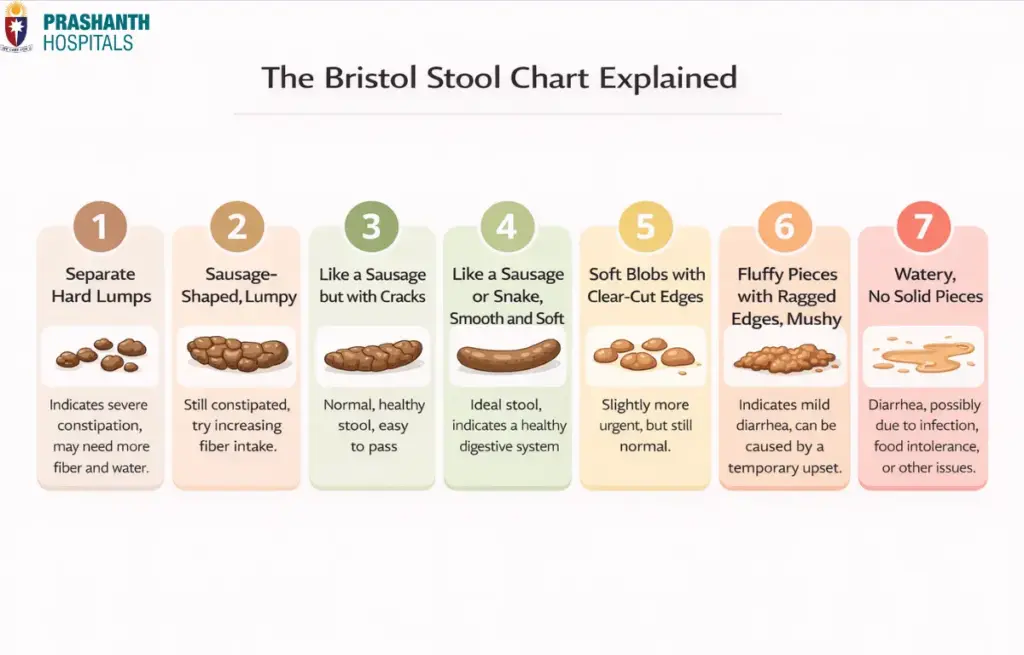
The Bristol Stool Chart is a widely used medical tool that categorizes stool into seven types. It helps doctors and patients understand bowel patterns and recognize potential problems.
By knowing types of poop and what they mean, you can track changes over time and seek medical advice when necessary. Remember, occasional variations are normal, but persistent changes may indicate an underlying issue.
Separate Hard Lumps
This type of stool appears as small, hard lumps, often difficult to pass. It is usually a sign of constipation.
Common causes:
- Low fiber intake (less dal, vegetables, fruits)
- Dehydration
- Delayed bowel movements due to a busy lifestyle
Tips to improve:
- Drink more water throughout the day.
- Include fiber-rich foods like whole grains, green vegetables, and fruits.
- Gentle exercise, like walking, can help stimulate bowel movements.
This type shows that the digestive system is slowing down. Tracking types of poop and what they mean helps prevent discomfort and complications.
Lumpy or Sausage-Shaped Poop
A slightly lumpy, sausage-shaped stool usually indicates mild constipation. While it is better than separate hard lumps, it still suggests that your bowel movements could improve.
Common causes:
- Irregular meals
- Low water intake
- Stress or travel disruptions
Practical tips:
- Eat fiber-rich foods daily, like rajma, moong dal, and seasonal fruits.
- Maintain a consistent bathroom routine.
- Practice relaxation techniques to reduce stress, which can affect bowel habits.
This type falls in the different types of poop category that are worth monitoring to maintain digestive health.
Smooth, Soft Poop
Smooth, soft sausage-shaped stool is considered healthy. This is the type most doctors recommend aiming for.
Why it’s healthy:
- Easy to pass without straining
- Indicates good hydration and a balanced diet
- Shows the digestive system is functioning well
Eating a mix of whole grains, fiber, and staying hydrated can help achieve this stool type. This answers the question, which type of poop is healthy, for most adults.
Loose or Watery Poop
Loose or watery stool usually indicates faster bowel transit. Occasional watery stool may result from eating spicy food, rich street food, or a mild stomach infection.
Causes to consider:
- Viral or bacterial infection
- Food intolerances (like lactose)
- Stress or travel
Tips to manage:
- Stay hydrated with water or oral rehydration solutions.
- Avoid very oily or spicy foods until digestion stabilizes.
- Probiotics like curd or buttermilk may help restore gut balance.
Frequent watery stool can affect nutrient absorption, so understanding types of poop and what they mean is important for timely action.
Irregular or Mixed Stool
Sometimes stool may be inconsistent — soft in some parts, hard in others, or streaked with mucus.
Possible reasons:
- Irritable bowel syndrome (IBS)
- Dietary changes or sudden high-fat meals
- Mild gut infections
Practical advice:
- Keep a diary of foods and stool patterns to identify triggers.
- Eat balanced meals and avoid skipping breakfast.
- Consult a doctor if irregular stool persists.
Learning about different types of poop helps you identify patterns and maintain digestive health.
Color Matters – What Your Stool Color Says
Normal color: Light to dark brown is ideal, thanks to bile produced by the liver.
Types of poop color and meaning:
- Green: Often from leafy vegetables or fast transit through the gut
- Yellow: May suggest fat malabsorption
- Black: Could be due to iron supplements or bleeding in the upper GI tract
- Red: Sometimes from beets, but can also indicate lower GI bleeding
Clinical insight: While occasional color changes are usually harmless, persistent changes should prompt a medical review.
Other Stool Features to Watch
Apart from consistency and color, other features can indicate health concerns:
- Mucus in stool: Could signal irritation in the intestines
- Blood streaks: Should be evaluated promptly
- Strong odor: May indicate infection or digestion issues
Tracking types of poop and what they mean helps you notice subtle changes early.
Tips for Healthy Bowel Movements
Maintaining regular, healthy bowel movements is easier than you think:
- Eat fiber-rich foods: Include dal, vegetables, fruits, and whole grains in daily meals
- Stay hydrated: Drink at least 2–3 liters of water daily
- Exercise regularly: Walking, yoga, or light activity improves digestion
- Establish a routine: Try visiting the bathroom at a consistent time each day
- Probiotics: Curd, buttermilk, and fermented foods support gut health
These tips help ensure which type of poop is healthy is achieved consistently.
When to Seek Medical Advice
Consult a doctor if you notice:
- Persistent constipation or diarrhea
- Blood in stool
- Severe abdominal pain or bloating
- Sudden, unexplained changes in stool color or consistency
Early consultation helps prevent complications and ensures safe treatment.
Conclusion – Listen to Your Body
Your bowel habits are a simple way to monitor overall health. Paying attention to types of poop and what they mean, different types of poop, and types of poop color can guide small but meaningful changes in diet and lifestyle.
If you notice persistent changes, consult a doctor to ensure your digestive system stays healthy. Small adjustments in fiber, hydration, and routine can make a big difference in achieving which type of poop is healthy.