Summer brings longer days, outdoor activities, and plenty of sunshine. But along with the warmth, this season also creates conditions where certain health problems become more common.
High temperatures, excessive sweating, dehydration, contaminated food, and increased sun exposure can affect the body in different ways. From stomach infections and skin problems to serious heat-related conditions, common diseases in summer season can impact daily life if proper precautions are ignored.
The good news is that most summer illnesses can be prevented with simple lifestyle changes and awareness. Let’s understand the most common summer health problems, their warning signs, and how to stay protected.
Food Poisoning
A fun summer outing or a simple meal can quickly become uncomfortable when food safety is ignored. Food poisoning is one of the most common summer illnesses because warm temperatures allow bacteria and other harmful microorganisms to grow faster.
Food contamination can happen due to improperly stored food, unclean water, poor hygiene, or undercooked meals. Foods that require refrigeration need extra care during hot weather.
Symptoms usually appear as stomach discomfort, nausea, vomiting, diarrhoea, abdominal cramps, and fever. While mild cases often improve with rest and fluids, severe dehydration or persistent symptoms may require medical attention.
To reduce the risk of food poisoning during summer:
- Choose freshly prepared food whenever possible.
- Wash fruits and vegetables thoroughly before eating.
- Drink clean and safe water.
- Avoid leaving cooked food at room temperature for long periods.
Dehydration
When summer temperatures rise, your body loses more water through sweating. If this lost fluid is not replaced, dehydration can slowly affect your energy levels and overall health.
Many people wait until they feel extremely thirsty, but thirst is often an early sign that the body already needs more fluids. Dehydration is especially common among children, older adults, athletes, and people who spend long hours outdoors.
Common signs include tiredness, dizziness, dry mouth, headache, dark urine, and weakness.
Maintaining hydration throughout the day is important. Drinking water regularly, including hydrating foods like fruits, and avoiding excessive heat exposure can help your body handle summer better.
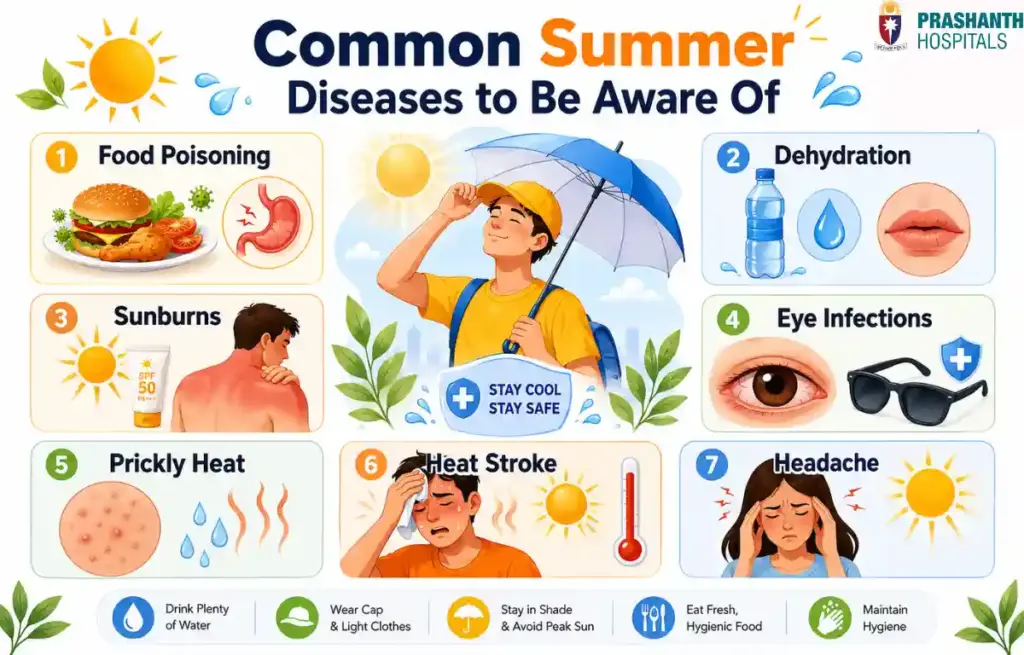
Sunburns
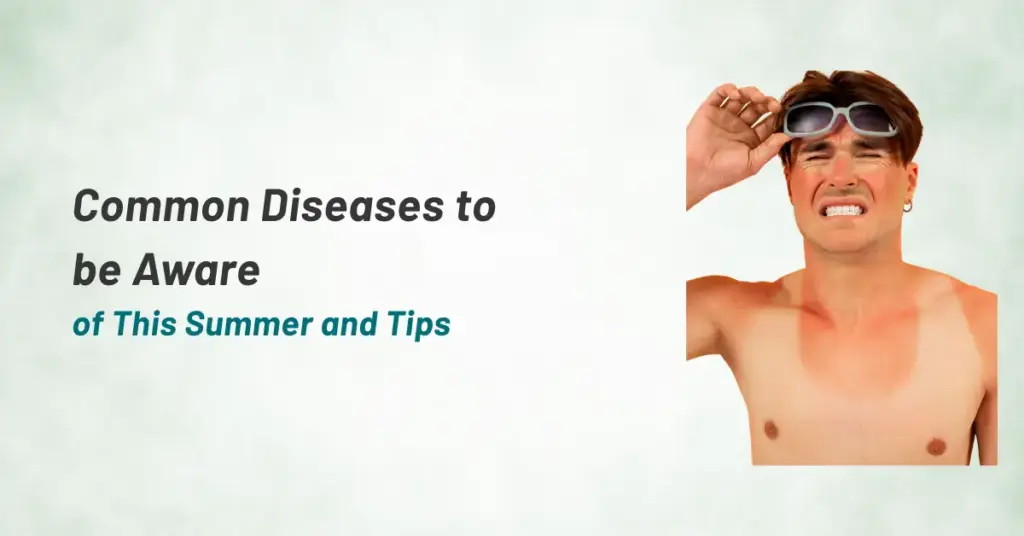
The warm sunlight may feel pleasant, but prolonged exposure to ultraviolet (UV) rays can damage the skin. Sunburn occurs when the skin is exposed to more sunlight than it can handle.
It may begin with redness and irritation but can later cause pain, swelling, peeling, or even blisters in severe cases.
Many people underestimate sun exposure because the damage may not appear immediately. Protecting your skin should become a daily summer habit.
Simple protection methods include:
- Applying sunscreen before stepping outside.
- Wearing light, protective clothing.
- Using sunglasses and hats when exposed to strong sunlight.
- Limiting outdoor activities during peak afternoon heat.
Eye Infections
Summer heat, dust, sweat, and increased exposure to swimming pools can make the eyes more vulnerable to infections.
Conditions such as conjunctivitis (pink eye) may spread easily through contaminated hands or shared personal items. Symptoms can include redness, itching, irritation, excessive watering, and eye discharge.
Eye hygiene becomes especially important during summer. Avoid rubbing your eyes frequently and make sure your hands are clean before touching your face.
Prickly Heat
Hot and humid weather can sometimes leave your skin struggling to manage excessive sweating. When sweat ducts become blocked, it can lead to prickly heat or heat rash.
This condition appears as small red bumps with itching or irritation, commonly affecting areas where sweat collects, such as the neck, back, chest, and skin folds.
Although it is usually not serious, the discomfort can affect daily activities.
Keeping your body cool and allowing the skin to breathe can help prevent prickly heat. Wearing loose cotton clothes, staying in ventilated areas, and maintaining good skin hygiene can reduce irritation.
Heat Stroke
Heat stroke is one of the most dangerous summer-related health conditions. It happens when the body is unable to control its temperature after prolonged exposure to extreme heat.
Unlike ordinary heat exhaustion, heat stroke is a medical emergency. It can cause confusion, fainting, extremely high body temperature, and serious complications if treatment is delayed.
People working outdoors, exercising in intense heat, or spending long periods under direct sunlight are at higher risk.
Warning signs should never be ignored. Moving to a cooler place, lowering body temperature, and seeking medical help quickly are important steps.
Headache
Summer headaches are often linked to dehydration, excessive heat exposure, poor sleep, and changes in daily routine.
Spending too much time in the sun or not drinking enough fluids can trigger headaches and make existing migraine problems worse.
A few simple habits can help reduce summer-related headaches:
- Stay hydrated throughout the day.
- Avoid skipping meals.
- Take breaks from direct sunlight.
- Maintain proper rest and sleep.
Listening to your body’s signals can prevent a mild headache from becoming a bigger health issue.
Tips to Prevent Summer Diseases
Staying healthy during summer does not require complicated changes. Small daily habits can protect your body from many heat-related problems.
Make hydration a priority instead of waiting until you feel thirsty. Choose fresh and hygienic food, especially during hot weather when contamination risks are higher.
Protect yourself from excessive sun exposure by planning outdoor activities during cooler hours and wearing suitable clothing. Maintaining personal hygiene, keeping your surroundings clean, and paying attention to early symptoms can help prevent many summer illnesses.
Remember, prevention is always easier than dealing with a health problem after it develops.
Conclusion
Summer is a season to enjoy, but it also requires extra care for your health. Rising temperatures can affect your body in many ways, from dehydration and skin irritation to infections and serious heat-related conditions.
By staying hydrated, practicing good hygiene, protecting yourself from the sun, and making smart food choices, you can significantly reduce the risk of common diseases in summer season.
A few simple precautions can help you stay active, comfortable, and healthy throughout the hottest months of the year.