A fever is something most people have experienced.
Sometimes it is a passing infection that gets better with rest and time. But in places where malaria is a risk, there is another possibility that should not be overlooked.
A person may begin with fever, chills, headache or unusual tiredness and assume it is just another common infection. The symptoms may not seem serious at first. Yet malaria can become dangerous when diagnosis and treatment are delayed.
That is why World Malaria Day is not simply about remembering a date. It is about recognising a disease that can often be prevented, understanding the signs that deserve attention and knowing when a fever needs proper medical evaluation.
The goal is not to fear every fever. It is to know when not to ignore one.
Why is World Malaria Day Important?
World Malaria Day is observed every year on April 25 to raise awareness about malaria and encourage stronger efforts in prevention, diagnosis, treatment and control.
Malaria spreads through the bite of an infected female Anopheles mosquito. The mosquito carries a parasite called Plasmodium, and that parasite is what makes a person unwell.
It remains an important health concern because malaria can affect people of all ages, and some forms of the disease can progress rapidly and cause serious complications.
Public awareness plays an important role because the first symptoms may resemble other common illnesses.
A person does not need to know how to diagnose malaria themselves.
They simply need to know when malaria is possible, what warning signs to watch for and why timely medical assessment matters.
It Starts With a Mosquito Bite, but the Risk Does Not End There
Understanding how malaria spreads makes prevention easier to understand.
When an infected female Anopheles mosquito bites a person, malaria parasites can enter the bloodstream. The parasites then develop within the body and eventually infect red blood cells, producing the symptoms associated with malaria.
This means malaria is primarily a mosquito-borne infection, not an illness that ordinarily spreads through casual contact.
You cannot generally catch malaria simply by sitting beside someone who has it, shaking their hand or sharing a meal.
The mosquito is central to transmission.
So while protecting yourself from mosquito bites may seem like a small everyday precaution, it is an important part of malaria prevention.
Malaria Can Look Like an Ordinary Fever at First
This is where awareness becomes practical.
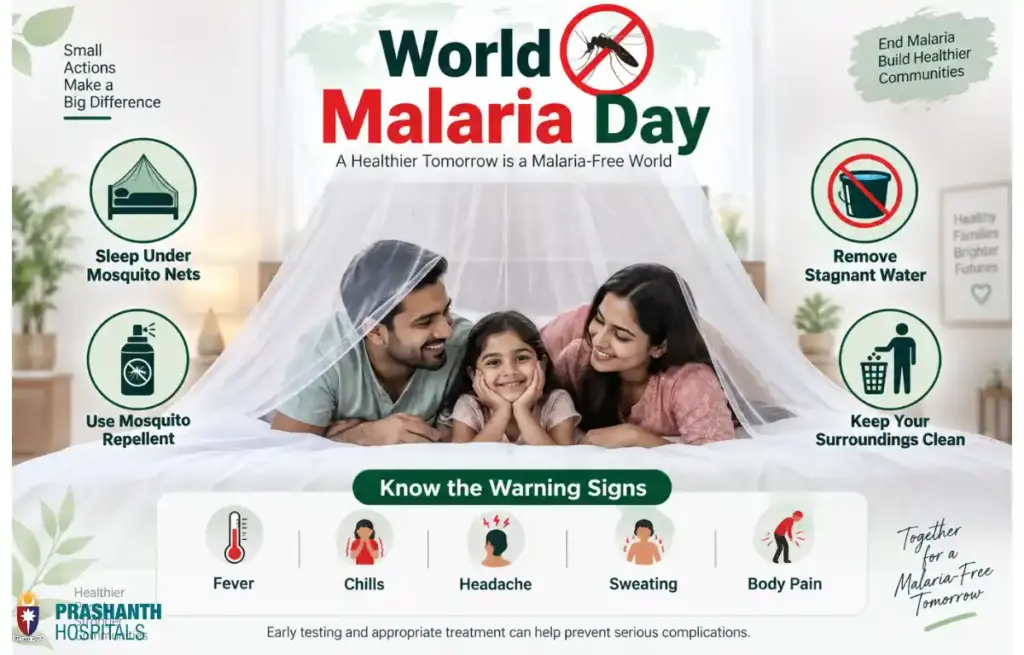
Malaria can cause symptoms that may initially look similar to other infections. Depending on the person and the parasite involved, symptoms can include:
- Fever: Often one of the main symptoms and may occur with episodes of chills or sweating.
- Chills and shivering: Some people experience pronounced chills around periods of fever.
- Headache and body aches: Generalised discomfort can accompany the infection.
- Weakness and fatigue: Malaria can leave a person feeling unusually weak or exhausted.
- Sweating: Sweating may occur as the fever comes down.
- Nausea or vomiting: Gastrointestinal symptoms can occur in some people.
The important point is that these symptoms do not prove that someone has malaria.
Several other infections can cause similar symptoms.
That is why malaria should not be diagnosed based on symptoms alone. When there is a relevant risk of malaria, appropriate medical assessment and testing can help determine the cause of the fever.
Why Waiting for the Fever to Get Worse Can Be Risky
One of the most common reasons people delay medical care is simple: they expect the fever to settle.
Sometimes it does.
But if malaria is a possibility, waiting without appropriate assessment can be risky because certain forms of malaria can progress to severe disease. Plasmodium falciparum is the species most often linked to severe malaria, though other species can also cause serious illness in some cases.
Complications can affect the brain, kidneys, lungs, blood and other organs.
Severe malaria may present with warning signs such as:
- Confusion or altered consciousness.
- Seizures.
- Difficulty breathing.
- Severe weakness.
- Loss of consciousness.
- Other signs of serious deterioration.
- These symptoms require urgent medical attention.
The message is not that every person with a fever has malaria.
It is that a potentially serious infection should not be allowed to progress simply because the initial symptoms seemed manageable.
Some People Need to Take the Risk More Seriously
Malaria can affect anyone who is exposed to infected mosquitoes, but the consequences can be more serious for certain groups.
Particular attention may be needed for:
- Young children, who can become seriously ill from malaria.
- Pregnant women, for whom malaria can pose risks to both mother and baby.
- Older adults and people with certain health conditions.
- Travellers, particularly those visiting malaria-risk areas without established immunity or adequate preventive measures.
- Travel history is especially important.
Someone who develops a fever after returning from an area where malaria occurs should make sure the healthcare professional knows about the travel.
Returning home does not automatically mean the malaria risk has ended.
Why Testing Matters When Malaria Is Suspected
One of the most important lessons in malaria awareness is that symptoms alone are not enough to confirm the diagnosis.
Fever, chills, headache and weakness can occur in many infections.
Healthcare professionals can consider the person’s symptoms, travel or residence history, mosquito exposure and other clinical factors before deciding which tests are appropriate.
Diagnostic testing helps distinguish malaria from other causes of fever and allows appropriate treatment to be started when malaria is confirmed. Diagnosis commonly relies on blood tests such as microscopy or a malaria rapid diagnostic test (RDT), which help confirm whether Plasmodium parasites are present.
This is particularly important because different malaria parasites can behave differently, and treatment decisions depend on the specific clinical situation.
The right diagnosis comes before the right treatment.
Malaria Prevention Is a Community Effort Too
It is easy to think of malaria prevention as something that happens only at an individual level.
But controlling malaria requires a much wider effort.
Mosquito surveillance, vector-control programmes, environmental management, public awareness, access to reliable diagnostic testing and timely treatment all contribute to reducing malaria transmission and its consequences.
Individuals also have an important role.
Protecting against mosquito bites, following local prevention advice, taking recommended travel precautions and seeking medical attention when malaria is suspected all contribute to the larger effort.
When individual awareness and public-health action work together, malaria prevention becomes stronger.
When a Fever Needs to Be Checked by a Doctor
Not every fever needs to be associated with malaria.
But a fever deserves medical attention when the circumstances make malaria possible or when the illness is not following the expected course.
Consider seeking medical advice if:
- Fever is persistent, recurrent or getting worse.
- Fever is accompanied by significant chills or shivering.
- There is unusual weakness, repeated vomiting or difficulty maintaining normal activity.
- Fever develops after travelling to or living in an area where malaria occurs.
- Symptoms continue without a clear explanation.
The person develops confusion, seizures, breathing difficulty, loss of consciousness or other signs of severe illness.
For severe or rapidly worsening symptoms, urgent medical care is essential.
This World Malaria Day, Remember What Matters
You do not need to become an expert in malaria to protect yourself.
You simply need to remember a few important principles.
- Prevent the bite. Use measures such as insecticide-treated bed nets, mosquito repellents, protective clothing and indoor mosquito-control measures, especially in areas where malaria occurs.
- Know your surroundings. Understanding whether malaria is present where you live or travel helps you make better prevention decisions.
- Pay attention to fever. A fever accompanied by chills, weakness or other concerning symptoms deserves attention when malaria is possible.
- Mention your travel history. If you develop a fever after visiting a malaria-risk area, tell your healthcare professional.
- Don’t rely on guesswork. Malaria can resemble other infections. Testing can help identify the actual cause.
- Don’t wait for severe symptoms. When malaria is suspected, timely medical assessment can make a meaningful difference.
Awareness Should Change What We Do
Malaria is preventable and treatable, but prevention and treatment work best when people recognise the risk early. This World Malaria Day, make awareness practical. Prevent the bite. Recognise the warning signs. Share your travel history. Seek medical care when malaria may be possible.
At Prashanth Hospitals, individuals can seek medical evaluation for persistent or concerning fever and other symptoms that may require further investigation. Because sometimes, the most important health decision is not knowing exactly what the fever is. It is knowing when to get it checked.