Maintaining strong and healthy knees is an essential part of going about our everyday activities. Do you have a knee replacement surgery scheduled for the near future? Knee replacement may seem like a major operation, but recovery from it is getting easier with technological advancements happening every year. It is now possible to do a total knee in a highly motivated patient as an outpatient (same day) surgery. Knowing and understanding what to expect from the knee replacement surgery will prepare you for what’s ahead. Most people will experience an improved quality of life after a total knee replacement. They report less pain. They can move more easily.
Understanding the recovery time after knee replacement helps you stay prepared and confident throughout the healing journey.
Recovery Time after Knee Surgery
The recovery time after knee replacement varies from person to person based on age, health, and activity level. Most patients start walking within days, but complete healing takes time.
If you are wondering after knee replacement how long to recovery, it usually takes around 6 to 12 months for complete healing, while initial recovery happens within the first few weeks.
How Long Does Recovery Take After Knee Replacement?
When discussing recovery after knee replacement, it is important to understand that healing is gradual. Some patients recover faster, while others may take longer depending on their condition and commitment to rehabilitation.
The recovery time after knee replacement depends on how well you follow post-surgery care and physical therapy routines.
Know What to Expect
Understanding what to expect each step of the way enables you to focus on the long term goal of living pain-free. Each surgical recovery time is different, but typically the doctor may recommend that you spend a few days at the hospital. Knee replacements can be expected to last at least 15 years; some last 20 years or longer. You may also be able to return to work depending on your rate of healing. Everyone is different, and your surgeon will determine a recovery plan that best suits your needs.
Knee Replacement Recovery Timeline
- Week 1–2: Basic movement with walker support
- Week 3–6: Improved walking and daily activity
- 6–12 Weeks: Strength and mobility increase
- 3–6 Months: Return to routine activities
- 6–12 Months: Full recovery after knee replacement
This timeline gives a clear idea of recovery time after knee replacement and helps set realistic expectations.
Best Activities During Recovery After Knee Replacement
Stay Active
Staying active will improve your chance for a full recovery. Listen to your body and stop when it hurts too much. Walking, swimming, low-impact aerobics are all good choices for a long-term program. While most people can resume their normal activities after 6 weeks, it can take up to 4-6 months, or even a whole year to fully recover. This period plays a key role in recovery after knee replacement.
Tips for Faster Recovery After Knee Replacement
To help navigate the process, here are some tips for recovery from knee replacement surgery.
- Walk whenever you can. Do not sit for more than an hour at a time.
- You will need to practice using assistive devices like walkers or crutches to be able to climb stairs.
- Drink lots of fluids and avoid having alcohol.
- Keep your weight in check so that there is not too much strain on your knee.
- Follow post-op instructions – make sure that you understand all the instructions given you by the doctor.
- Follow through with the exercises and physical therapy. These exercises are important in helping you return to normal daily activity.
- Physical therapy will end at some point; so have a plan for how to continue to be active.
- Avoid high-impact activities such as jogging, basketball, tennis, etc.
- If you can, quit smoking. Smoking raises your chances of complications and infection during and after surgery. It can also make wounds take longer to heal and prolong the recovery time after knee replacement.
- Ice your knee after exercising and walking. Even if you don’t notice any swelling or pain, ice anyway. The more you ice early on the sooner the swelling will decrease.
- When you are resting, put pillows under your calf, not behind your knee or heel. Keeping your knee straight and elevated will help decrease swelling and improve your range of motion.
- Sleeping on your stomach or on the side with your new knee will be uncomfortable, so it’s better to avoid it for a few weeks post-surgery.
Diet Tips to Improve Recovery After Knee Replacement
A healthy diet plays a key role in healing and achieving full recovery after knee replacement.
- Eat protein-rich foods for tissue repair
- Include calcium and vitamin D for bone strength
- Stay hydrated
- Avoid alcohol and processed foods
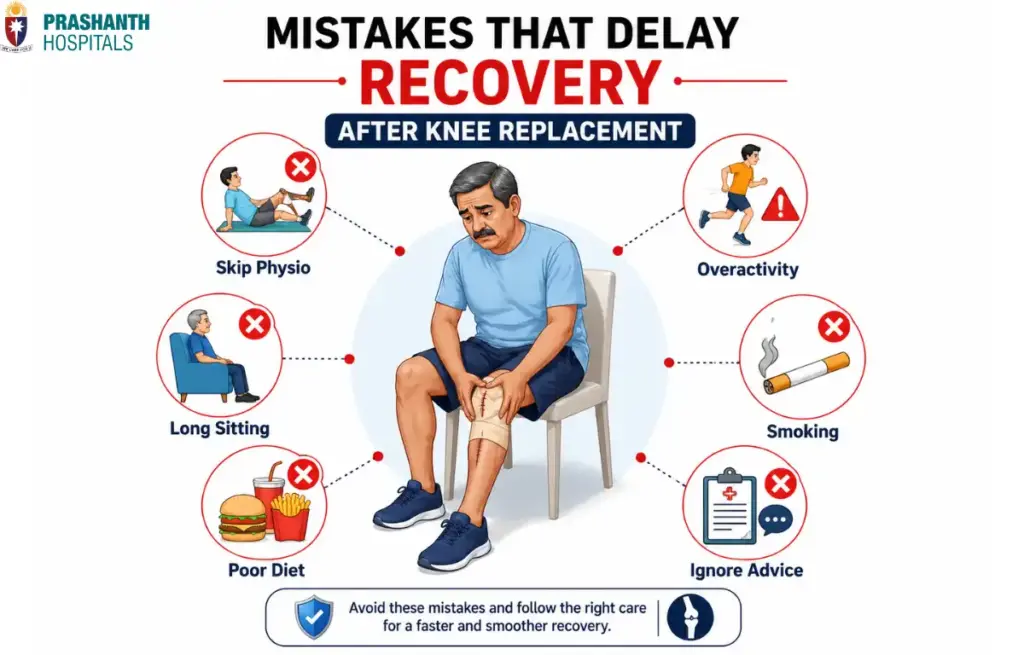
Common Mistakes That Delay Recovery
- Skipping physiotherapy
- Sitting for long hours
- Ignoring pain signals
- Not following medical advice
- Returning to high-impact activity too soon
Avoiding these mistakes can significantly improve recovery time after knee replacement.
Why Staying Active Matters During Recovery
Refuse to be sedentary
Even though it hurts to exercise, do your best and persevere. Remember to strike a balance between staying active and not pushing yourself too hard. There will be both good days and bad days during recovery. Each day you should notice that your exercises are getting a little easier. Always consult your doctor to determine the appropriate exercises.
Final Thoughts on Recovery After Knee Replacement
The journey to recovery requires patience, consistency, and proper care. The recovery time after knee replacement may vary, but following the right steps can make the process smoother and faster.
It’s important to find a highly skilled and experienced knee surgeon with whom you have total confidence. Prashanth Bone, Spine & Joint Replacement Center is one of the best orthopedic hospitals in Chennai. The center has the best ortho doctor in Chennai to treat even the most complicated cases. We house the best knee surgeons in Chennai. If you have chronic knee pain and want to explore whether knee replacement surgery is the right option for you, contact us today to book a consultation. We look forward to helping you with any questions or concerns.