
Most of us have asked this question at some point, usually while staring at a half empty water bottle on a busy afternoon. How many liters of water should I drink a day? It sounds like it should have one neat answer. But the truth is a little more personal than that.
This guide breaks it down in plain terms, so the next time someone asks how much liters of water should I drink a day, you will have a real answer instead of a guess. We will look at how much water most people need, how this changes with age, climate, and life stage, and why some days you simply need more than others.
What Total Fluid Intake Actually Means
Before we get into numbers, there is one mix up worth clearing up first, because it changes how you should read every number in this article.
When health experts talk about daily fluid needs, they almost always mean total fluid intake. This includes the water you drink, but also tea, coffee, milk, soup, and even the water naturally present in fruits, vegetables, and other foods. It is not the same as plain drinking water alone.
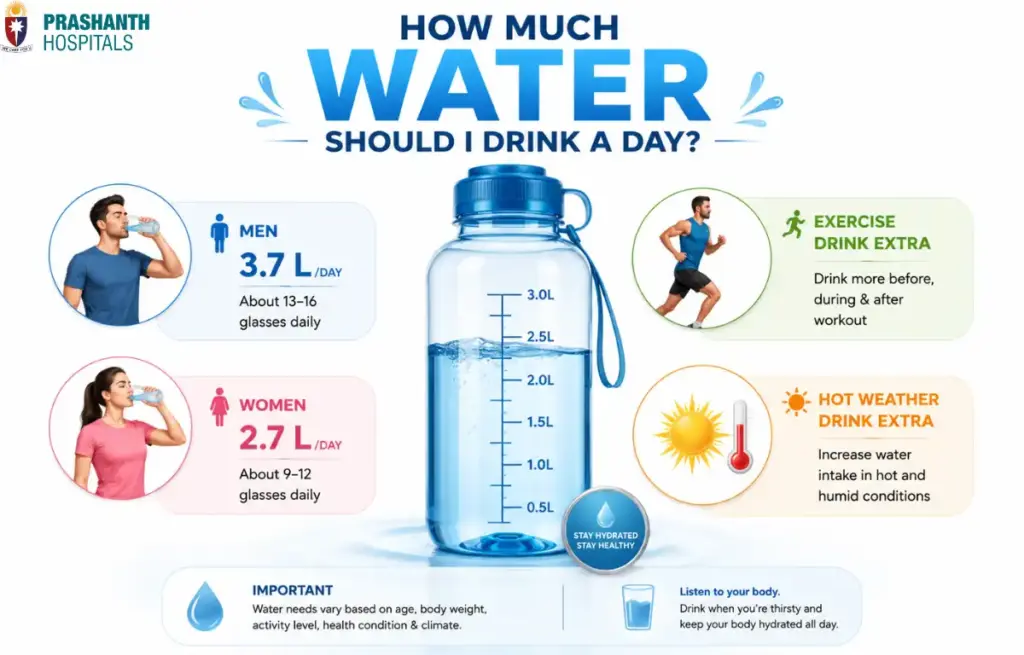
So when you read that adults need around 2.7 to 3.7 litres a day, that number is your total fluid intake from everything you eat and drink, not a target for how much water specifically needs to come out of a bottle. Plain drinking water usually makes up a good chunk of this, often around 6 to 8 glasses a day for most people, with the rest filled in naturally through meals and other drinks.
How Much Water do you Actually Need Each Day
So if you are wondering how much liters of water should I drink a day, here is a clear, simple way to think about it. Most adult women need around 2.7 litres of total fluid a day. Most adult men need around 3.7 litres of total fluid a day. These figures already include fluid from food and beverages, not just water on its own.
There is no single perfect number that fits everyone. Your own needs shift depending on your body size, how active you are, the climate you live in, and your overall health.
Why Does Your Body Need Water
Water plays a much bigger role than just stopping thirst. It supports almost everything your body does every single day.
It carries nutrients to your cells and helps remove waste through urine. It cushions your joints, which is part of why staying hydrated can ease everyday stiffness. It helps your brain stay sharp, since even mild dehydration can make you feel foggy or tired. It also helps your body manage its temperature, especially when it is hot outside or you have been active.
How Many Liters of Water Should I Drink a Day by Age and Life Stage
Your fluid needs are not the same throughout life. They shift as your body grows, changes, and ages. This is really the heart of how much litre water should I drink a day, since the right number depends heavily on your stage of life.
Children between 4 and 8 years generally need around 1.2 litres of total fluid a day. Teenagers need a bit more, usually between 1.6 and 1.9 litres depending on age and gender. Adult women typically need around 2.7 litres of total fluid a day, while adult men need closer to 3.7 litres.
Pregnancy and breastfeeding both increase fluid needs further. Many guidelines suggest pregnant women need around 3 litres of total fluid a day, while breastfeeding women may need closer to 3.8 litres, since the body uses extra fluid to produce milk. Rather than focusing too much on the exact number, the simple takeaway is this. Fluid needs rise noticeably during pregnancy and breastfeeding, so it helps to drink a little more often through the day during this time.
Older adults, those over 65, have their own story, and it is one that often gets overlooked. We will get into that in a bit, because it matters more than most people realize.
Why Living in a Hot Climate Changes your Water Needs
If you live somewhere like Chennai or anywhere else with hot, humid weather for most of the year, the general numbers above need a small adjustment.
Standard fluid guidelines are usually based on moderate climates. In tropical heat and high humidity, your body loses more water through sweat, often without you fully noticing it, since humid air makes sweat evaporate more slowly and feel less obvious on the skin. This is sometimes called hidden fluid loss.
Because of this, health guidance for people living in tropical regions generally suggests adding an extra 0.5 to 1 litre of fluid on top of the standard baseline during hot or humid stretches. This matters even more for people who spend time outdoors, work in non air conditioned spaces, or are simply out and about during the hottest part of the day.
Do Other Drinks and Foods Count Toward your Water Intake
Yes, they genuinely do. Tea, coffee, and milk all add to your daily fluid intake, even though many people assume only plain water counts.
Fruits and vegetables help too. Watermelon, cucumber, oranges, and strawberries are mostly water by weight, so eating them through the day quietly adds to your hydration without you even trying.
One thing worth watching is sugary drinks. Sodas, sweetened juices, and energy drinks do add fluid, but they also add a lot of sugar and calories without giving your body much real benefit in return. Plain water and naturally hydrating foods are simply the better long term choice.
Why Older Adults Need to be Extra Mindful of Water Intake
This is one part of the hydration story that does not get enough attention, and it deserves more space here.
As people get older, the body’s thirst signal becomes weaker. This means an older adult can be low on fluids without feeling thirsty at all. It is not carelessness. It is simply how aging affects the body.
On top of that, some medicines that are common in older age, like those prescribed for blood pressure, can cause the body to lose more fluid than usual. This makes it even more important for seniors and the people caring for them to pay attention to fluid intake, rather than waiting for a thirst cue that might not come.
A simple and practical habit here is to drink on a routine, rather than only when thirsty. A glass with breakfast, one with lunch, one in the afternoon, and one with dinner builds a steady rhythm that does not rely on the body’s thirst signal at all.
Signs You are Not Drinking Enough Water
Your body usually gives a few warning signs when fluid levels start dropping. Dark yellow urine is one of the clearest signs, while pale or light yellow usually means you are doing fine.
Urine colour is a helpful day to day guide, though it is not perfect on its own. Certain vitamin supplements, like B vitamins, and some medicines can change urine colour even when your hydration is completely normal. So treat it as a useful clue, not the final word.
Other signs include a headache that seems to come out of nowhere, feeling unusually tired, a dry mouth, or feeling a bit dizzy when you stand up. None of these need to cause alarm on their own, but if they show up often, it is worth paying closer attention to how much you are drinking through the day.
Can You Drink Too Much Water
It is possible, though it is genuinely rare for most people. Drinking an extreme amount of water in a short period can lower the sodium levels in your blood, a condition called hyponatremia.
This usually happens when someone drinks very large amounts of plain water without replacing electrolytes, often during prolonged exercise like long distance running or endurance events. It is mostly seen in athletes pushing through intense, lengthy activity or in people with certain health conditions, not in everyday situations like sipping water through a normal day.
For almost everyone reading this, the bigger and more common issue is drinking too little, not too much.
Simple Tips to Drink More Water Every Day
Small habits make the biggest difference here. Keep a water bottle somewhere you will actually see it, like your desk or your bag, rather than tucked away in a cupboard.
Make it a habit to drink a glass with every meal, since this alone covers a good portion of your daily need without much effort. Adding a slice of lemon, orange, or a few mint leaves can make plain water feel more enjoyable if you find it boring on its own.
If you exercise, the simplest rule is to replace fluids based on how much you actually sweat, especially during longer workouts or in hot weather. A short, light workout may need little more than your usual intake, while an hour of intense activity in the heat calls for noticeably more.
Setting a reminder on your phone can also help, especially on busy days when hours can pass without a single sip. Honestly, once you build a small routine, you stop having to ask how many liters of water you should drink a day, because it simply becomes part of how your day runs.
When should you Talk to a Doctor About your Water Intake
Most hydration concerns are easy to manage with small daily changes. But certain signs are worth getting checked rather than handled at home.
If your urine stays dark despite drinking water regularly, or you feel tired and foggy for no clear reason, it is worth mentioning to a doctor. The same goes for noticeable swelling, very frequent urination, or constant thirst that does not go away, since these can sometimes point to an underlying health condition rather than simple dehydration.
This next part matters a lot, so it deserves to be said clearly. People living with kidney disease or heart failure are sometimes told by their doctor to actually limit how much fluid they drink, rather than increase it, since their body may struggle to process extra fluid safely. People managing diabetes also often have fluid needs that differ from the general guidelines in this article. None of the numbers here are meant to override personal medical advice. If you are managing any ongoing health condition, always follow what your own doctor has recommended for you specifically.
How Prashanth Hospitals can help
Hydration seems simple on the surface, but it connects to a lot of what keeps your body running well, from kidney function to energy levels and even joint comfort. A regular health check up can catch small issues early, long before they turn into something bigger.
At Prashanth Hospitals, our team looks at the full picture of your health, not just one number or one symptom. Whether it is understanding your fluid needs, checking kidney function, or simply making sure your daily habits are supporting your health, we are here to help you feel confident about your choices.
If you have been wondering whether your daily water habits are really working for you, it might be worth getting a simple health check up to know for sure. Many people ask how much liters of water they truly need only after noticing they feel tired or sluggish, so it is worth checking in before that happens.
Book a health check up at Prashanth Hospitals today.