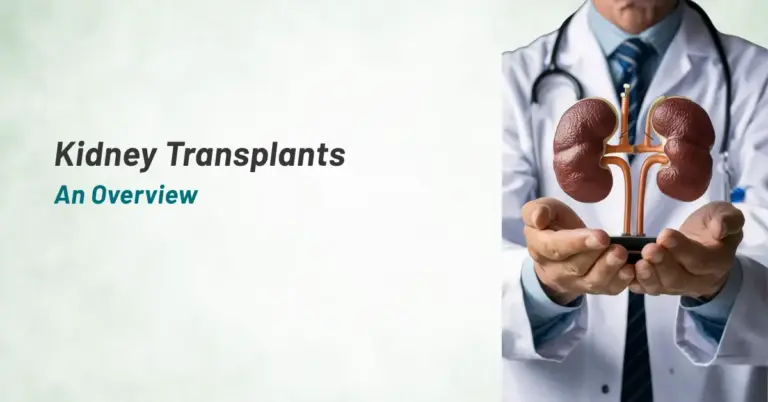
A kidney transplant is a significant surgical procedure, and the weeks and months that follow are just as important as the operation itself. For people who have spent months or years managing kidney failure, often with regular dialysis, the transplant marks the beginning of a different chapter. But that chapter requires commitment, consistency, and close medical follow-up to go well.
Understanding the recovery time after kidney transplant can help you prepare for each stage of healing and set realistic expectations. Kidney transplant recovery is not a single event. Recovery is not a single event. It is a gradual process that unfolds in stages, from the first hours in hospital through to the months at home, and eventually into a long-term way of living that protects the new kidney for years to come.
This guide walks you through what happens at each stage, what you can do to support your recovery, what warning signs to watch for, and what life after a kidney transplant typically looks like.
What Happens to Your Body After a Kidney Transplant?
Understanding what your body is going through during recovery helps explain why certain precautions matter so much.
During the transplant operation, a healthy donor kidney is placed in the lower abdomen. In most cases, the original kidneys are left in place unless they are causing specific problems. The new kidney is connected to nearby blood vessels and the bladder. Once blood flow is restored, the kidney may begin producing urine almost immediately, which is one of the earliest signs that the transplant is working.
However, this does not always happen right away.
In some cases, particularly with kidneys received from deceased donors, the transplanted kidney may take several days or even a few weeks to begin functioning. This is called delayed graft function. It is more common than many patients expect, and it is usually temporary. During this period, some patients require a few additional dialysis sessions while the new kidney recovers. This does not mean the transplant has failed.
Your immune system poses the central challenge during recovery. The body naturally recognises a transplanted organ as foreign tissue and attempts to attack it. This response is called rejection. To prevent it, transplant recipients take immunosuppressant medications, which reduce the immune system’s activity enough to allow the new kidney to function without being attacked.
These medications are taken every day for life. Without them, rejection can occur even years after a successful transplant.
In the hospital, your medical team monitors several things closely: urine output, kidney function through blood tests, blood pressure, fluid balance, medication levels in the bloodstream, and the surgical wound. Each of these gives information about how well the new kidney is settling in.
Kidney Transplant Recovery Timeline
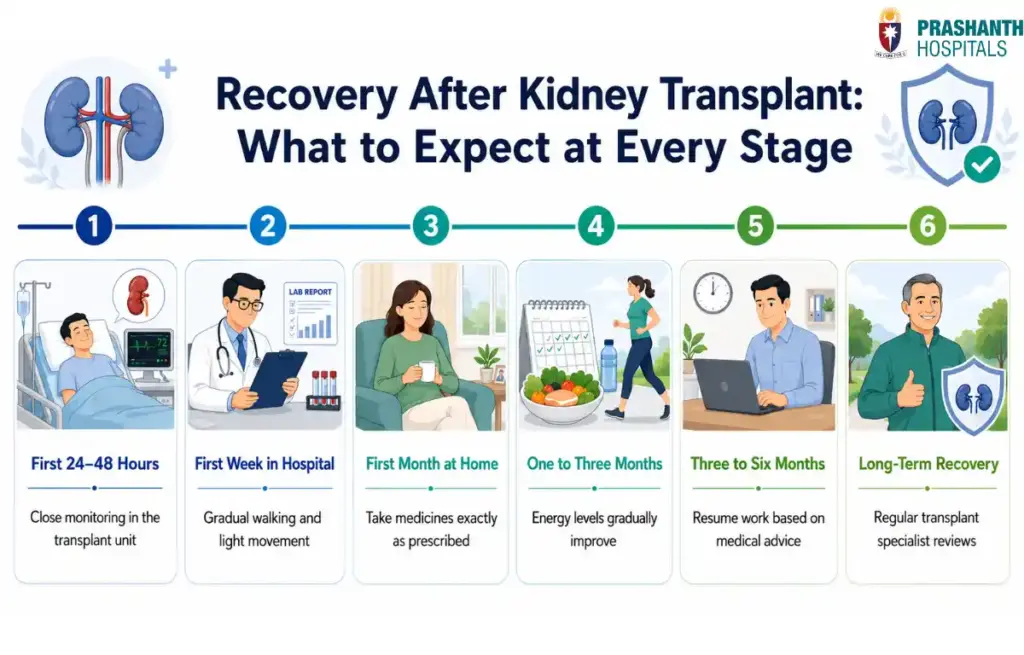
The recovery time after kidney transplant unfolds in overlapping phases. The timeline below reflects what most patients experience, though individual journeys vary depending on age, overall health, the source of the donor kidney, and whether any complications occur. Understanding the recovery time after kidney transplant also means knowing which symptoms require immediate medical attention.
| Recovery Milestone | Typical Timeframe |
| Hospital stay | 3 to 7 days |
| Initial wound healing | 2 to 4 weeks |
| Resuming light daily activities | 4 to 6 weeks |
| Returning to desk-based work | 6 to 8 weeks |
| Moderate physical activity | 2 to 3 months |
| Overall surgical recovery | 3 to 6 months |
These are averages, not deadlines. Recovering faster than this is not necessarily better, and recovering more slowly does not mean something is wrong.
The first 24 to 72 hours are the most intensively monitored period of the entire recovery. Blood tests are done frequently, blood pressure is checked every few hours, urine output is measured carefully, and pain is managed. Gentle walking is usually encouraged within the first day after surgery, not because it is expected, but because early movement improves circulation, reduces the risk of blood clots, supports lung recovery, and helps the body begin to heal.
The first week involves preparing to go home. Before discharge, you will learn which medications to take, when to take them, how to care for the wound, how much fluid to drink, what foods to be careful about, and when to contact the hospital. This education is a critical part of your care.
Weeks two to six are when gradual improvement becomes noticeable. Walking becomes easier, appetite returns, sleep improves, and daily tasks feel less exhausting. Medication doses are adjusted most frequently during this period as your team works to find the right balance of immunosuppression. Follow-up appointments and blood tests happen often during these weeks for exactly this reason.
Recovery during this phase is rarely a straight line. Days of increased energy may be followed by days of unexpected fatigue. This pattern is normal. The body is healing internally, adjusting to new medications, and adapting to a kidney that is now filtering waste much more efficiently than the failed kidneys were.
Months two and three typically bring more significant improvements. Many people return to office work, drive again, resume social activities, and feel closer to their pre-illness selves. Heavy lifting, strenuous exercise, and physically demanding work are usually deferred until the transplant team confirms the body has healed adequately.
Beyond three months, the focus shifts from healing to long-term maintenance. Surgical recovery is largely complete, but caring for the transplanted kidney becomes a permanent commitment rather than a temporary phase. Every stage of kidney transplant recovery builds on the one before it.
Understanding Rejection: What it is and Why Monitoring Matters
Rejection is a word that causes significant anxiety for transplant recipients. Understanding what it actually means helps put that anxiety in perspective. Rejection occurs when the immune system identifies the transplanted kidney as foreign and attempts to damage or destroy it. There are different types.
- Hyperacute rejection is rare and occurs within minutes to hours of transplantation. It is identified and managed in the operating theatre and is now uncommon due to careful pre-transplant matching.
- Acute rejection is the most common type and can occur at any point, most often within the first few months after transplantation. It is frequently detected through blood tests before symptoms appear. When caught early, acute rejection is often treatable with high-dose immunosuppressant medication, and many episodes can be successfully reversed.
- Chronic rejection develops slowly over months or years and causes a gradual decline in kidney function. It is harder to reverse than acute rejection, which is why consistent long-term monitoring is so important even when everything feels fine.
The critical point is that many episodes of rejection occur without any noticeable symptoms. A patient can feel completely well while rejection is beginning to affect the transplanted kidney. This is why regular blood tests and follow-up appointments are not optional extras in post-transplant care. They are the mechanism by which problems are caught early enough to be treated.
Missing follow-up appointments because you feel healthy is one of the most common and preventable reasons that transplant problems are detected late.
7 Tips for a Successful Recovery After Kidney Transplant
1. Take Your Medications at the Same Time Every Day
Immunosuppressant medications work by maintaining a consistent level of immune suppression in your body. Missing doses or taking them at irregular times allows those levels to fluctuate, which increases the risk of rejection.
Setting phone reminders, using a weekly pill organiser, or linking medication times to regular daily events such as meals can help build the consistency that transplant care requires. This is not a temporary habit. It is a lifelong one.
Never stop, reduce, or change your immunosuppressant medications without discussing it with your transplant team first. Even if a side effect feels difficult to manage, the solution is to speak with your doctor about alternatives, not to adjust doses independently.
2. Attend Every Follow-Up Appointment
Regular follow-up appointments are a vital part of the recovery time after kidney transplant. During these visits, your transplant team checks how well your new kidney is functioning, monitors your immunosuppressant medication levels, and looks for early signs of rejection, infection, or other complications. Blood tests, urine tests, and blood pressure checks help ensure your recovery is progressing as expected.
In the first few months, follow-up visits are frequent. As recovery progresses and results stabilise, they become less frequent. But they never stop entirely. Lifelong monitoring is a standard part of kidney transplant care.
Think of these visits not as something to fit around other commitments, but as the most important maintenance your new kidney receives.
3. Eat a Balanced Diet and Be Careful About Certain Foods
Nutrition plays an important role in recovery after kidney transplant and in protecting long-term kidney health. A balanced diet that includes adequate protein, fibre, vegetables, and whole grains supports tissue healing and helps manage blood pressure and blood sugar, both of which affect kidney function over time.
There are specific dietary points that kidney transplant recipients need to know.
Grapefruit and pomelo must be avoided completely after kidney transplantation. These fruits contain compounds that interfere directly with how the body processes calcineurin inhibitors, the main class of immunosuppressant medication. Even a small amount can cause medication levels to rise unpredictably, which increases the risk of toxicity and side effects.
High-potassium foods such as bananas, oranges, potatoes, and tomatoes in large quantities may need to be monitored or limited depending on your blood potassium levels in the early post-operative period. Your transplant team or dietitian will advise you based on your specific blood results.
Salt restriction helps manage blood pressure, which is important because high blood pressure is both a cause and a consequence of reduced kidney function. Processed foods, pickles, and salty snacks are worth limiting consistently.
A transplant dietitian can give you personalised dietary guidance based on your medications, blood results, and health conditions. General dietary advice from the internet is not a substitute for this.
4. Follow Your Fluid Recommendations Precisely
Adequate hydration supports kidney function. But the right fluid intake for a kidney transplant recipient is not a fixed number that applies to everyone. It depends on your kidney function, blood pressure, heart health, medications, and other individual factors.
Drinking too little can lead to dehydration, which stresses the transplanted kidney. But taking in significantly more fluid than your body requires can cause fluid overload, which places strain on the heart and kidneys and is genuinely harmful in some patients, not merely unnecessary.
Follow the specific fluid guidance your transplant team provides and update them if anything changes, such as a period of illness, hot weather, or increased physical activity.
5. Protect Yourself From Infection
Immunosuppressant medications reduce the immune system’s ability to fight off infections. This is unavoidable, as the same suppression that prevents rejection also reduces the body’s natural defences. During the first few months after transplantation, when immunosuppression is at its most intense, infection risk is at its highest.
Practical steps that reduce infection risk include washing hands regularly and thoroughly, avoiding close contact with people who are unwell, following safe food hygiene practices, keeping the surgical wound clean and dry until it is fully healed, and wearing a mask in crowded environments when infection risk is elevated.
Regarding vaccinations, certain vaccines may be recommended after transplant to protect against infections you are now more vulnerable to. However, live attenuated vaccines, including those for MMR, varicella, and yellow fever, are generally avoided in people taking immunosuppressant medications because the weakened live virus in these vaccines can cause infection in someone with a suppressed immune system. Your transplant team will advise you on which vaccines are appropriate and the best time to receive them during your recovery time after kidney transplant.
Never start a new vaccine without confirming with your transplant team first.
6. Resume Physical Activity Gradually
Resuming physical activity gradually is one of the most important parts of recovery after kidney transplant. Rest is important in the early weeks of recovery. But prolonged inactivity weakens muscles, increases the risk of blood clots, affects mood, and slows overall recovery.
Walking is the most recommended activity in the early weeks after transplantation. It is low impact, improves circulation, supports cardiovascular health, and can be increased gradually as strength returns. Begin with short, gentle walks and increase duration and distance slowly over weeks.
More demanding exercise such as swimming, cycling, or gym-based activities can usually be resumed once your transplant team confirms that the surgical site has healed and that kidney function is stable. Heavy lifting and contact sports are typically deferred for longer.
The goal is steady, sustainable progress rather than rushing back to previous fitness levels.
7. Take Care of Your Mental and Emotional Health
The psychological side of transplant recovery is real and often underacknowledged. The weeks after surgery can bring a wide range of emotions. Some people feel enormous relief and gratitude. Others experience anxiety about rejection, guilt if the kidney came from a deceased donor, or uncertainty about the future.
Medication changes, disrupted sleep patterns, and the significant life adjustment involved in post-transplant care can also affect mood. These experiences are common and do not indicate weakness.
Speaking openly with family members, connecting with other transplant recipients through support groups, and seeking professional counselling if needed are all appropriate responses to the emotional demands of this period. Emotional wellbeing is not separate from physical recovery. Research consistently shows that patients with strong support systems are more likely to adhere to their medication schedules and attend follow-up appointments, both of which directly affect transplant outcomes.
Lifestyle Changes That Protect Your Transplanted Kidney
Kidney transplant recovery doesn’t end once the surgical wound heals. Long-term transplant success depends on habits maintained consistently over years, not just during the initial recovery period.
Maintaining a healthy body weight reduces strain on the transplanted kidney and lowers the risk of high blood pressure and diabetes, both of which can damage kidney function over time. Staying physically active and eating a balanced diet are the most practical ways to support this.
Avoiding tobacco in any form is important. Smoking damages blood vessels throughout the body, including those supplying the transplanted kidney, and significantly increases the risk of cardiovascular disease, which is already elevated in kidney transplant recipients.
Avoiding self-medication is essential. Certain common over-the-counter medications can be harmful after a kidney transplant. Non-steroidal anti-inflammatory drugs (NSAIDs) such as ibuprofen and diclofenac are generally contraindicated because they reduce blood flow to the kidneys and can cause acute kidney injury. Herbal supplements and alternative remedies can interact with immunosuppressant medications in unpredictable ways. Always check with your transplant team before taking any new medication, supplement, or remedy, regardless of how harmless it appears.
Sun protection deserves specific mention. Immunosuppressant medications increase the risk of skin cancer, particularly squamous cell carcinoma, which is significantly more common in transplant recipients than in the general population. Using sunscreen with a high SPF consistently, wearing protective clothing, and avoiding prolonged sun exposure are simple preventive measures that matter.
Warning Signs That Need Immediate Medical Attention
Most people recover from kidney transplantation without major complications. But it is important to recognise symptoms that require prompt medical assessment.
| Symptom | Possible Concern |
| Fever or chills | Infection or early rejection |
| Reduced urine output | Kidney dysfunction or dehydration |
| Swelling in the legs, feet, or face | Fluid retention or reduced kidney function |
| Pain or tenderness around the transplant site | Infection or transplant-related complication |
| Persistent vomiting or diarrhoea | Dehydration and impaired medication absorption |
| Sudden weight gain over one to two days | Fluid overload |
| Significantly elevated blood pressure | Early changes in kidney function |
| Redness, discharge, or opening of the surgical wound | Wound infection |
Do not wait to see if these symptoms resolve on their own. Contact your transplant team promptly if any of these develop. Early assessment and treatment prevent small problems from becoming serious ones.
If you experience a fever, significant reduction in urine output, or pain at the transplant site, treat these as urgent. Same-day medical review is appropriate.
Kidney Transplant Care at Prashanth Hospitals, Chennai
At Prashanth Hospitals, our Nephrology and Urology department provides specialist support for patients throughout their recovery after kidney transplant, from pre-transplant evaluation through to long-term post-transplant follow-up.
Our team of nephrologists, transplant specialists, and supporting clinical staff works closely with each patient to monitor kidney function, manage immunosuppressant medications, identify complications early, and provide the dietary and lifestyle guidance that protects transplant outcomes over the long term.
If you or a family member has received a kidney transplant and requires specialist follow-up care in Chennai, or if you are at the stage of evaluating transplant options, our team at Prashanth Hospitals is here to help.
Book a consultation with our Nephrology and Urology department today.